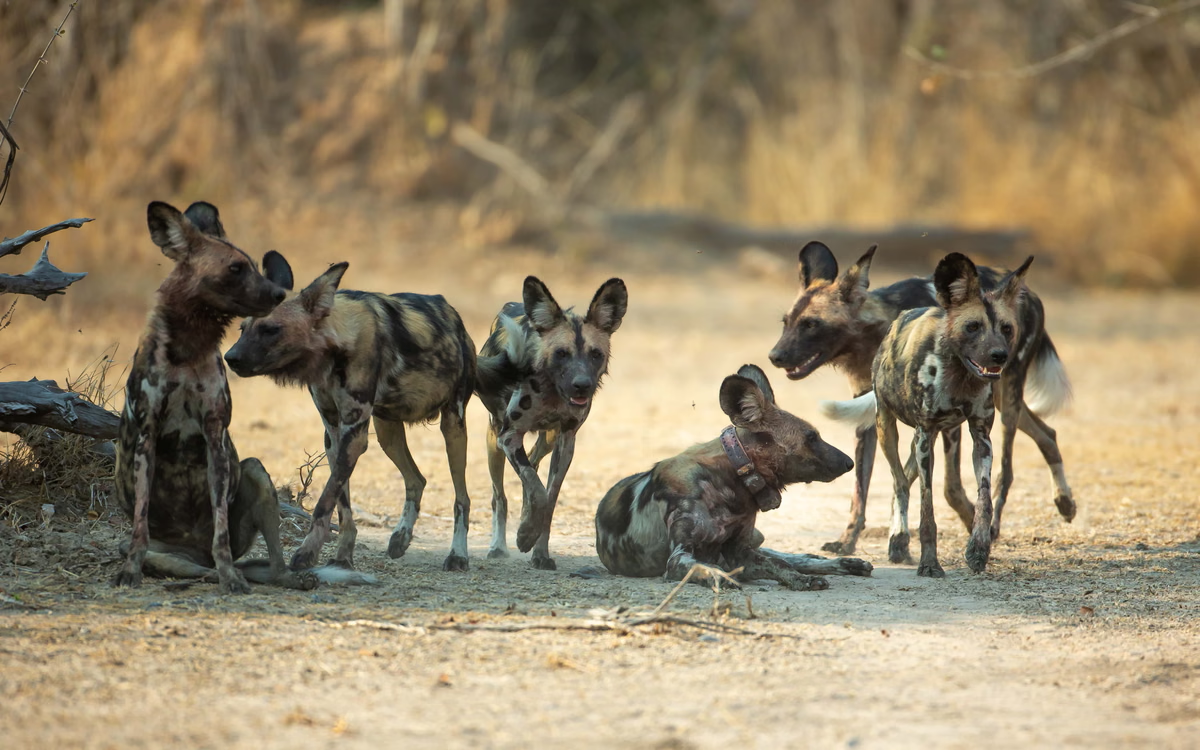
In an extraordinary display of resilience, three African wild dog brothers recently concluded a 2,500-mile (4,100km) trek across Zambia. This dispersal, a critical life stage where young dogs depart their natal pack to secure mates and establish independent territory, represents the longest single journey ever recorded for a mammal on the continent. The brothers navigated a challenging landscape marked by human infrastructure, vehicular traffic, and bushmeat snares over an eight-month span.
The odyssey stretched from their point of origin in Kafue National Park in western Zambia to their final home in the eastern Luangwa Valley. This transit covered a direct distance of 340 miles (546km), setting another record for the species. To put the scale of their movement into perspective, the journey exceeds the distance of the iconic wildebeest and zebra migrations across the Serengeti and is roughly equivalent to traveling the entire length of Chile on foot.
This feat eclipses the previous record of 2,418 miles, established in 2012 by wild dogs migrating between northern Tanzania and southern Kenya. Dr. Matt Becker, chief executive of the Zambian Carnivore Programme, noted that while the journey highlights the enduring connectivity of African wilderness strongholds, it also underscores the extreme dangers these animals encounter. He emphasized that the survival of such species depends on maintaining and investing in connected landscapes rather than relying solely on enclosed, fenced reserves.
The research, published in the journal Ecology, involved monitoring 19 different wild dog groups. The sibling trio’s journey was particularly notable because it intersected with their own sisters. Two months into the trek, the groups encountered each other in Zambia’s copper-belt mining region. They spent a day together before continuing their separate paths, as wild dogs typically avoid mating with close relatives, necessitating these vast, arduous movements to find suitable mates from other populations.
Unfortunately, the landscape remains hazardous; two of the sisters died during their dispersal, likely victims of illegal snares. Such risks, combined with habitat fragmentation, limited prey availability, and human conflict, have pushed the species toward critical status. Only an estimated 6,600 adults remain across 39 distinct populations, leading the International Union for Conservation of Nature to classify African wild dogs as endangered.
Despite these threats, the success of the three brothers serves as a testament to the species’ ability to persist in human-dominated areas. Much like African savannah elephants, wild dogs require vast, uninterrupted corridors to survive. Dr. Nyambe Nyambe, director of the Kavango-Zambezi transfrontier area secretariat, underscored the importance of this study, noting that it provides vital evidence that connectivity between large ecosystems remains functional.
Governments across the five countries encompassed by the Kavango-Zambezi region are working to ensure space remains for wildlife migration. Nyambe emphasized that by continuing to conserve and improve these networks—spanning national parks, community-managed lands, and international borders—conservationists can provide the necessary conditions for endangered species to thrive and successfully establish new territories. The report also notes that including a group of sisters to the three brothers who were far less successful at finding a new range, the researchers tracked 19 separate groups of wild dogs to monitor their dispersals. The report also notes that but they also reveal how difficult and dangerous those journeys have become. The report also notes that the dogs are showing us that connectivity still works; now we need to do more to protect and strengthen it.”. The report also notes that and typically have to travel long distances through the landscape to find prospective mates, related dogs do not form new family packs. The report also notes that and follow the biodiversity reporters Rebecca Ratcliffe, Phoebe Weston and Patrick Greenfield in app for more nature coverage, find more age of extinction coverage here.