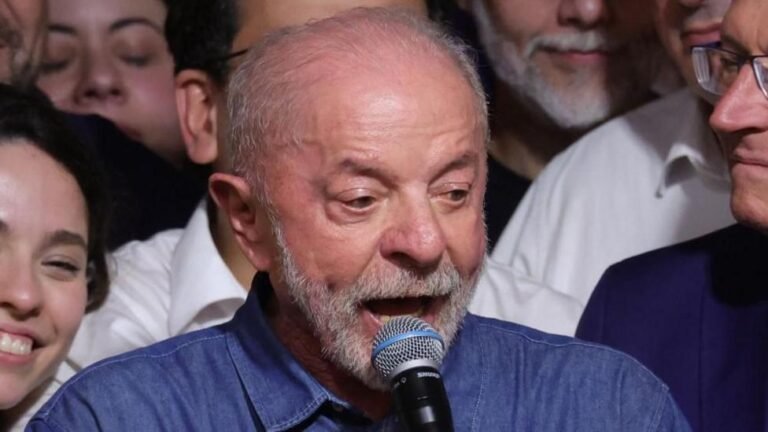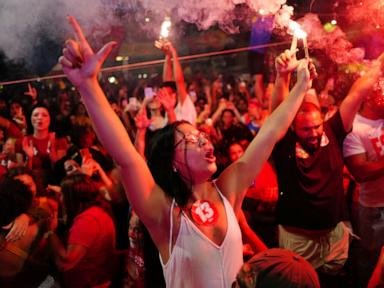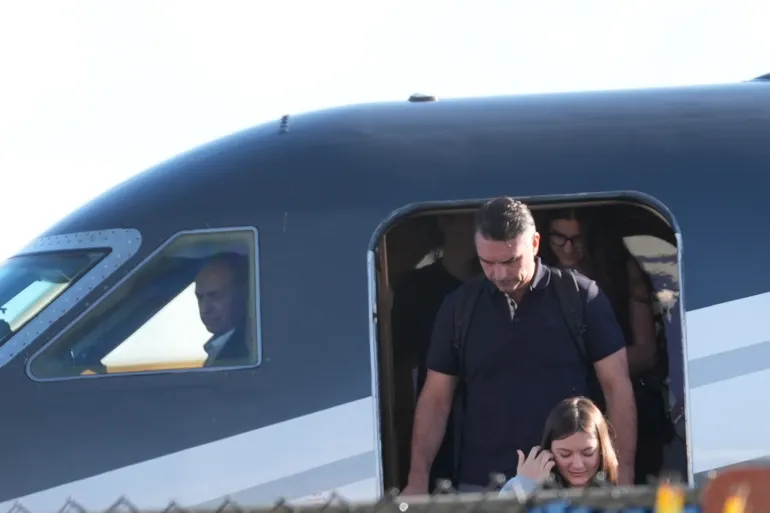
Senator Flavio Bolsonaro arrived in Miami, Florida, on Wednesday alongside his wife and two daughters, marking a swift departure from Brazil just days after his defeat in the presidential runoff election against incumbent Luiz Inacio Lula da Silva. The election saw Lula secure victory with 51.8 percent of the vote compared to Bolsonaro’s 48.2 percent, a difference representing millions of ballots.
The senator’s departure follows a late Sunday night ruling by Supreme Court Justice Alexandre de Moraes, who ordered the surrender of Flavio’s regular and diplomatic passports. The court identified him as a flight risk due to an ongoing investigation into money laundering and currency evasion involving the senator and his associate, Willer Tomaz, who reportedly relocated to Miami two weeks ago.
Argentine immigration records detail a complex escape route: the family traveled by land into Argentina on Tuesday night before boarding a private Baires Fly jet to Guayaquil, Ecuador. From there, they continued to Opa-Locka Executive Airport near Miami. The US State Department confirmed on Tuesday that it would issue the necessary visas for their entry.
The political fallout has been sharp, with US President Donald Trump and Argentine President Javier Milei remaining the only prominent world leaders who have not acknowledged Lula’s victory. Trump asserted without evidence on Monday that Brazil’s election appeared rigged, though he simultaneously expressed admiration for President Lula.
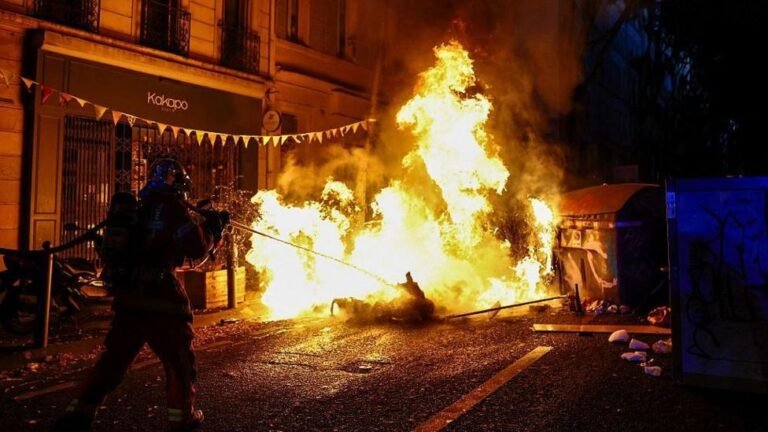
In Brazil, the news triggered strong public backlash. Sao Paulo resident Cristiana Cunha, 36, described the senator’s actions as those of a coward unwilling to face the consequences of his behavior. Another local, 45-year-old psychoanalyst Priscila Cardoso, compared the flight to a parasite escaping through a sewer, labeling the senator’s refusal to accept the results as the tantrum of a spoiled child. According to she, She was unsurprised by news of his leaving the country. Cardoso, who is a single parent, likened his behaviour to that of a “spoiled child who loses a game and takes the ball home with them”.
Following his loss, Flavio attempted to contest the outcome, calling a press conference to claim the election should be annulled. His argument centered on a Supreme Court decision to extend polling hours by two hours due to weather and transportation issues. However, official data reveals that fewer than 35,000 votes were cast during that extension, far below the 4.4 million vote gap that separated the candidates. However, will be walking the tightrope between political pragmatism and continuing to convince hardline Bolsonaristas that he is a “loyal ally”, his main obstacle.
Political analyst Paulo Roberto de Souza from the Democracy in Check Institute suggested that Flavio’s flight could signal a shift in Brazil’s conservative power structure. He noted that this loss is particularly humiliating for the family, as it follows Jair Bolsonaro’s 2022 re-election failure and establishes a perceived ceiling on their influence. According to de Souza, the right wing may now begin competing over the remnants of the Bolsonaro legacy. “In 2022, [Flavio’s father] Jair Bolsonaro became the first incumbent Brazilian president to lose a re-election battle. And now, in 2026, Flavio became the first presidential candidate to lead after the first round and lose a run-off. According to “Without a doubt, Tarcisio is the main figure in this reorganisation process on the Brazilian right,”, De Souza. “For this election, he was the name floated and insisted upon by some key figures in Bolsonarism, as well as neo-Pentecostal leaders.”.
While Flavio has not officially conceded, his Liberal Party has moved to recognize the election results. Attention is now turning toward Sao Paulo Governor Tarcisio de Freitas, who is widely viewed as the primary successor in the right-wing reorganization. De Souza suggested that while the Bolsonaro family members may offer endorsements in future elections, such as the 2030 cycle, they are unlikely to remain central players on the ballot. In de Souza’s view, that there will be a member of the Bolsonaro family on the presidential ticket come the next election in 2030. “They are much more likely to be figures that provide endorsement, rather than actual players themselves,” he said, it is unlikely. “I definitely think there could be a Bolsonaro on the ballot in 2030; I just don’t know which one.”.
Many voters remain skeptical that the family’s influence is truly waning. Residents point to the recent elections of Flavio’s brother, Carlos, and his mother-in-law, Michelle, to the Senate as evidence that the family intends to maintain its grip on power. As Cunha noted, while the dynamics may shift, the expectation remains that a member of the Bolsonaro family will likely be on the ballot in 2030, even if the specific candidate remains unclear. For some voters, Flavio’s call for an annulment came across as bad sportsmanship.