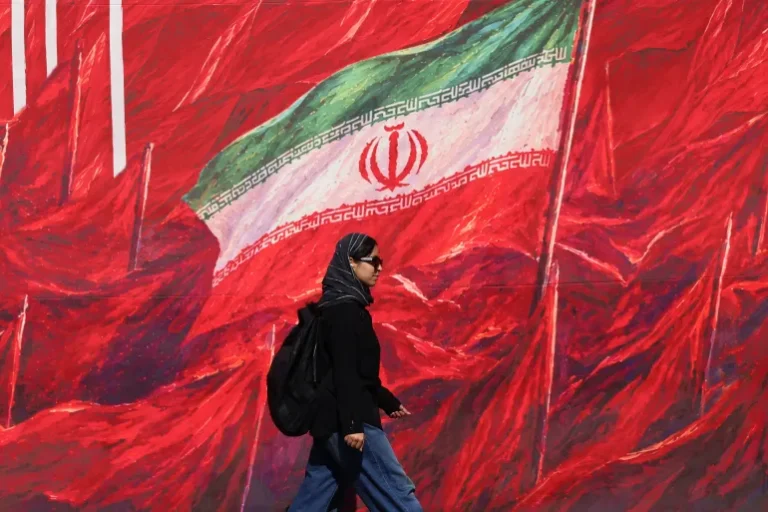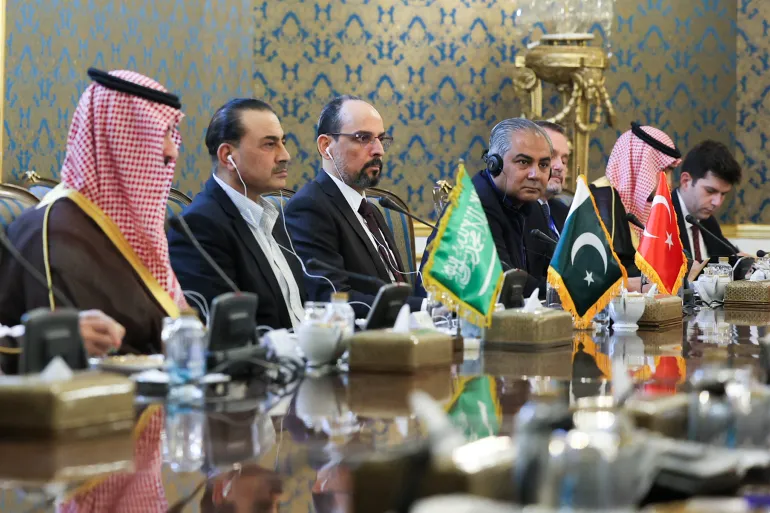
In a high-level diplomatic push, senior security officials and ministers from Pakistan, Saudi Arabia, and Turkiye—the three signatories of the Mecca Joint Defence Agreement—have convened in Tehran. The mission aims to address growing regional insecurity and navigate the escalating friction between Iran and the United States. According to while there is still little information on what might be discussed, the meetings come amid a flurry of diplomatic activity to deal with a new escalation between the United, And Iran.
The delegation, including Saudi Defence Minister Khalid bin Salman Al Saud, Pakistani military chief Asim Munir, and Turkish intelligence head Ibrahim Kalin, met with Iranian President Masoud Pezeshkian. Future discussions are slated with Iranian security chief Mohsen Rezaei. These meetings represent some of the most significant diplomatic engagement in the Iranian capital in recent months. The meetings are among the highest-profile dialogues held in Tehran in recent months. According to iranian authorities have, They favoured “security originating from within the region” as they prepared for the meetings.
Ali Vaez, deputy director of the Middle East and North Africa Program at the International Crisis Group, described the visit as an 11th-hour effort to tip the balance toward compromise before the return of open conflict. Vaez warned, however, that without a credible formula to reconcile the US-Iran divide, the parties risk walking away with nothing more than goodwill in a narrowing window of time. “But unless they arrive with a credible formula to bridge the US-Iran divide, they may find themselves with little more than goodwill in a race against the clock.”.
A core aspect of the dialogue involves Yemen’s Houthi rebels, who maintain strong ties with Tehran and have launched repeated drone and missile strikes against Saudi Arabia. Ayesha Siddiqa, a senior research fellow at King’s College London, noted that while Riyadh is pressuring its partners for increased action against the Houthis, both Pakistan and Turkiye remain constrained by a lack of capacity to commit ground troops in Yemen.
The current diplomatic efforts are reportedly linked to General Munir’s recent visits to Saudi Arabia and Iran, as well as Islamabad’s tightening of overland trade restrictions with Tehran following the imposition of a US blockade. Iranian officials have publicly stated a preference for regional security solutions, though analysts remain skeptical about the potential for a lasting breakthrough.
Umer Karim, a researcher specializing in Saudi foreign policy, argued that the meetings are primarily focused on shielding Saudi Arabia from the fallout of a renewed Iran-US war. Karim expressed doubt that these negotiations could significantly alter Tehran’s strategic calculus or reduce the risk of regional turmoil, given the limited leverage possessed by the visiting delegations. “However, since little has changed from an Iranian strategic calculus and the actors involved don’t have the kind of leverage needed to affect Iran’s strategic thinking, these negotiations are going to yield little,” Karim said.
Chatham House expert Sanam Vakil shared a cautiously optimistic outlook regarding the immediate impact of the talks, though she remained less confident about a permanent resolution. She noted that while Iran is motivated to avoid a major confrontation, its control over the Houthis is not absolute. Furthermore, fundamental disagreements between Washington and Tehran—including Iran’s nuclear program, enriched uranium levels, and US demands—continue to block a sustainable peace. Washington also wants to rein in Tehran’s nuclear programme and bring in international inspectors to assess Iran’s highly enriched uranium. According to israel, It wants to overthrow the Islamic Republic.
Tensions remain at a breaking point as US President Donald Trump weighs potential new strikes on Iran’s civilian infrastructure to break the current deadlock. According to this could prompt Iran to lash out at its neighbours, as it did earlier in the war with strikes on US bases in Arab, And infrastructure.
The US has demanded an end to threats against international shipping in the Strait of Hormuz, while Iran insists on the lifting of the naval blockade on its southern ports and a return to a June memorandum of understanding. Amid these rising risks, the US State Department ordered non-emergency government personnel and their families to evacuate Saudi Arabia on October 21 due to the persistent threat posed by Houthi forces. The US and regional powers want international shipping and transit through the Strait of Hormuz to resume without impediments or attacks. Meanwhile, the US Department of State issued an October 21 order for nonemergency US government employees and their family members to leave Saudi Arabia for their safety’s sake, given the Houthi threat.