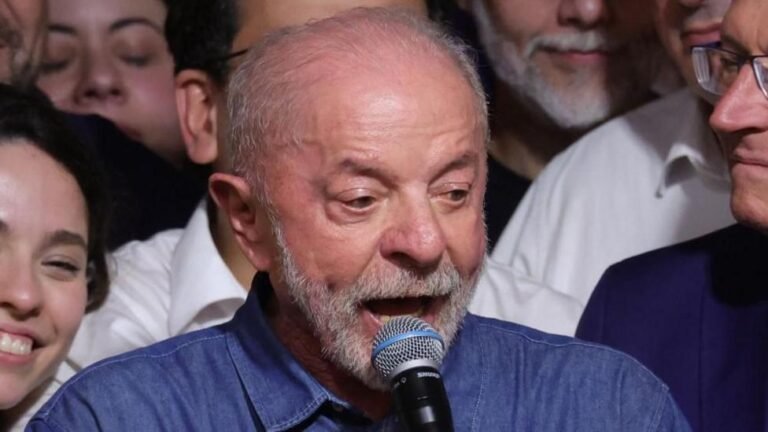
Luiz Inácio Lula da Silva secured a historic fourth non-consecutive term as president of Brazil on Sunday, prevailing over opponent Flávio Bolsonaro in a tense election process that preserves a distance between Latin America’s largest economy and Washington.
Brazil’s electoral court confirmed that the soon to be 81-year-old leader held an unassailable lead with 100 percent of the votes counted. The official announcement followed an evening of uncertainty after a Supreme Court justice made a last-minute decision to extend voting hours by two hours at polling stations across the nation, an action that may prompt legal challenges from the Bolsonaro campaign. Britt McHenry resigns from State Department after basketball game altercation.
The election result bucks a recent regional trend where right-of-center candidates aligned with U.S. President Donald Trump have achieved victories. With Lula’s win, Latin America’s two most populous nations—Mexico and Brazil—remain under left-of-center leadership. The outcome also positions Brazil, which boasts an annual gross domestic product of $2.6 trillion, to maintain its strategic independence from Washington despite economic pressure from higher tariffs imposed by Trump.
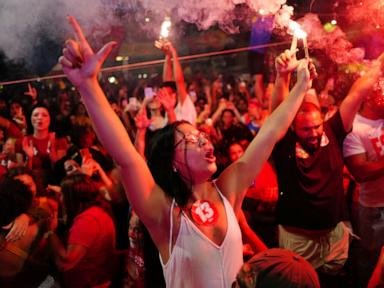
Supporters gathered to celebrate outside and inside the São Paulo hotel where Lula monitored the vote tally alongside First Lady Rosângela da Silva, key political allies, and personal friends. His new presidential term is scheduled to commence on January 5, 2027.
This contest marks the first time since the end of Brazil’s military dictatorship in 1985 that a candidate who placed second in the opening round went on to win the presidency. During the initial voting round, Bolsonaro had led with 47 percent against Lula’s 45 percent, representing a margin of approximately 2.2 million votes.
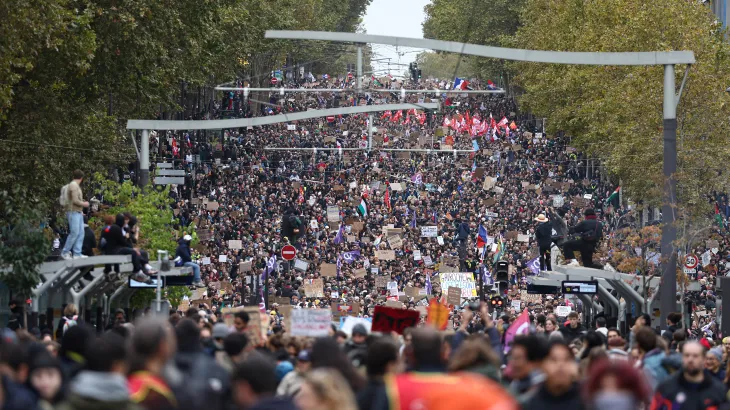
To overcome the first-round deficit, Lula restructured his campaign strategy by actively targeting younger voters, organizing street demonstrations focused on democratic principles, raising concerns regarding another Bolsonaro presidency, and highlighting several key government initiatives. He consistently defended national sovereignty, warning voters that a presidency under his rival would subject Brazil to greater political control from the United States.
The victory stands as a significant milestone in Lula’s political journey, which began in the 1970s as a trade union leader. He subsequently co-founded the Workers’ Party and ran for president three times before winning office in 2002. Following his 2006 reelection, his cabinet minister Dilma Rousseff succeeded him in 2010 and won again in 2014 before being impeached in 2016 during a massive corruption investigation. Which he represented as a presidential candidate three times until he finally won it in 2002, he then helped found the Workers’ Party. He was reelected four years later and was succeeded by one of his cabinet ministers, Dilma Rousseff, in 2010. Which also ensnared Lula, rousseff was impeached for accounting maneuvering in 2016 amid a sprawling corruption probe.
Lula faced severe legal challenges when he was jailed in March 2018 during another presidential run. After spending 580 days in prison, he was released when Brazil’s Supreme Court annulled his convictions following police disclosures showing the trial judge was biased. Following his release, he emerged as a primary critic of former President Jair Bolsonaro, whom he narrowly defeated in the 2022 election. Two years into his recent term in 2024, Lula publicly acknowledged that his administration had much more work to do to fully satisfy his voting base. He quickly became one of former President Jair Bolsonaro’s biggest critics and narrowly beat him in 2022. Two years into the job, that his administration had done little that far to earn the support of his voters, lula admitted in 2024. Trump told DOJ to sue to block Alaska Senate results if Republican narrowly loses.
With this election win, Lula joins U.S. President Donald Trump and Nicaraguan President Daniel Ortega—who are all 80 years old—among the oldest serving heads of state in the Americas. At the time of the final vote tallies, neither Lula nor Senator Bolsonaro had formally delivered victory or concession speeches to their supporters.