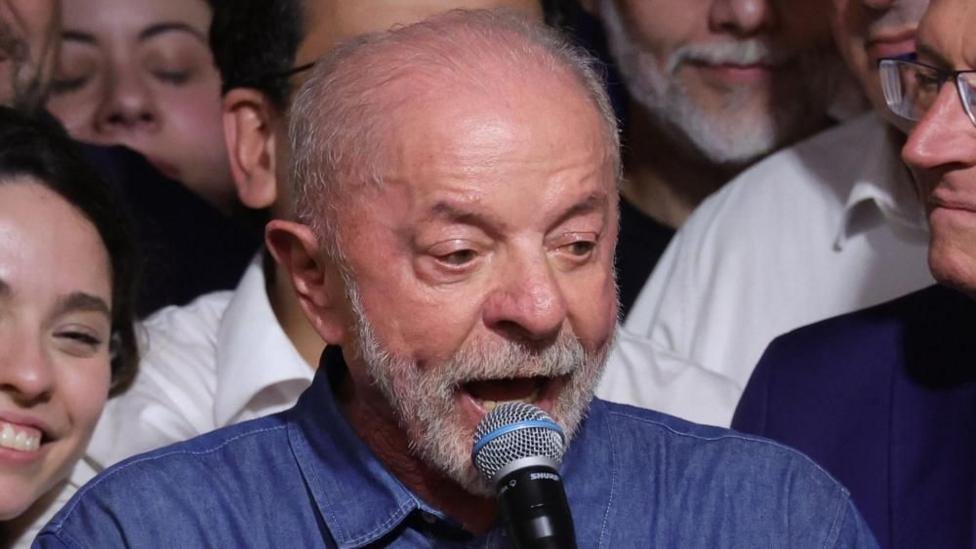
Luiz Inácio Lula da Silva, Brazil’s veteran left-wing leader, has secured a fourth presidential term following a fiercely contested election campaign. The Superior Electoral Court confirmed that with all ballots processed, Lula garnered 51.79% of the vote, effectively defeating his right-wing opponent, Flávio Bolsonaro, who finished with 48.21%.
Despite the official declaration of results, Bolsonaro has refused to recognize the outcome. He described the decision to extend polling hours by two minutes as “inexplicable,” even though his own campaign team had joined Lula’s representatives in requesting that voting stations remain open longer. In a direct challenge to the process, Bolsonaro announced to supporters in Brasilia his intention to seek a formal annulment of the election.
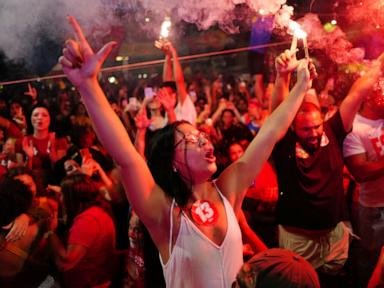
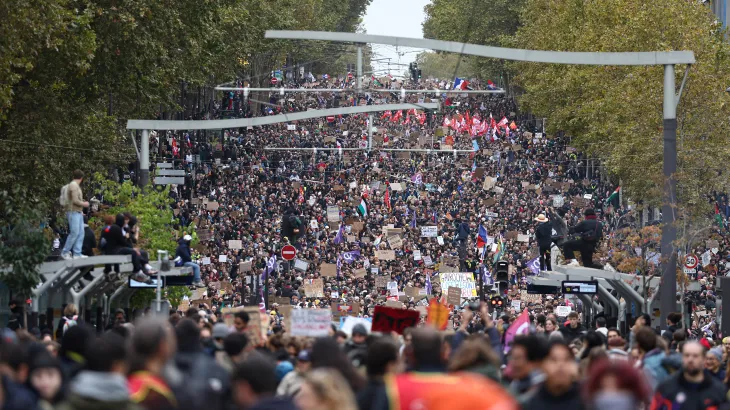
The victory marks a remarkable turnaround for Lula, who served as president from 2003 to 2010 and again starting in January 2023. Many observers had considered his return unlikely after he lost to the younger Bolsonaro in the first round on October 4. However, a robust grassroots campaign, characterized by large street rallies and a strategic social media push, allowed the former metalworker to recover ground in just three weeks. However, this has not stopped Lula and his supporters from celebrating what they describe as a “historic victory” and an surprise turn-around. But the road to his win in Sunday’s run-off was not a smooth one. Who has been the dominant figure on Brazil’s left since he first ran for president in 1989, nevertheless faces the most challenging political landscape since first taking office in 2003, the former metalworker. And yet, Lula’s Workers’ Party managed to organise huge rallies ahead of the run-off, showing the strong grassroots support it commands.
Lula’s success is notable for defying a broader regional trend in Latin America, where voters have increasingly shifted toward conservative governance in nations like Argentina, Chile, and Colombia. Despite this, the incoming president faces a daunting political landscape. His new term, which begins on January 5, 2027, will be tested by a deeply polarized electorate and a notably hostile Congress, where Bolsonaro’s Liberal Party achieved significant gains. His new term, set to begin on 5 January 2027, will start amid significant constraints at home and abroad, including animosity from US President Donald Trump.
The international implications of the result remain complex.
While the administration of US President Donald Trump did not formally endorse the younger Bolsonaro, the White House has historically favored conservative leaders in the region to bolster trade, security, and defense interests. The US has also expressed concern over China’s growing influence in South America; as Brazil holds vast reserves of rare earth minerals and significant oil resources, its diplomatic leanings are closely watched by both superpowers. Lula has warned against foreign interference, insisting that Brazil will not function as anyone’s “backyard.” While Trump did not endorse Lula’s rival, Flávio Bolsonaro, directly â something he did with the right-wing candidates who went on to win presidential elections held in Colombia and Honduras â there is little doubt his administration would have preferred to see a conservative at the helm of this country of 213 million people. It is also keen to reduce China’s influence in the Western Hemisphere.
Environmental advocates have largely welcomed the election results, expressing relief that the shift may prevent further degradation of the Amazon. Critics of the Bolsonaro family had pointed to record-breaking deforestation and wildfires during the previous administration, arguing that more relaxed environmental policies could have resulted in irreversible ecological damage. Recent aerial imagery from 2025 during the COP30 summit illustrated the severity of these fires in the Maranhao region. Held near Centro Novo in the state of Maranhao, Brazil, in 2025, an aerial view from a Greenpeace flyover shows a fire burning in the Amazon rainforest during the UN Climate Change Conference (COP30).
Looking ahead, the veteran leader—who will be 85 by the conclusion of his term—has promised a “new way of governing.” He previously described the election as a “parting of the waters for Brazil,” vowing to bridge the country’s sharp political divide. Although he has provided few specific policy details, he emphasized a commitment to “remain firm in the fight for a more just country” and stated in a pre-election livestream that the nation would never be the same.
Despite the celebration among his supporters, the narrow margin and the ongoing refusal of his opponent to accept the defeat underscore the significant challenges ahead. Governing through a Congress dominated by the right will test the resilience of the veteran politician as he attempts to implement his policy agenda for the population.