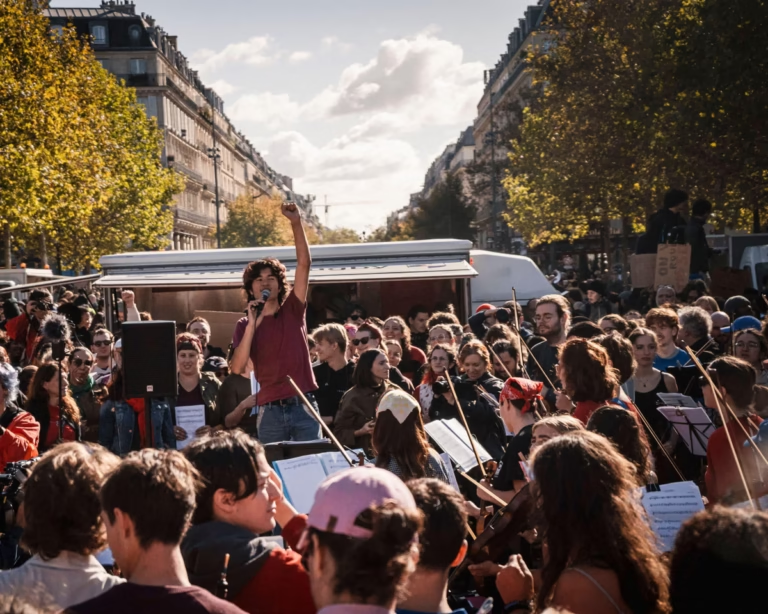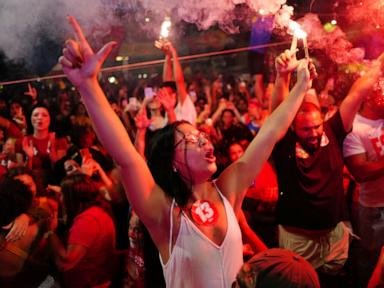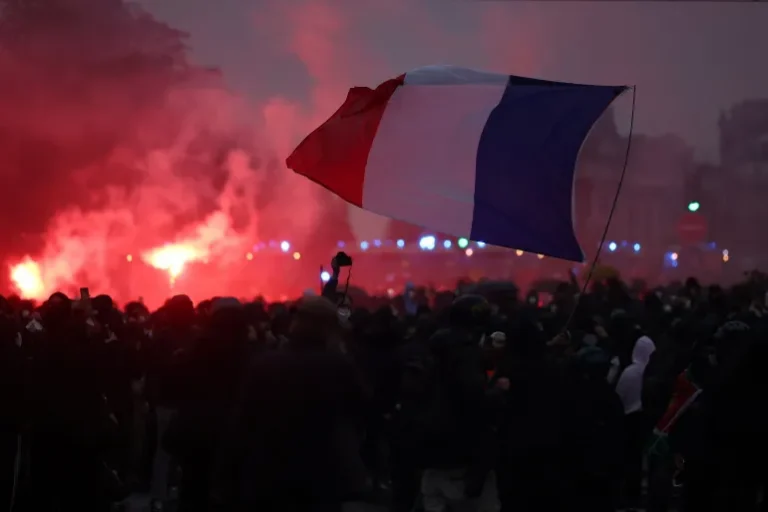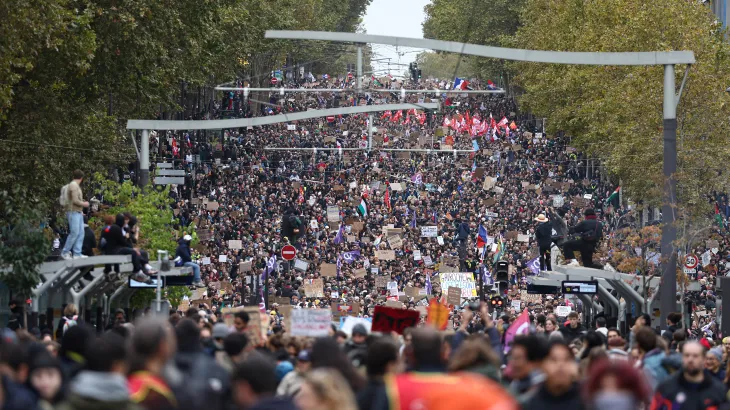
Massive protests erupted across France for a second consecutive weekend as citizens took to the streets to voice opposition to deteriorating educational conditions and the mounting cost of living. Demonstrations held Saturday saw official estimates place the nationwide turnout at 410,000, including 110,000 in Paris, though the CGT union confederation contested these figures, claiming the actual numbers were nearly double the government’s count.
In the capital, the march moved from Porte d’Italie toward Porte de Vincennes. A cheerful demonstration started at Porte d’Italie before reaching the Porte de Vincennes, along the Boulevards des Marechaux, by 5pm local time (15:00GMT), in the capital. As night fell and temperatures dropped, the mood changed, towards the end of the march.
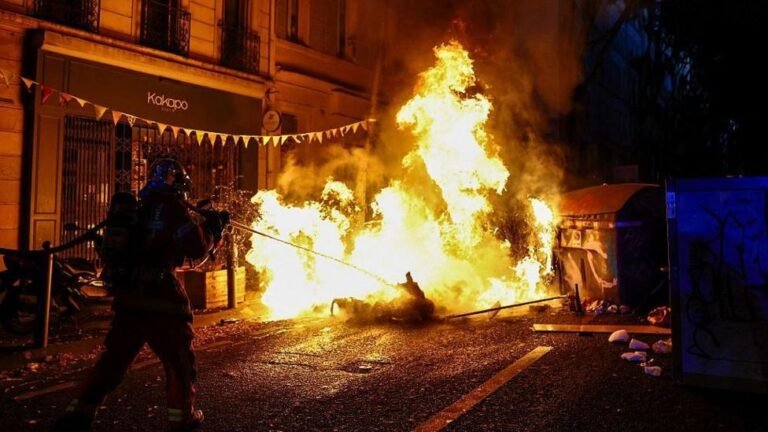
While the protest remained largely peaceful throughout the day, the atmosphere darkened as evening arrived. Police utilized tear gas and water cannons to disperse crowds, with authorities reporting that approximately 500 individuals classified as rioters engaged with law enforcement. Officials noted that while skirmishes occurred, the scale of violence was lower than that observed during the previous weekend.
Authorities implemented strict control measures, including the banning of central protest routes and the mandatory rerouting of marches to the city outskirts. Major landmarks such as the Louvre and the Musee d’Orsay shuttered, and approximately 24 metro stations were closed at the request of police to maintain security. Additionally, the Art Basel Paris event canceled its weekend schedule, and many retailers in central districts boarded up windows or hired private security. Local authorities warned that Saturday’s protest route on the city’s southeastern rim was the only one allowed after the banning of the originally negotiated central road between Place de la Bastille and Place de la Nation.
Protesters expressed frustration over the state’s restrictive tactics. Emma, a podcaster and demonstrator, described the route changes as a deliberate government strategy to discourage participation and dampen the movement’s momentum. Monica, a retired education sector worker, added that switching routes at the last minute created the impression that officials were attempting to render the protesters invisible.
The security operation was extensive, involving more than 70,000 police officers and gendarmes nationwide, marking a 20 percent increase over the previous weekend’s deployment. Elite police unit RAID was mobilized to support operations, though officials stated they were not tasked with direct crowd control. Interior Minister Laurent Nunez confirmed that nearly 1,000 arrests were made across the country, citing extreme levels of violence in certain areas. According to earlier in the day, police, More than 3,000 checks were conducted and 65 arrests made in Paris.
Demonstrations were also prohibited in city centers including Lyon, Montpellier, Rouen, and Nice. In Lyon, police dispersed 150 protesters with tear gas, while in Marseille, a union-led march was permitted under specific conditions. These events follow a broader period of unrest that began in mid-September, when students initiated school blockades to protest dilapidated buildings and teacher shortages. Other protests organised by groups besides unions were also prohibited. The ban – and the switching of the march to the city’s edge – triggered an uproar and further galvanised students to come out.
President Emmanuel Macron, who is barred from seeking a third consecutive term and will leave office in 2027, held discussions with student leaders on Friday. Despite promises to reform the Parcoursup university admission system and increase staffing, the meeting did not satisfy demonstrators, who continue to demand more concrete government action. Some demonstrators dressed all in black could be seen throwing items from the streets. Teachers, ecologists as well as nurses and union representatives were marching and dancing amid witty slogans and calls for President Emmanuel Macron’s resignation: “Too many billionaires; we are preparing the revolution”, chanted a group. “We are all antifascists,” chanted a second group, echoing a familiar slogan of Italy’s antifascist movement, young students. With student representatives calling for further mobilisation until the government presents concrete actions, but the meeting failed to defuse tensions. Inequality and Macron’s presidency, the movement has since become a focal point for wider discontent over the cost of living.
The political climate remains volatile as France approaches a presidential election in six months. The unrest has drawn significant attention to the far-right National Rally, whose leader Marine Le Pen advocates for a strict law-and-order platform. Recent polling indicates she holds a substantial lead over potential opponents. Recent polls say she’s the leading contender to be the next president by a wide margin.
During a party congress in Orleans this weekend, the National Rally confirmed the re-election of Jordan Bardella as president with nearly 99 percent of the vote. Le Pen and Bardella are scheduled to address approximately 10,000 supporters on Sunday to officially launch their presidential campaign, even as protesters outside denounced the party’s platform.
Last weekend’s protests saw more than 500,000 people take to the streets, fueled by a coalition of student organizations and remnants of the 2018 yellow vest movement. Following the intense clashes on October 17, which resulted in widespread vandalism and over 2,000 arrests, organizers have already called for further demonstrations to take place next Saturday. Protests that had been largely peaceful were marred by widespread looting, vandalism and clashes, with thousands of businesses damaged or ransacked, on October 17.