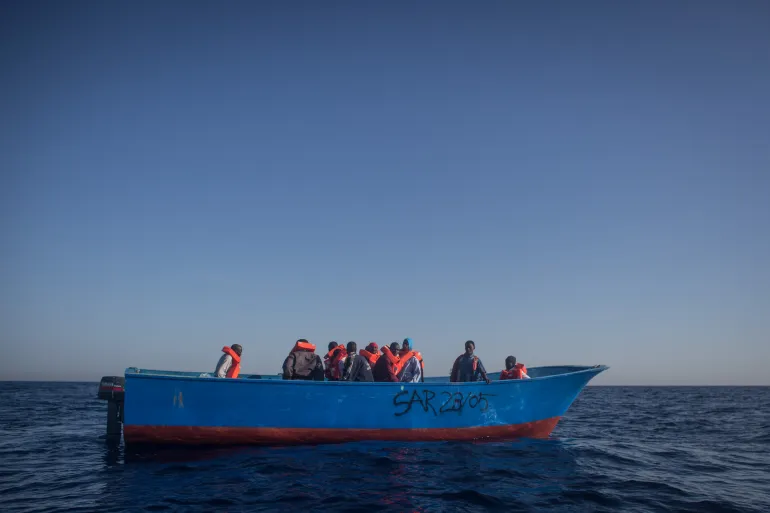
The Spanish charity Salvamento Maritimo Humanitario (SMH) has announced the postponement of its upcoming search-and-rescue mission in the Central Mediterranean. The organization stated on Wednesday that a doubling of fuel prices has made continued operations unaffordable in the region, forcing it to pivot its activity toward the waters off Valencia in southeastern Spain.
To help manage the financial strain, the group has initiated a crowdfunding campaign aimed at offsetting these increased expenses. SMH, which utilizes a converted fishing vessel for its maritime operations, is not the only organization facing such hurdles. The Spanish NGO Open Arms previously reported scaling back its own missions, citing both the surge in energy prices and Italian policies that mandate rescue vessels dock in northern ports, significantly increasing travel times and operational costs.
The Central Mediterranean route, stretching from North Africa toward Italy, remains one of the world’s most perilous migration corridors. Despite the high risk, data from the International Office for Migration indicates a notable decline in sea crossings this year. As of October 2026, approximately 60,000 migrants and refugees have arrived in Europe by boat, representing a 39 percent decrease compared to the 98,000 arrivals recorded during the same period in 2025. According to the agency, About 60,000 migrants and refugees reached Europe by boat so far in 2026, down 39 percent from roughly 98,000 over the same period last year.
However, this reduction in volume has not lessened the humanitarian toll. Official figures confirm that at least 2,292 people have perished or gone missing at sea throughout 2026. Many of these individuals embark from the Libyan coastline on inadequate, overcrowded vessels while fleeing conflict and poverty across Africa and the Middle East.
The current landscape for NGOs is further complicated by the Italian government’s stance. Prime Minister Giorgia Meloni’s administration, which maintains a staunchly anti-immigration position, has consistently argued that the presence of humanitarian search-and-rescue vessels serves to encourage further migration attempts across the sea.