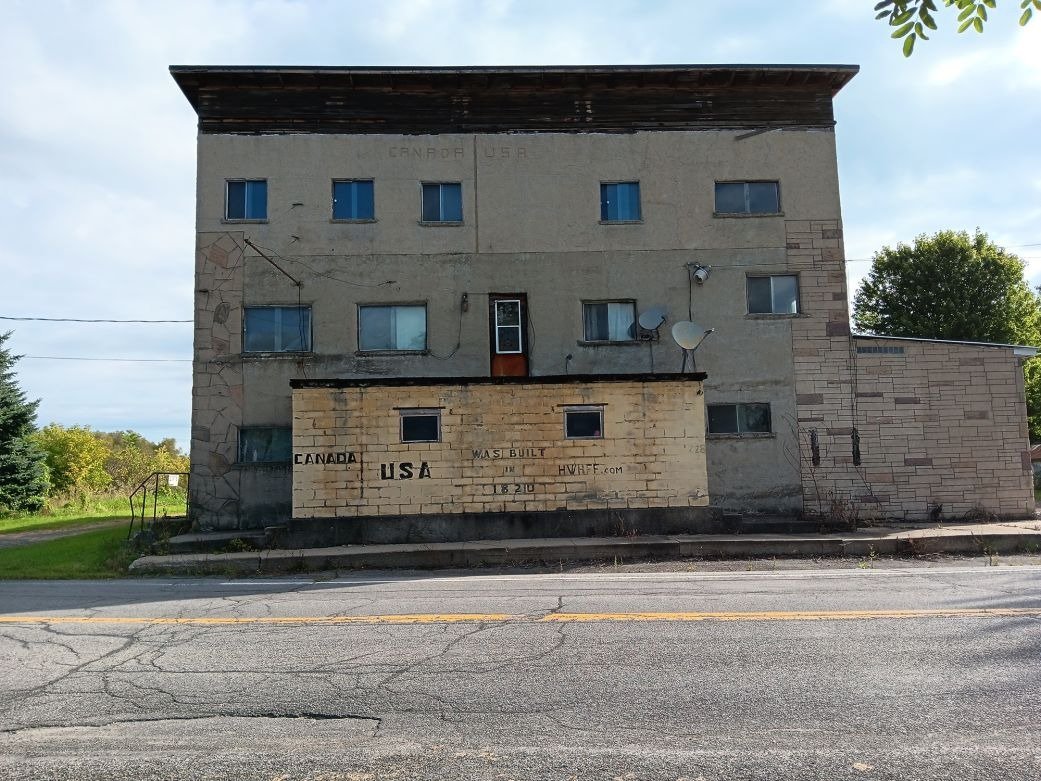
Tensions between Canada and the United States have reached a breaking point, with Ottawa describing recent trade pressures as an attack, while Washington maintains it has been exploited for years. Nowhere is this geopolitical friction more tangible than at the Half-Way House, a freight-forwarding shop where a physical line painted across the floor marks the transition between Fort Covington, New York, and Dundee, Quebec.
For owner Louis Patenaude, the 65-year-old proprietor of the three-story structure located at 228 Dundee Road and 8777 Route 132, the current trade climate feels like a political game disconnected from the reality of daily commerce. The building, which has served as a hotel and a bar under his father, Paul Maurice, before becoming a hub for cross-border shoppers, now finds its historic operational model threatened by retaliatory tariffs.
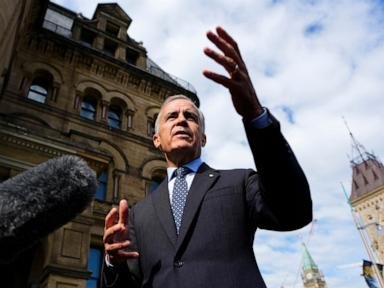
The situation stems from a total breakdown in trade negotiations late last August. President Trump responded by imposing 50% tariffs on approximately $20 billion worth of Canadian imports and threatening to double duties on Canadian automobiles and parts starting January 1. Furthermore, an executive order was signed to rename Lake Ontario as “Lake America.” In response, Canadian Prime Minister Mark Carney condemned the measures as efforts designed to hurt and divide the two nations. Canada is set to implement 50% duties on US steel and aluminum starting September 8, alongside new tariffs on construction materials, paper products, appliances, and agricultural goods.
Patenaude’s business thrives on the ease of moving items like Amazon packages, car parts, and household trinkets for roughly 3,000 customers from nearby Canadian towns. While he expects some patrons to reduce non-essential spending to avoid customs fees, he notes that these deeply integrated supply chains are difficult to unwind. Economists at the University of Toronto, including Joseph Steinberg, suggest that border communities are often insulated from the harsh rhetoric of “Buy American” or “Buy Canadian” campaigns because they rely on long-standing regional relationships.
Data from the Bank of Canada reinforces the volatility of these policies. Research from May 2025 regarding previous 25% counter-tariffs showed that retail prices for affected goods rose by about 6%, with market adjustments often occurring before tariffs were even officially implemented. Retailers frequently adjusted prices based on their expectations of how long these trade conflicts might persist.
Despite the facility’s historical significance, which includes documented tax contributions to both nations during his father’s tenure, Patenaude is looking toward an exit. He acknowledges that while he could expand by obtaining a customs broker license to handle logistics himself—a move that could be highly lucrative—the aging building requires extensive repairs. The property is currently listed for sale, with each of the two parcels in New York and Quebec priced at $350,000. The report also notes that made possible by a geographic quirk, patenaude’s business is a simple one. The report also notes that turns out, it’s convenient to have Patenaude’s place nearby if you’re Canadian and want to buy something that only ships within the US. The report also notes that friendship and mutual trust, that convenience is only possible thanks to decades of free trade. The report also notes that patenaude, 65, has roots on both sides. The report also notes that that historic relationship is falling apart, but like the building’s chipping paint and 100-year-old clapboards. The report also notes that patenaude’s small operation isn’t at the center of some of the most contested industries. The report also notes that he can’t do much about that, he said, if he loses business because everyday items get too expensive.