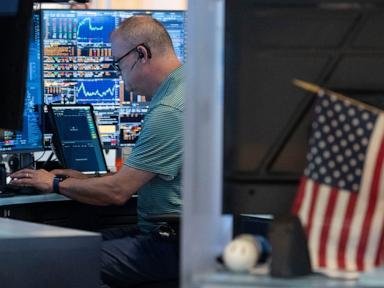
U.S. equity markets posted gains on Friday, reclaiming significant ground lost earlier in the week. A primary driver for the turnaround was a cooling trend in oil prices, combined with new inflation data that arrived largely in line with economist forecasts, offering a sense of stability despite persistent price pressures.
The S&P 500 rose 1%, putting it on track to conclude a four-day losing streak—the longest such decline since June. By 12:45 p.m. Eastern time, the Dow Jones Industrial Average had climbed 575 points, or 1.1%, while the Nasdaq composite also showed a 1.1% gain.
Energy markets provided a tailwind for the rally. Brent crude, the international benchmark, saw its price slide 2.3% to $105.12 per barrel, pulling back from highs near $110 reached overnight amid regional tensions involving Iran. This cooling in energy costs offered some relief regarding headline inflation, which remains elevated; consumers faced costs for food, gasoline, and other essentials 3.4% higher last month compared to a year prior.
The latest inflation readings have solidified trader expectations that the Federal Reserve will likely proceed with an interest rate hike during its upcoming meeting. Such monetary tightening is intended to curb borrowing, slow economic activity, and ultimately dampen inflationary pressures. Consequently, the yield on the two-year Treasury note—highly sensitive to Fed policy shifts—increased to 4.61% from 4.56% late Thursday. Conversely, longer-term yields remained stable, with the 10-year Treasury yield at 4.95%, potentially suggesting bond market confidence in the Fed’s long-term strategy.
Fed Chairman Kevin Warsh has maintained a guarded stance regarding future rate trajectories, though he previously offered some reassurance to investors. The administration, led by President Donald Trump, has advocated for lower rather than higher rates. Brian Jacobsen, chief economic strategist at Annex Wealth Management, noted that “symbolism can trump substance, even when it comes to monetary policy.”
Economic confidence remains fragile, as evidenced by a preliminary University of Michigan report showing a decline in consumer sentiment across the political spectrum. Furthermore, inflation expectations for the coming year climbed to 4.6% from 4% in the previous month. Economists view this as a concerning development, as rising expectations can initiate a cycle that further embeds inflation into the economy.
Corporate activity also moved the markets. Kroger shares climbed 2.5% following a quarterly profit report that exceeded analyst projections; the grocer maintained its full-year earnings outlook despite revising its revenue growth expectations downward. In the automotive sector, ACV Auctions surged 44.5% after Copart announced an acquisition offer of $10.50 per share. Copart, which managed over 4 million vehicle auctions last year, saw its own stock rise 1.2%.
In the technology sector, Oracle experienced volatile trading. Despite exceeding quarterly profit and revenue targets, an initial 8.5% gain evaporated as the stock fluctuated, ultimately settling down 1.3%. This movement reflects broader summer jitters regarding artificial intelligence-focused stocks and valuation concerns.
International markets showed a mixed performance. In Europe, the FTSE 100 in London gained 0.4% following stronger-than-expected U.K. economic data. In contrast, Asian markets struggled, with Japan’s Nikkei 225 falling 1.9% and the South Korean Kospi dropping 1.8%. The report also notes that clancy juror claims holdout tied exercise band around water bottle amid deliberations. The report also notes that uS strikes oil tankers, Tehran claims attacks on US-linked vessels. The report also notes that stocks are rebounding Friday and clawing back much of their losses for the week after oil prices eased off their recent spurt. The report also notes that even if prices are still rising too quickly for everyone’s liking, also helped calm the market, an update on inflation across the United States that came in close to economists’ expectations. The report also notes that which had jumped to their highest levels since May because of the ongoing war with Iran, they got help from a pullback in oil prices. The report also notes that which remains stubbornly high, that took a bit of pressure off inflation.