
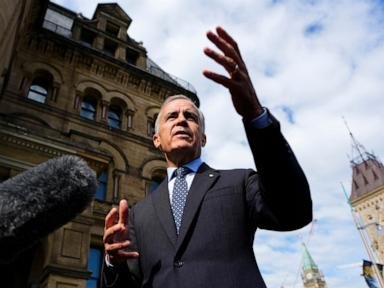
Canada serves as the largest export market for the United States, yet it has recently become the primary focus of an aggressive American trade strategy. President Donald Trump, who successfully negotiated the current North American trade framework during his initial term, now characterizes the relationship as exploitative, claiming that America has been “ripped off for 50 years by Canada.” This friction has intensified significantly since trade negotiations collapsed on August 21.
The diplomatic climate has soured over the past year, marked by the president’s provocative rhetoric regarding Canadian sovereignty and his recent executive order mandating that Lake Ontario be renamed “Lake America.” These personal and political slights have occurred alongside concrete economic warfare. Three weeks ago, the administration imposed 50% tariffs on $20 billion worth of Canadian imports, citing alleged discrimination against American automotive, dairy, and alcoholic beverage sectors.
In response, the Canadian government enacted retaliatory tariffs this past Tuesday. The president subsequently countered with a ban on Canadian motorcycles, mopeds, most alcoholic beverages, and the dairy byproduct whey, though he noted that essential goods such as bedsheets, toilet paper, and fishing rods would remain exempt from these specific measures. Analysts suggest these aggressive maneuvers create a precarious economic environment for a nation where trade accounts for 64% of total economic output, compared to just 25% for the U.S.
Despite the current volatility, international rankings continue to view Canada as an open economy. The Heritage Foundation places Canada 14th on its Index of Economic Freedom—eight spots ahead of the United States—while the Fraser Institute ranks the nation 11th globally. Oxford Economics data indicates that before this escalation, the effective tariff rate on American goods entering Canada was roughly 2.4%, significantly lower than the 5% rate the U.S. applied to Canadian products.
Much of the recent tension centers on the dairy industry. While the U.S. argues that Canada maintains protectionist policies, including tariffs exceeding 200% on certain dairy products, others note that the current trade structure was deliberately negotiated. Under the existing USMCA, Canada kept its supply management system, but in exchange, it provided American producers with greater market access. Official data shows that U.S. dairy exports to Canada increased by 11% last year, following an 8% rise in 2024, resulting in a $1.3 billion trade surplus for American farmers compared to $585 million in imports.
The broader bilateral trade deficit, which totaled $27.3 billion last year, is largely driven by the energy sector. Canada remains a vital supplier of crude oil, shipping over $85 billion worth to the United States in 2025. Experts observe that Midwestern U.S. refineries are specifically engineered for the heavy sour crude extracted from Alberta’s oil sands and cannot easily pivot to alternative sources without incurring significant costs and years of transition time.
Integration between the two neighbors runs deep: Canada directs approximately 70% of its total exports to the United States. Beyond oil, American agricultural operations rely on Canadian potash for fertilizer, and several northern U.S. communities depend on Canadian-generated electricity. Observers describe the current atmosphere as a severely strained standoff.
Administration officials indicate that a path toward resolution remains possible if Canada adjusts its agricultural tariffs. During a recent visit to Dublin, the president stated that Canada is highly motivated to reach a new agreement. Similarly, Canadian Prime Minister Mark Carney has maintained that his administration is prepared to negotiate a fair deal, though concerns persist that American demands for the surrender of certain manufacturing capacities will prove difficult for Ottawa to accept. The report also notes that wASHINGTON — Canada might seem an unlikely target for a U.S. trade war. The report also notes that rankings of the world’s most open economies usually put Canada near the top. The report also notes that he says, he sees a predator out to cheat the United States and strangle its industries, but when Trump looks at Canada. The report also notes that america has been “ripped off for 50 years by Canada,” the president declared Saturday when asked if he was considering pulling out of the three-way agreement he signed with the leaders of Canada and Mexico in late 2018. The report also notes that relations between the U.S. and Canada have deteriorated since their latest trade talks collapsed Aug. The report also notes that trump has goaded Canada’s leaders with personal attacks and portrayed the longtime U.S. ally as weak. The report also notes that he signed an executive order last month directing the federal government to change Lake Ontario’s name to “Lake America.”, after alienating the Canadian public last year by repeatedly floating the idea of making Canada the 51st state. The report also notes that each side blamed the other for the failed negotiations.