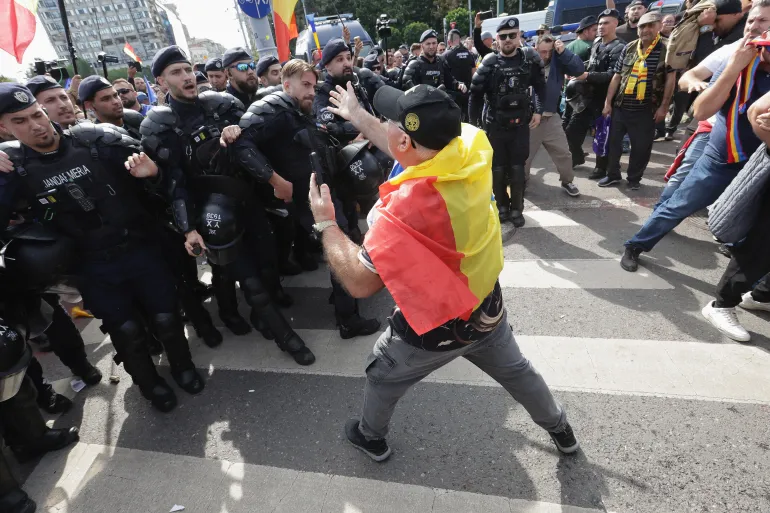
Violent clashes erupted in Bucharest on Tuesday as approximately 2,000 farmers and shepherds gathered to protest an ongoing European Union ban on live sheep exports. The restriction, implemented to combat the spread of the highly contagious small ruminant plague, has become a major flashpoint for agricultural workers facing economic uncertainty.
The situation escalated outside the government headquarters when some demonstrators began hurling rocks and metal barriers at law enforcement officers. In response, riot police deployed tear gas to disperse the crowd. According to police, 26 individuals were detained following the confrontation.
Medical authorities reported that 24 people, including both protesters and police, required treatment for injuries. While many were treated for the effects of tear gas, others suffered physical trauma, such as broken bones, with four individuals requiring hospitalization.
The demonstration was fueled by broader political frustrations in Romania, a nation of 19 million people currently grappling with the European Union’s highest inflation rate and a prolonged political crisis. Protesters carried banners demanding the resignation of the president and prime minister, reflecting deep-seated discontent with the current leadership.
Far-right elements played a visible role in the unrest. Some participants chanted the name of Calin Georgescu, a former presidential candidate currently facing legal proceedings for alleged acts against the constitutional order following the 2024 election annulment. Supporters of Georgescu had actively promoted the protest via social media.
George Simion, leader of the Alliance for the Union of Romanians (AUR), declared that his party “stands with the farmers and all working Romanians,” though he urged attendees to remain peaceful. Meanwhile, the national government characterized the event as one that “degenerated into regrettable acts of violence,” urging participants to maintain calm.
President Nicusor Dan addressed the unrest in a social media statement, condemning the “extremely serious” violence and warning against attempts to transform legitimate grievances into street conflict. This protest follows earlier demonstrations held in late July, as the livestock export ban is scheduled to remain in effect until the end of 2026.
The backdrop of this instability includes a fragile governing landscape. Following a successful no-confidence motion in May, the pro-European administration was dismantled, leaving a divided parliament unable to confirm a successor while the country implements austerity measures to manage its budget deficit. The report also notes that the rally was encouraged and supported by far-right forces, as in other protests by farmers across Europe in recent years. The report also notes that the demonstration was called by farmers and shepherd groups.