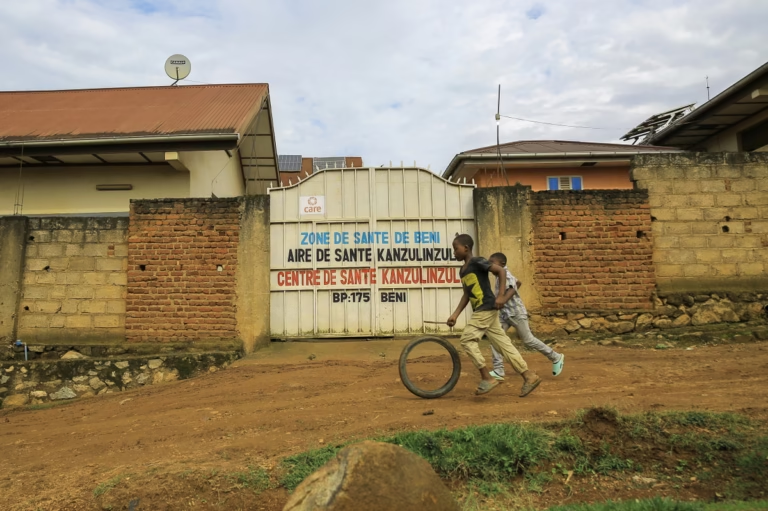
Guinea-Bissau’s health ministry has officially denied approving a controversial research project involving newborns, which was set to receive funding from the United States government and private donors. Minister of Health Quinhin Nantote confirmed on Tuesday that the government did not authorize the trial under any of the terms currently circulating in public reports. It’s “reassuring” to see Guinea-Bissau pushing back on the trial, Titanji said, adding: “A study like this one needs the highest level of ethical scrutiny.
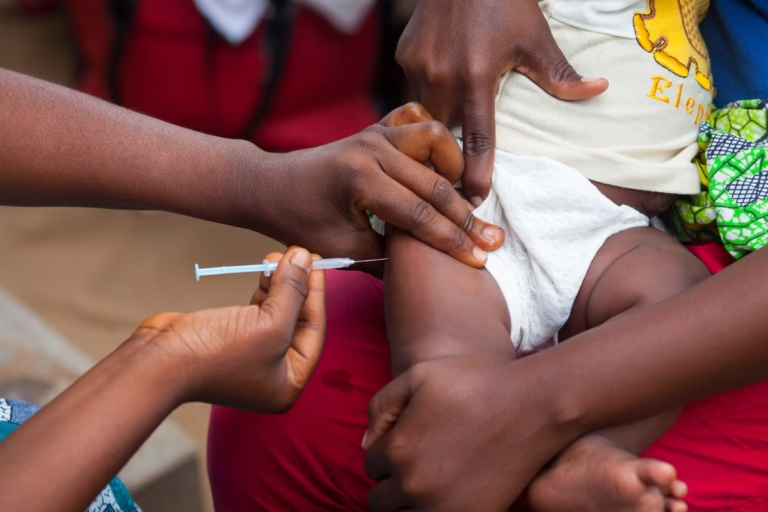
The study, championed by US Department of Health and Human Services (HHS) secretary Robert F. Kennedy Jr., was designed to enroll 14,000 infants. Under the proposed protocol, half would receive the hepatitis B vaccine at birth, while the other half would be denied immunization for the first six weeks of life. Notably, the study would not assess vaccine safety or effectiveness but would instead track “nonspecific” health outcomes, such as mortality rates and neurodevelopmental conditions. In Denmark, infants born to hepatitis B-negative parents do not receive the shot, there is widespread testing for and low incidence of the virus, and the robust healthcare system can track health outcomes and provide timely and comprehensive medical care – making it an ideal location for such a study.
The controversy escalated after members of a Danish research ethics committee voted to approve the project, believing that officials in Guinea-Bissau had already cleared the design. However, Nantote expressed surprise at these reports, emphasizing that the ministry has not sanctioned these “tests.” During a press briefing, he stressed that any human research, particularly involving children, must strictly adhere to national laws, international ethics, and formal approval mechanisms.
Nantote convened an emergency meeting with key stakeholders, including the Bandim Health Project, the National Institute of Public Health (Inasa), and the Expanded Vaccination Program (PAV), to address the situation. The Bandim project, led by researchers Peter Aaby and Christine Stabell Benn, has faced intense scrutiny regarding its methodology. Danish researcher Charlotte Strøm criticized their past work as “highly misleading,” noting that they failed to report significant findings in nearly all of their published papers and allegedly chose not to release data that contradicted their hypotheses. According to the claims made in nearly all of their papers are “highly misleading”,, Charlotte Strøm, a Danish researcher who has co-authored research showing that Aaby, Stabell Benn, and their co-authors had no significant findings in 24 out of 25 studies and that they’ve chosen not to publish research that may not support their viewpoints. “When researchers operate like this and abandon proper methodological rigor, they literally decide on the results themselves, and that is not science,” Strøm said, calling it “problematic, questionable [and] unethical”. According to kennedy has repeatedly praised their work, which he, Shows that after vaccination, “you can have mass injuries, and catastrophic injuries, and they’re hiding in plain sight”.
The proposed experiment has been widely criticized as unethical and neocolonialist. Critics, including Emory University researcher BK Titanji, argue that since a safe, effective vaccine has been available for decades, withholding it from newborns in a resource-constrained nation is unacceptable. Titanji highlighted the lack of transparency in the application process, noting that researchers should provide formal documentation of local approval, which has remained absent. Which is newborn babies, in a country that is resource-constrained.”, you are going to be conducting a study on the most vulnerable population. She had to include extensive documentation in her application – and it was a survey, not medical research on human subjects, she said. “I can’t come to Emory’s [institutional review board] and just be like: ‘I got permission from Cameroon, when Titanji recently applied for approval of a collaborative study in Cameroon. Experts have decried the African experiment as “ horribly unethical and cruel ”, “ neocolonialist ” and “ damaging ”.
The US government’s commitment to the project remains unclear. While reports indicate that the Centers for Disease Control and Prevention (CDC) allocated $1.6 million in funding for the trial—to be matched by the Pershing Square and Bluebell foundations—the HHS issued a brief statement asserting that the study has not been approved. The agency did not provide further clarification. Even after reporting indicated that the US Centers for Disease Control and Prevention (CDC) has again set aside $1.6m for funding for the trial this year, to be matched by private funding from the Pershing Square Foundation and the Bluebell Foundation, it is unclear whether the US plans to move forward with the study. The agency has not responded to questions about the trial.
Internal issues have also plagued the approval process in Denmark, where at least four members of the ethics committee resigned following the fast-tracked vote. The committee had to alter its own rules to accommodate the study, as randomized controlled trials were previously outside its scope. Despite requests from committee members, officials provided no documentation confirming that Guinea-Bissau had sanctioned the research.
Colette Delawalla, head of the non-profit Stand Up for Science, praised the Guinea-Bissau government for opposing the project, stating that the nation’s sovereignty must be respected. She pointed out that it would cost only $13,200 to provide birth-dose hepatitis B vaccines to all newborns in the country through UNICEF and Gavi. The World Health Organization has similarly offered support to help the nation scale up its immunization programs rather than prioritize this controversial trial. She added. “This is not muddy water: we can use Black babies to further pseudoscience or we can save children’s lives with a 20-cent shot.”, everyone involved should work together to ensure that every baby in Guinea-Bissau receives the birth dose of the hepatitis B vaccination.
As of now, the study is effectively canceled or suspended according to earlier comments by Nantote. The research team, including Aaby, Stabell Benn, and Frederik Schaltz-Buchholzer, did not respond to requests for comment regarding why the ethics committee was led to believe the trial had received local clearance or why it could not be conducted in Denmark, where high vaccination rates and robust healthcare systems are already established. She added: “I believe there is serious cause for concern.”.