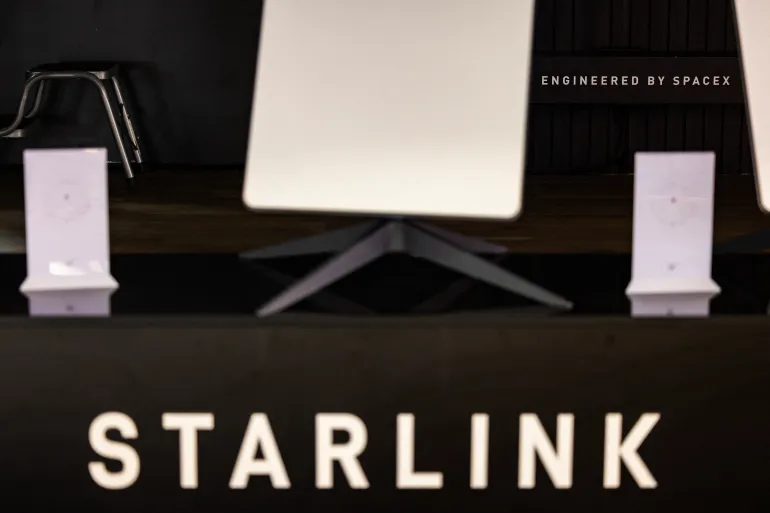
President Donald Trump has stated that Elon Musk restored Ukraine’s access to Starlink, the satellite internet service essential for Kyiv’s ongoing defense and air operations against Russia. When questioned about reports that he pressured Musk to lift recent restrictions, Trump remarked, “I don’t want to comment on it, whether I called or whether somebody else called, doesn’t make any difference, I guess. The bottom line, he put it back.” On Thursday, Trump declined to discuss a report from The Wall Street Journal that he had called Musk and instructed him to end restrictions on Ukraine’s connection. According to the news outlet, Starlink services returned to normal following the call. Or the president’s right-wing allies, might seek to leverage such technology to pressure Ukraine into complying with US demands, the Starlink speed caps and restrictions have also raised concerns that Trump.
The controversy emerged on October 13, when Ukrainian officials reported that sudden connectivity constraints had hampered their military’s operational capabilities. Although the service was subsequently restored, reports indicate that internet speeds and connectivity remain inconsistent. The source of the service limitations remains a subject of debate, with both Musk and the current U.S. administration deflecting responsibility. Connectivity has reportedly remained spotty, though the system came back online.
Addressing claims of his own involvement, Trump told reporters, “Well, I don’t know if it was anybody, but it wasn’t me, and I don’t think it was Elon.
And from what I understand, it’s the same as it’s always been.
Conversely, Secretary of State Marco Rubio noted this week that oversight of Starlink speeds is governed by private commercial agreements, stating, “The bottom line is that that is governed by a private commercial contract as to how their stuff can be used and what speeds they’ll allow it to be used at.”
Musk has consistently denied personal control over military-grade service access. In an October 14 social media statement, the tech mogul claimed that Starshield—the military version of the satellite system—is strictly controlled by the U.S. government. “Any limits on speed or usage are decided by the US military and ultimately POTUS,” Musk asserted.
These service fluctuations have fueled concerns regarding potential leverage used by the Trump administration to influence Ukraine’s strategic decisions. Relations between Trump and Ukrainian President Volodymyr Zelenskyy remain strained, with Trump frequently describing the Ukrainian leader as “difficult” and blaming him for the war’s persistence. Trump has previously suggested that Ukraine’s interest in NATO membership was a primary catalyst for the conflict, which began with the Russian invasion in February 2022. After Putin launched a full-scale invasion of the Eastern European country, ukraine has been locked in a slow-grinding war with Russia since February 2022. According to in 2025, for instance, Trump blamed Ukraine’s ambitions of joining NATO. “ I actually think that that was the thing that caused the start of the war,” he, At the time.
Public rhetoric from the White House regarding the war has been critical, with Trump recently posting on Truth Social that Zelenskyy “doesn’t want to end this war, and probably never did.” These comments follow widespread criticism from Democrats and some Republican figures concerning the administration’s softening stance on Russia.
As the administration navigates domestic political fallout from rising fuel costs—a byproduct of U.S. involvement in the conflict against Iran—it has simultaneously moved to permit the purchase of Russian diesel and reduce sanctions on the Russian energy sector. Amidst these shifting geopolitical dynamics, Trump has expressed an interest in holding a potential trilateral summit with Vladimir Putin and China’s Xi Jinping, an unprecedented diplomatic maneuver for the three powers.