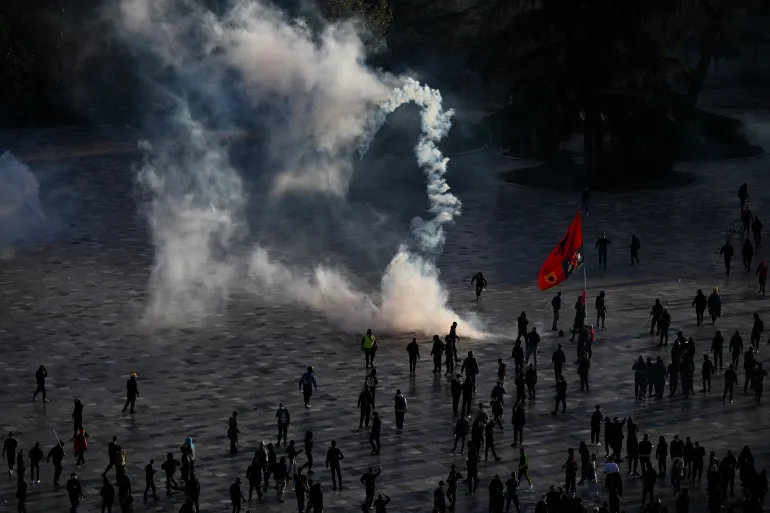
Thousands of demonstrators swarmed the streets of Tirana on Saturday, marking a significant escalation in ongoing anti-government protests. The rallies, which have persisted in the Balkan nation since mid-October, turned violent as police deployed water cannons, tear gas, and rubber bullets to control the crowds. Authorities confirmed that more than 300 individuals, including both civilians and law enforcement officers, sustained injuries during the chaotic confrontations. Thousands of people had heeded calls from organisers for students and others around Albania to attend the rally.
Public frustration, initially sparked by poor conditions in local schools and the rising cost of living, has evolved into a broader movement against systemic corruption. Demonstrators are increasingly calling for the resignation of Socialist Prime Minister Edi Rama. The atmosphere in the capital was tense throughout the day, with police implementing rigorous security checks on vehicles entering the city to prevent further unrest. With checks being carried out on cars heading to the city, local media reported, police had introduced heightened security around the capital on Saturday.
The Ministry of Education served as a flashpoint for Saturday’s activity, where protesters threw stones and ignited garbage bins near the building. The movement has drawn support from a diverse coalition, including university professors, artists, and various opposition groups. While some participants expressed disdain for the current administration, others directed criticism at the broader political landscape, including opposition leader Sali Berisha. With some also seen holding signs decrying Rama’s opposition, centre-right leader Sali Berisha, protesters have blamed the entire political class for the crisis.
Antigovernment sentiment in Albania has been simmering since May, following revelations regarding a luxury hotel project involving the family of United States President Donald Trump. Prime Minister Rama has characterized the recent surge in violence as the work of “foreign actors,” specifically accusing Russia and Iran of orchestrating online disinformation campaigns to destabilize the country.
In a symbolic attempt to de-escalate, the prime minister’s office placed red cushions outside the government headquarters to signal a willingness to engage in dialogue. The gesture was short-lived, however, as protesters ultimately set the cushions on fire. Despite the intensifying clashes and dozens of arrests, the movement shows no immediate sign of relenting as participants continue to challenge the current political leadership.