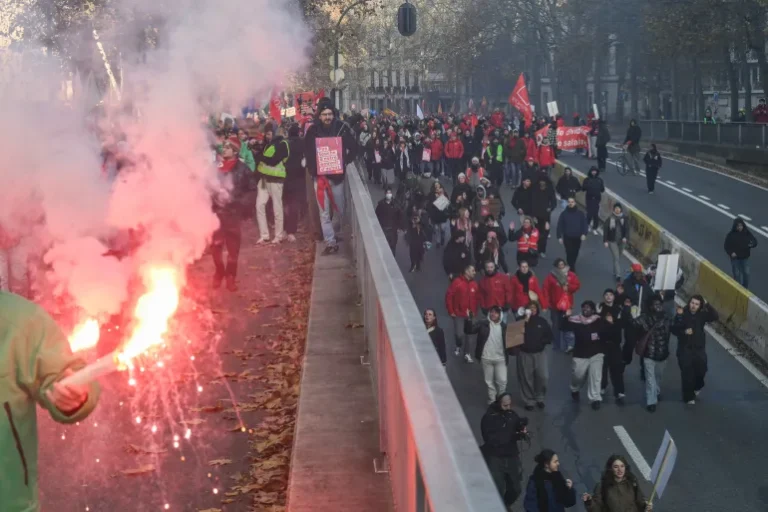
France is grappling with severe political turmoil, marked by crippling public debt, massive social unrest, and a President Emmanuel Macron with just six months left in his term. Six consecutive weekends of demonstrations have erupted over soaring prices, worsening public services, and alleged police brutality. Student-led protests have rapidly escalated into widespread looting and clashes on urban streets, raising questions about the forces driving the unrest ahead of pivotal presidential and parliamentary elections. You see them at demos all over Europe. There is supposed to be equality in France.
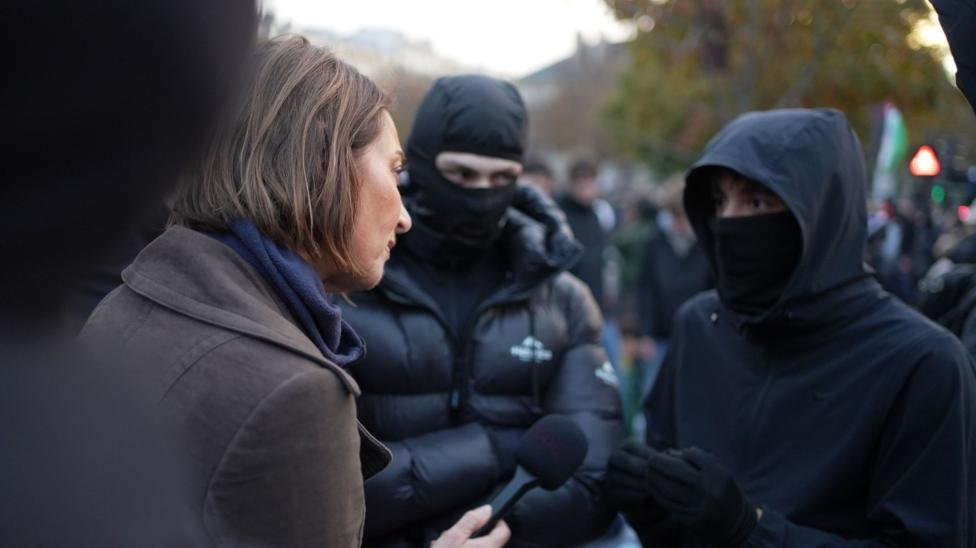
President Macron has publicly attributed the violence to “delinquents” and “ultra-left groups” whose explicit goal, he claims, is to bring down the French Republic. However, former police commissioner Michel Klein downplayed the radical left’s potential to overthrow the government, noting that while anarchists and far-left extremists may harbor the desire to destroy the Republic, they lack the organizational capacity to do so. Intelligence estimates place the number of ultra-left activists in France at around 5,000. That’s quite a claim â and one that needs examining. The left in France blames the centre and right for the cost-of-living crisis that’s making French people so upset and angry. And how organised and dangerous are they. Katya Adler talking to a protester. According to le Monde newspaper has an article, external it is constantly updating to investigate a rising number of, Of protester injuries. Since then, the French authorities are trying to tightly manage demos. You don’t achieve anything,” one of them tells me. “It’s the only way to get our voices heard, without violence. You need qualifications to get a decent job.
The physical and economic toll of the ongoing unrest has been substantial. Heavy police presence during recent demonstrations has seen over 1,000 officers injured. On the side of the demonstrators, young protesters have suffered broken bones, and two individuals reportedly lost hands during altercations involving police stun grenades. The French Insurers Federation estimated that property and shop damage from a single day of severe rioting on October 17 amounted to approximately €207 million (£175.5 million). The French Insurers Federation estimates damages to shops and private property on 17 October alone – the day of the biggest riots – came to around â¬207m (£175.5m). Stun grenades and tear gas the officers had to hand, they were no match for the batons. They were keen to downplay the rioting but – again â would only speak if they could remain anonymous.
During late-afternoon demonstrations, masked agitators frequently emerge from side streets as daytime marches wind down and riot police mobilize. Clad entirely in black with ski masks or balaclavas to conceal their identities from law enforcement, these individuals form what is known as the Black Block. Rather than a formal organization, the Black Block represents a decentralized protest technique used by diverse individuals, ranging from hard-left anti-capitalist activists to unaffiliated local youths who use the cover of anonymity. They say, to hide their identity from police), my best bet was to head out into the protests and try to approach people dressed in all black and ski masks or balaclavas (worn. We come from an area with a bad reputation.
In the midst of recent kettling maneuvers by riot police, several young men from outer-city housing estates defended their aggressive tactics. Refusing to identify themselves, they explained that their aggression stems from deep social neglect, failing local infrastructure, and a lack of employment opportunities. They asserted that non-violent measures fail to generate government attention, claiming that force remains their only viable outlet, while denying any formal links to organized left-wing political entities. We discover, come from the sprawling housing estates common on French city outskirts – the banlieues – associated with deprivation, unrest and second or third generation immigrant families, these young men.
Hard-left student activists operating within the demonstrations voiced similar frustrations while seeking to distance themselves from pure vandalism. Speaking anonymously, two masked students acknowledged that violent acts damage public perception of their movement, yet argued that minor property destruction pales in comparison to what they characterize as systemic state violence and police brutality, such as the tactical use of pepper spray against student crowds. They don’t much like what they call mainstream media. Earlier, I had spotted two hard-left student activists, standing masked on top of a bus shelter, above the thronging crowd of protesters waving banners sporting the red anarchist sign and the symbol for the Antifa (anti-fascist) movement.
A 17-year-old activist using the pseudonym Starflix, who operates within the Black Block with his parents’ knowledge and support, detailed the specific tactics employed on the frontlines. Starflix demonstrated homemade paint bombs—eggshells filled with paint and sealed with tape—designed to strike the visors of riot police helmets, forcing officers to lift their protection and obscure their vision. Activists also collect street paving stones and rocks to hurl at heavily armed police lines. We saw would-be rioters vastly outnumbered, glass bottles and homemade paint bombs at the ready to throw at police, towards the end of one of the protests this month. As we were being forcefully kettled in by police, I tried to talk to would-be rioters. Few wanted to engage but I then met 18-year-old Nas (not his real name) and friends.
Starflix stressed that the Black Block is not a monolithic group but a shared tactic that encompasses both politically motivated anti-capitalists seeking political pressure and opportunists taking advantage of the chaos to commit theft. He added that while participants fear injury or arrest, they are far more terrified of a future governed by extreme social inequality. To coordinate movements and evade police traps, these groups rely heavily on encrypted communication platforms such as Telegram and Signal, supported by tips circulated on left-wing websites and Instagram pages.
A veteran Black Block activist dismissed official narratives claiming the movement operates under a centralized command structure, asserting that French intelligence services are fully aware of its fragmented nature.
According to the activist, individuals simply show up to demonstrations, put on black clothing, and act independently based on a shared rejection of the current socioeconomic order. He also rejected allegations of alignment with mainstream political figures, explicitly denying links to Jean-Luc Mélenchon’s France Unbowed (LFI) party, which he labeled as part of the capitalist system. We’re viewed as part of an establishment many of them despise.
Addressing the underlying goals of the movement, the veteran activist maintained that the primary objective is not the destruction of France as a nation, but the dismantle of a system that leaves increasing numbers of citizens unable to afford basic necessities. He warned that public anger will continue to manifest violently on the streets as long as economic hardship and state indifference persist.
The ongoing social volatility has also drawn far-right vigilante groups to the periphery of protests across multiple French cities. Claiming a mandate to “protect French streets,” these right-wing elements add another layer of friction to an already volatile security environment, highlighting the intense polarization gripping the country ahead of the upcoming presidential vote.