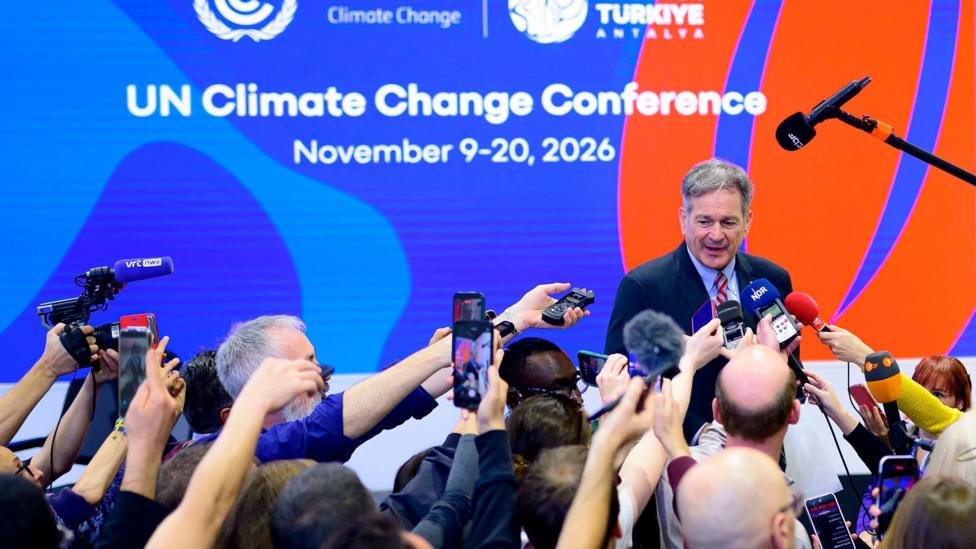
Negotiations at the COP31 UN climate summit in Turkey have ground to a halt, resulting in an overnight suspension after the event stretched more than 24 hours beyond its scheduled conclusion. Delegates from nearly 200 nations remain unable to reach a consensus on a new global climate agreement, a requirement for any successful outcome under the UN framework.
A significant point of contention involves the lack of explicit language regarding the reduction of global fossil fuel demand in the current draft. A coalition including the European Union and several Pacific island nations is actively resisting the proposal, while Panama’s Environment Minister is pressing for firm commitments on fossil fuels to be included in the final text. Addressing these concerns, EU Climate Commissioner Wopke Hoekstra stated on Saturday that unless the bloc secures “what is needed in terms of climate action… then there’s no deal.”
Financial disagreements also persist, specifically regarding a push from the Africa Group to secure increased funding for climate adaptation. The European Union has signaled its opposition to these demands, further complicating the path to a consensus. As the impasse drags on, many negotiating teams are being forced to reschedule their return flights from Sunday to Monday, signaling that an immediate resolution remains elusive. Negotiating teams due to fly out on Sunday morning are now moving their flights to Monday in a sign that a deal is not yet in sight.
If a consensus cannot be reached, the summit faces the rare prospect of ending without a deal, requiring the negotiations to be reconvened next year—an outcome that has occurred only once since the COP process began in 1995. There is also the logistical risk that as delegates depart, the summit may lose the required number of participating nations to ratify any formal agreement. This has only happened once before since countries started holding COP climate meetings in 1995.
Despite the deadlock, UK Energy Secretary and chief negotiator Miatta Fahnbulleh expressed optimism regarding the prospects for a resolution. She described the proceedings as “difficult negotiations” but noted that discussions remain productive. The UK delegation continues to push for a viable outcome, with Fahnbulleh confirming her team is working throughout the remaining hours to facilitate an agreement between the opposing parties. The UK is pushing hard for an outcome and we will keep working in the coming hours to bring countries together.