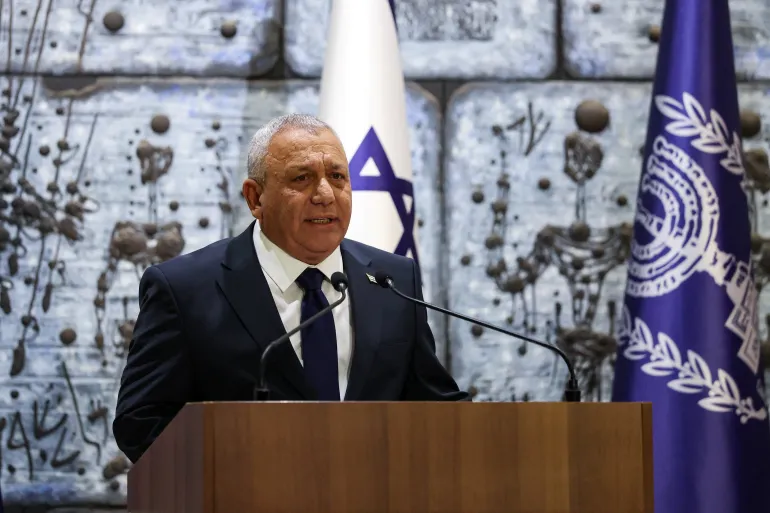
Gadi Eisenkot, the political leader currently tasked with assembling Israel’s next government, has leveled strong accusations against caretaker Prime Minister Benjamin Netanyahu. Eisenkot claims that Netanyahu and his political allies have orchestrated a “racist and violent” campaign against the nation’s Palestinian minority throughout the recent election period. They have faced a racist and violent campaign of delegitimisation fuelled by the outgoing prime minister and his circle for political reasons,” Eisenkot wrote on X, since the start of the election campaign.
Highlighting the demographics of the state, Eisenkot noted that Arab citizens comprise 21 percent of the population and are an essential part of the national narrative. In a social media post, he criticized the ongoing efforts to smear these communities, labeling such tactics as an “anti-state act” that undermines the principle that a prime minister must serve all citizens, regardless of their voting history.
The criticism arrives during a tense political deadlock following the October 27 national elections. Eisenkot’s four-party alliance secured 48 parliamentary seats, while Netanyahu’s coalition of right-wing and religious parties claimed 53. Both remain below the 61-seat threshold required for a majority, despite Arab-led parties achieving a record 19 seats in the legislature.
Netanyahu has frequently targeted these Arab-led factions with unproven allegations of electoral fraud, assertions that have been officially rejected by Israeli electoral authorities. Furthermore, the caretaker leader has repeatedly attacked these parties for failing to designate Hamas as a terror organization following the October 7, 2023, attacks, even though the leadership of those Arab-led parties publicly denounced the assault.
Eisenkot emphasized that while voters and politicians may disagree with or even harbor distaste for the political stances held by representatives of Arab parties, the systemic slander of an entire demographic is unacceptable. Despite the backing of Arab-led parties to unseat him, Eisenkot has rejected forming a coalition directly with them, instead pursuing a 61-seat path that involves negotiations with the ultra-Orthodox Shas and United Torah Judaism parties. “One can disagree with the representatives of the Arab parties, and one can even feel deep revulsion toward some of them, but one cannot, should not, and I will not allow an entire sector to be slandered,” Eisenkot said. However, Eisenkot has ruled out forming a government with those parties, which would give him a 67-seat bloc.
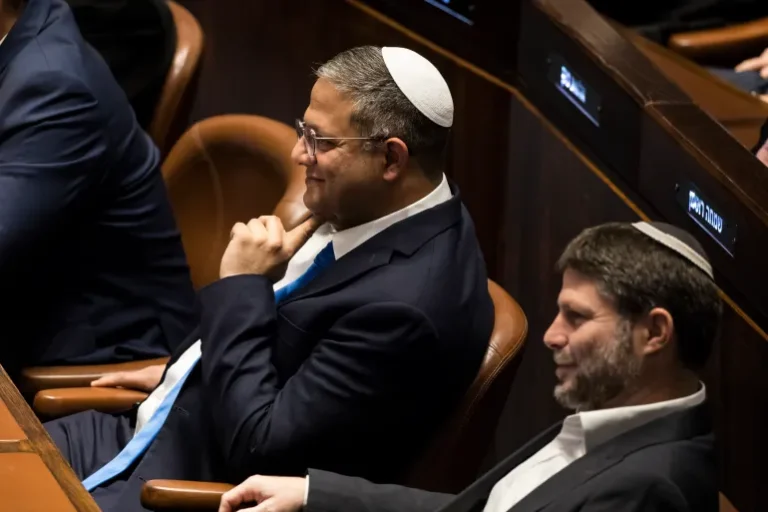
As he navigates the six-week window to form a governing coalition, Eisenkot has expressed urgency, noting that failure to do so would be a significant mistake. He has also remained open to including both Netanyahu and the far-right Finance Minister Bezalel Smotrich in a potential emergency government.
Beyond domestic politics, security remains a primary concern.
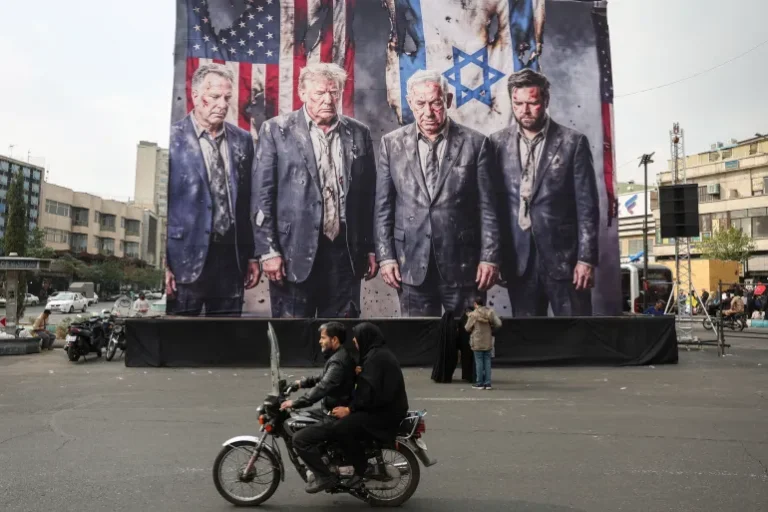
Reports indicate that Netanyahu is weighing possible military action against Iran. Eisenkot, who served as Israel’s military chief from 2015 to 2019 and sat as an observer in the war cabinet for the first eight months of the conflict in Gaza, has urged Netanyahu to avoid any unnecessary escalations. Eisenkot confirmed he met with the prime minister and his military secretary on Thursday to review the security situation. Netanyahu weighs renewed strikes on Iran.