President Volodymyr Zelenskyy has alleged that speed limitations on Starshield—the military-grade version of Starlink’s satellite internet—are directly hindering Ukraine’s defense efforts against Russian forces. According to the president, these restrictions have remained in place for five days, leaving his forces vulnerable during a surge of aerial bombardment. While Starlink has attributed these connectivity issues to technical malfunctions, Ukrainian leadership has explicitly rejected this explanation.
The impact of these disruptions is reportedly severe, with Zelenskyy noting that Russian forces are actively targeting energy substations using Shahed drones. “Many of these strikes are getting through because restrictions on the operating speed of Starshield terminals along the front line and in the temporarily occupied territories are still there,” he posted on X.
This marks the second instance of such connectivity outages in recent weeks.
SpaceX, owned by Elon Musk, has denied intentionally restricting speeds, though Musk recently stated that the United States government exercises control over the Starshield service.
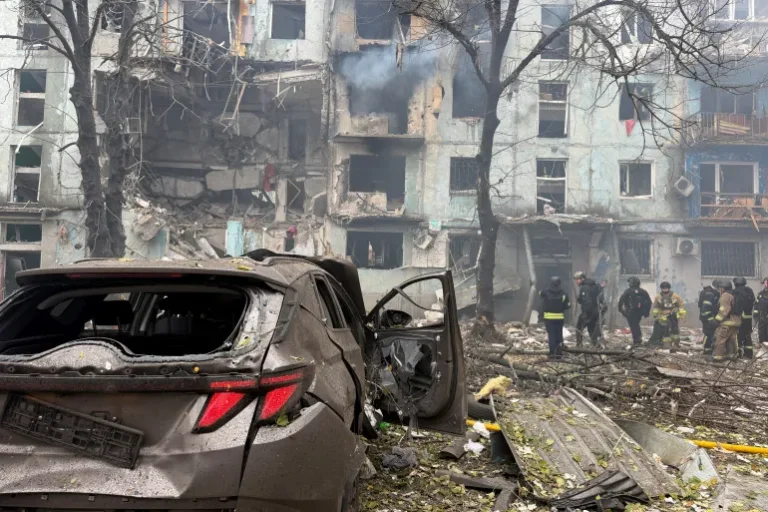
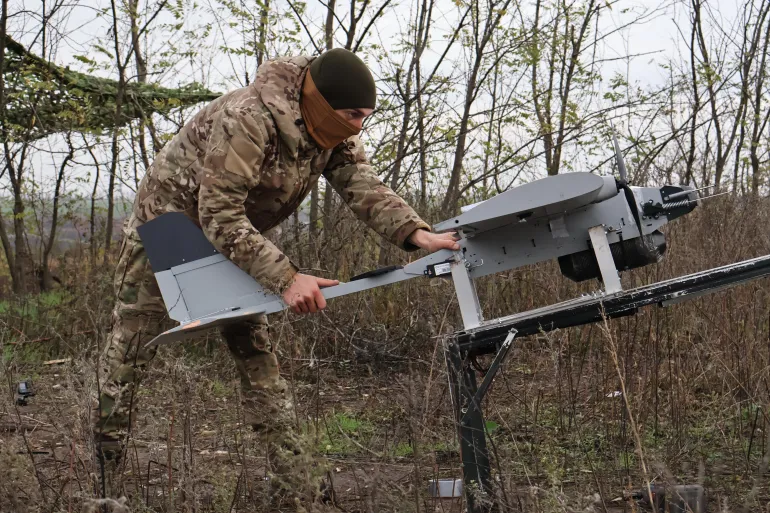
The battlefield situation remains volatile, with Ukraine’s military reporting it intercepted 106 of 132 drones launched by Russia overnight. Despite these interceptions, significant damage occurred. In the northern Koriukivka region, a drone strike on critical infrastructure resulted in two fatalities. Meanwhile, an energy facility in Odesa was hit, causing power outages for 41,000 households, according to the DTEK energy provider.
Reciprocal strikes have also escalated. Russia’s Defence Ministry confirmed it launched operations against Ukrainian military airfields and munitions depots. Within Russia, local officials in the Taganrog region reported that a Ukrainian drone strike killed an electrical engineer and left four others injured. Additionally, a drone attack in Nizhnekamsk resulted in six injuries, with significant damage reported to residential and industrial structures in the wider Trans-Kama region of Tatarstan.
Beyond the immediate kinetic conflict, diplomatic tensions remain high. US negotiators have been visiting both Kyiv and Moscow to pursue ceasefire possibilities, although friction exists regarding Ukrainian strikes on Russian oil refineries. Zelenskyy revealed that US officials had proposed a scenario involving a withdrawal of Ukrainian forces from the eastern Donbas region in exchange for NATO membership.
As international focus shifts toward a planned meeting in Shenzhen between Vladimir Putin, Donald Trump, and Xi Jinping, Ukraine has dismissed Russia’s ongoing rhetoric regarding a new European security architecture. Foreign Minister Andrii Sybiha sharply criticized Putin’s ambitions, stating, “In his dreams, he sees himself in Yalta in 1945. The problem is that to put forward ideas of this magnitude, you first need to win a world war.” Which saw the US, UK and former Soviet Union divide Germany and establish the United Nations, analysts have compared the meeting to the Yalta conference of 1945. “Putin is throwing around ideas about reshaping the European security order.