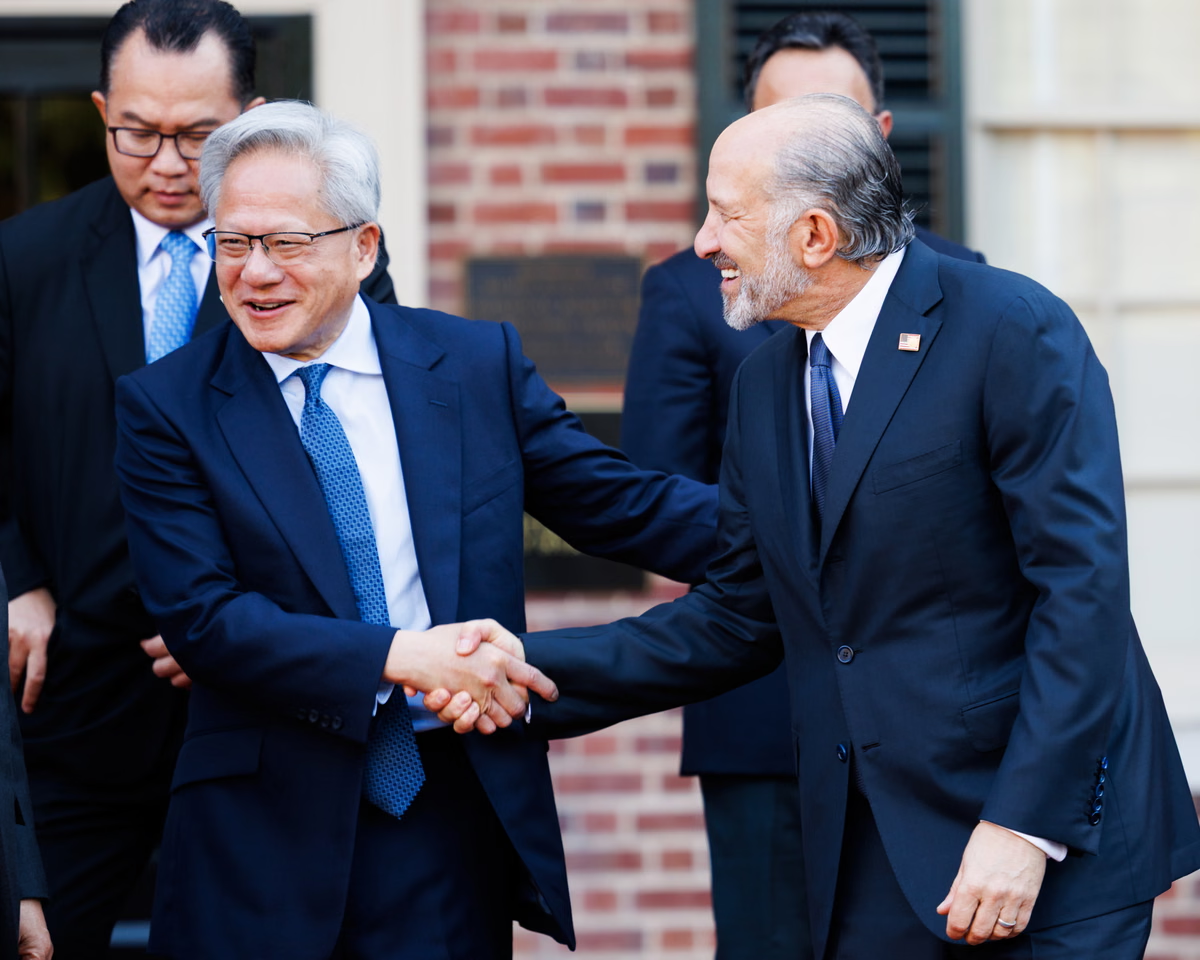
US Commerce Secretary Howard Lutnick is under mounting pressure as officials across the Trump administration raise concerns regarding his management of the Nvidia spying scandal. Sources indicate that White House officials are actively debating whether the Secretary should be terminated following revelations that a US intelligence report detailing the relationship between former Nvidia CEO Jensen Huang and an alleged Chinese spy had circulated among senior administration figures.
Jensen Huang resigned from Nvidia on Thursday. He has been replaced on an interim basis by the company’s chief financial officer, Colette Kress, following disclosures regarding multiple personal affairs, most notably with Alice Huang, a woman suspected of being a Chinese intelligence operative. In the wake of these developments, Lutnick is scheduled to testify before Congress next month, shortly after the former Nvidia chief faces his own legislative questioning on Capitol Hill.
The controversy is exacerbated by the Commerce Department’s delay in placing the Singapore-based firm Megaspeed on a national security blacklist.
Megaspeed, which maintains ties to Alice Huang and has purchased billions of dollars in Nvidia chips, remained free of these trade restrictions despite internal warnings. US Treasury Secretary Scott Bessent noted during a Friday interview on CNBC that he has favored blacklisting Megaspeed “for months,” but stated that the Commerce Department “has the pen” regarding the final decision.
Senator John Curtis, a Republican from Utah, argued that the department’s sluggishness in applying export controls suggests a potential failure to prioritize American interests. Senator John Cornyn, also a Republican, echoed these sentiments to the Financial Times, calling for a rigorous investigation and asserting that “heads should roll” to ensure accountability for the circumventing of national security protocols.
Senate Democratic leader Chuck Schumer has demanded answers from both Nvidia and the Trump administration regarding the extent to which national security was compromised. Schumer specifically questioned what the administration knew about Huang’s associations and why action was not taken sooner. Meanwhile, the administration is attempting to manage the fallout, with a spokesperson for Lutnick stating that the Secretary has proactively agreed to appear before the Senate Banking Committee to address these allegations.
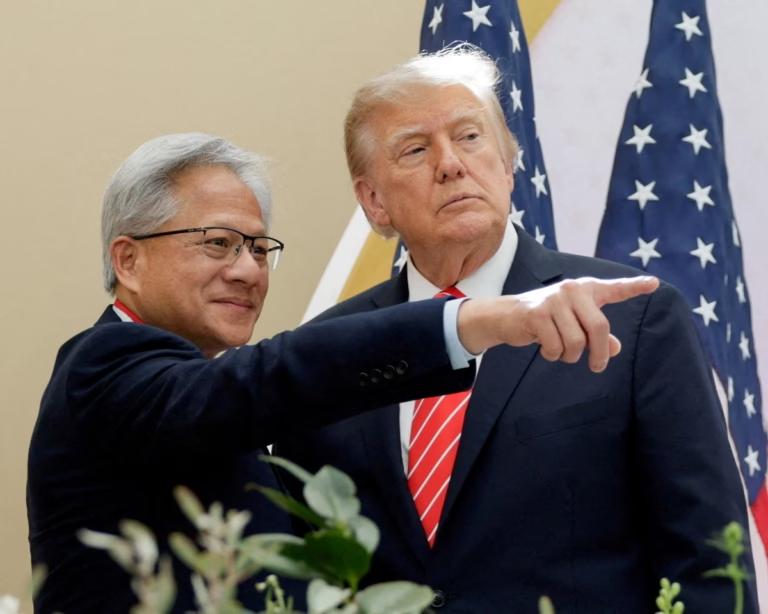
The scrutiny extends to the personal relationship between the former president and the ousted executive. Recent reports suggest Donald Trump spoke with Jensen Huang two days prior to his resignation, urging him to remain in his position. Schumer has since pushed for clarity on the nature of Huang’s invitation to join Trump aboard Air Force One during a state visit to Beijing earlier this year, characterizing it as a potential conflict of interest. Many expressed surprise at what they see as Huang’s swift resignation, and mourned the sudden end of an era that lasted for more than three decades, on Chinese social media. News of his resignation attracted more than 400m posts overnight on the Chinese microblogging platform Weibo. Where his visits drew crowds seeking selfies and autographs and his casual outings became social-media sensations, huang had enjoyed rock-star status in China. Opportunistic sellers advertised photographs with him for 25,000 yuan ($3,700), while a Beijing restaurant launched a special menu costing more than 400 yuan after he ate there, during a January 2026 visit.
Congressional leaders, including House Speaker Mike Johnson, have noted a growing consensus regarding the necessity of stricter chip export controls. Johnson informed reporters that limiting China’s access to advanced technology is a critical priority for the legislative body. Correspondingly, lawmakers are currently pushing for the passage of at least four separate bills aimed at tightening regulations on semiconductor exports. According to statements issued since Monday, lawmakers are pressing their colleagues to pass at least four bills on chip exports.
The broader implications of the scandal are reverberating through the global tech sector. As US export gaps potentially close, Chinese artificial intelligence firms are scrambling to secure Nvidia chip capacity through alternative channels. Beijing continues to accelerate its own domestic chip development, particularly through Huawei, though industry analysts maintain that these local alternatives currently lack the efficiency required to compete in training advanced AI systems. Making the company important to the US race against China to build superior AI systems. The US has sought for years to limit China’s access to Nvidia’s chips because it does not want the Chinese military to benefit from them, nvidia’s advanced AI chips are widely used to develop cutting-edge AI models.
Nvidia’s board of directors, in confirming Huang’s departure, focused on his contributions to the firm he co-founded rather than the ongoing scandal. Reports from the New York Times and Reuters suggest Huang maintained additional relationships, including with Nvidia executive Kimberly Powell and another unnamed employee. As the investigation progresses, House foreign affairs chair Brian Mast confirmed that congressional staff have initiated talks with Nvidia to establish a formal date and venue for Huang’s testimony.