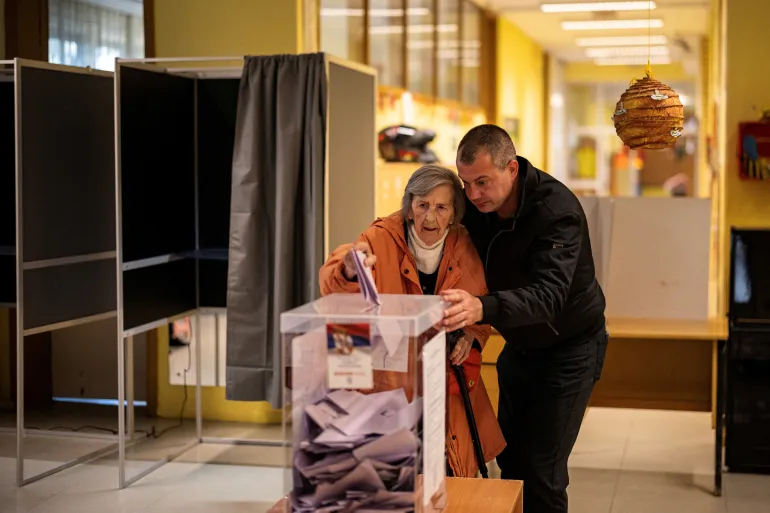
Polling stations across Serbia closed at 8pm local time on Sunday, marking the end of a high-stakes snap parliamentary election. With voter turnout reaching 64.9 percent by 17:00 GMT, the country recorded its highest participation level since the 1992 breakup of Yugoslavia. Approximately 6.5 million citizens were eligible to cast ballots for 250 parliamentary seats, with 18 distinct electoral lists vying for a majority of 126 seats required to govern. With first indications of the result expected a few hours later, voting ended at 8pm local time (19:00 GMT) on Sunday. The higher turnout does not show which side gained support. According to sunday’s voting was also marked by, Of intimidation and procedural problems.
The election serves as a critical test for President Aleksandar Vucic, who stepped down from his post in September to campaign for the prime minister position. His Serbian Progressive Party (SNS), which has held power since 2012, is facing a significant challenge from a movement born out of years of anticorruption protests. Supporters of the SNS often point to the modernization of the Serbian economy and promises of increased public-sector wages and pension hikes as key pillars of his platform.
Conversely, the opposition is anchored by the Student List—Students Win.
This coalition emerged following tragic demonstrations that began after a railway station canopy collapsed in Novi Sad in November 2024, resulting in 16 deaths.
Comprised of professionals from fields like medicine and education, the movement is campaigning on a platform focused on systemic institutional strengthening and the eradication of government corruption. Many established opposition parties have opted to support this student movement rather than run their own candidates. Demands for accountability widened into a movement against alleged government corruption and repression.
University of Belgrade researcher Jelena Vasiljevic noted that while the SNS relies on a solidified, consistent voter base, the student movement’s success remains contingent on its ability to mobilize citizens who traditionally abstain from the electoral process. The impact of the historically high turnout on the final seat distribution remains unclear as the vote count proceeds.
The voting process was marred by significant reports of electoral irregularities. The Centre for Research, Transparency and Accountability (CRTA) monitored 500 polling stations and reported that nearly one-third of them experienced pressure exerted on voters or election staff. Additionally, observers documented failures to maintain ballot secrecy.
By 5pm local time, the Centre for Free Elections and Democracy (CeSID) had logged approximately 260 reports of potential violations. These included documented instances of ballot photography, group voting, and discrepancies during voter identification checks.
Security concerns heightened in the capital, Belgrade, where police equipped with riot helmets and shields gathered near the election commission’s headquarters. Authorities erected barricades and closed surrounding roads to manage potential unrest. City prosecutors issued a formal appeal on Sunday, urging all political actors and participants to maintain order and refrain from violence during the tallying period.