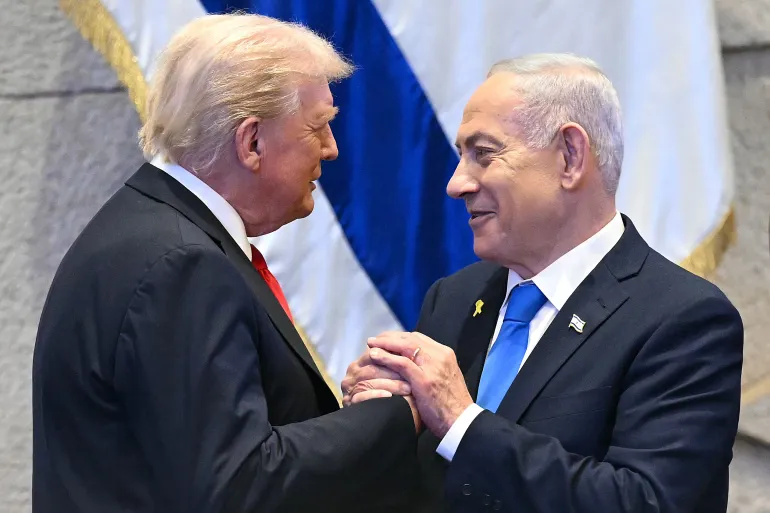
Israeli Prime Minister Benjamin Netanyahu has reiterated that overthrowing Iran’s government remains a primary objective, amid sliding poll numbers ahead of upcoming national elections. His remarks followed discussions with United States President Donald Trump and a visit to Israel by Pentagon chief Pete Hegseth, though there was no confirmation that Washington has agreed to join a fresh offensive or a leadership-toppling campaign.
While military experts acknowledge Israel possesses the firepower to inflict substantial harm on Tehran, they remain skeptical about its ability to translate those tactical gains into actual regime change. Analysts note that air strikes alone will not achieve this objective, while mounting a ground invasion would require a massive military commitment that goes far beyond current capabilities.
A renewed campaign would also mean confronting a resilient state that has already weathered two prior waves of strikes and retains significant retaliatory capacity. This includes potential threats against Israel and Gulf neighbors hosting US military assets. Furthermore, Washington’s commitment remains ambiguous as experts question the White House’s appetite for renewed hostilities without a clear strategy for forcing Tehran’s surrender. Potentially further isolating a country already widely ostracised by the international community amid its genocide in Gaza, such an approach would seek to punish Israel without drawing Washington directly into the fighting.
Experts agree that Israel’s capacity to launch strikes is solid. Urban Coningham, a research fellow at the Royal United Services Institute (RUSI), pointed out that Israel’s offensive weapon reserves and aerial refuelling capabilities provide a distinct advantage. Coningham noted that Israel could successfully re-establish air superiority and target Iranian infrastructure.
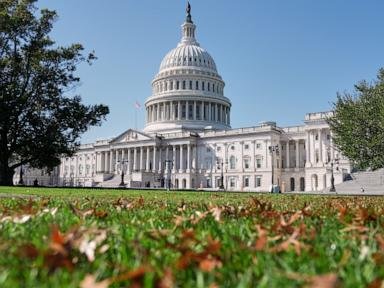
However, turning those strikes into political transformation is another matter entirely. Netanyahu has viewed Iran’s leadership as an existential threat since his initial term as prime minister in 1996, when he addressed the US Congress to denounce the regime. Nearly thirty years later, US military interventions in June 2025 and early this year delivered the exact external military action he sought, yet the Iranian government remained in power. He said, “The most dangerous of these regimes is Iran, that has wed a cruel despotism to a fanatic militancy.”, addressing the US Congress that July. Nearly 30 years later, US participation in the June 2025 war, and again in the campaign launched on February 28 this year, delivered the military intervention Netanyahu had long sought.
Netanyahu himself conceded the limitations of air campaigns last March, noting that military operations cannot rely solely on the air and must include a ground component, though he did not specify how such an effort would unfold. Caglar Kurc, an assistant professor at Abdullah Gul University in Turkiye, emphasized that bombing campaigns can degrade military readiness but cannot eradicate offensive capabilities entirely, as well-hidden installations would likely survive. Saying, “You can’t do it only from the air.”, netanyahu himself acknowledged the limits of airpower in March.
Kurc added that executing regime change would demand a willingness to deploy and sustain ground troops for years. Moreover, Israel can no longer rely on previous covert tactics yielding the same success. Coningham characterized intelligence assets on the ground as expendable, warning that executing such operations risks exposing networks that Iranian security forces will swiftly target and dismantle. Israel can also no longer assume that covert methods used in earlier attacks would prove equally effective again.
While Israel maintains human intelligence assets and cyber warfare capabilities, deploying them risks burning these resources for uncertain strategic gains. Coningham also dismissed the viability of proxy forces, noting that Kurdish or Baloch armed groups lack the military strength to challenge the Islamic Revolutionary Guard Corps. Although discussions occurred within the Trump administration regarding arming Kurdish opposition factions, those plans ultimately stalled. Making the prospect of a tangible military gain an important consideration, but using those capabilities risks revealing and sacrificing them. According to in March, the Trump administration was, To be actively discussing providing arms to opposition Kurdish groups, according to CNN, which cited Kurdish and US officials. If Israel were to attack without US support, Iran might concentrate its retaliation on Israeli territory while avoiding US targets and disruption to the Strait of Hormuz, coningham also suggested that.
Simultaneously, Iran does not require parity in aircraft to impose severe costs on any renewed offensive. Sidharth Kaushal, a senior research fellow at RUSI, observed that Tehran maintains substantial missile reserves. Even if targeting systems sustained damage, antiship missile stockpiles remain extensive due to domestic manufacturing of older Chinese designs and natural mountainous shelters in southern Iran shielding them from air raids.
Conversely, sustaining defensive operations poses a growing challenge for Israel, as prior exchanges have depleted interceptor inventories. The ongoing financial asymmetry presents another hurdle, with Israel expending costly defensive munitions to intercept inexpensive Iranian drones. Over an extended conflict, this dynamic threatens to strain Israeli stockpiles while Iran continues mass-producing low-cost munitions. That imbalance could place further pressure on Israel’s interceptor supplies, while Iran retains the capacity to mass-produce more cheap weapons for a lot longer, over a prolonged exchange.
Whether Washington would participate in another assault remains doubtful, given divergent political priorities and President Trump’s reluctance to escalate tensions ahead of US midterm elections. Recent media reports indicated that an Israeli proposal for fresh strikes failed to secure presidential approval, signaling hesitation regarding immediate escalation. Pointing to diverging political interests between Tel Aviv and Washington, with Trump facing pressure to avoid renewed escalation before the US midterm elections, analysts consider this unlikely.
Without direct American involvement, Coningham warned that Israel lacks the heavy bunker-busting capabilities required to strike deeply buried installations, such as the 30,000-pound GBU-57 munitions dropped by US B-2 bombers on Fordow and Natanz nuclear facilities in June 2025. These specialized weapons provided Washington with a distinct strategic edge that Israel cannot replicate independently.