
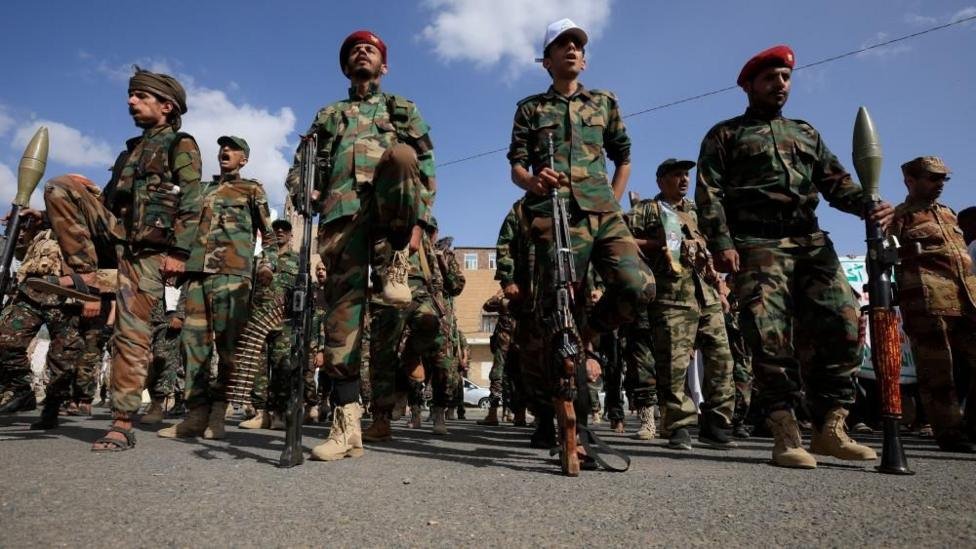
Yemen’s Houthi movement has claimed a significant military advance along the western Red Sea coast, further consolidating its influence over a critical global shipping corridor. According to sources within the internationally recognized Yemeni government, the Iran-backed group has seized control of Perim Island, also known as Mayyun, situated at the mouth of the Bab al-Mandab Strait.
This development follows the capture of the strategic port city of Mokha from Saudi-backed pro-government forces. Military officials indicated that the Houthis now effectively control the entire coastline in the region. The group’s military spokesman, Yahya Sarea, described the operation as a successful effort to expel Saudi-backed forces, claiming that hundreds of troops were killed, wounded, or captured across six districts in the Taiz and Hodeidah regions since the offensive began on September 3.
While the Houthis have stated that maritime navigation remains safe for all entities except Saudi vessels, the strategic importance of Perim Island has grown significantly. The island sits at the narrowest point of the Bab al-Mandab Strait, a waterway that has become essential for oil shipments to Asia, particularly as the Strait of Hormuz faces disruptions due to ongoing US-Iran tensions.
The rapid escalation has prompted high-level diplomatic activity. Saudi Crown Prince Mohammed bin Salman has reportedly pressed US President Donald Trump for direct military intervention. Sources familiar with the discussions noted that the US has so far declined to engage directly, opting instead to provide intelligence and targeting assistance. A senior Trump administration official confirmed that the US remains in continuous dialogue with Saudi Arabia and the Yemeni government regarding regional stability.
The conflict has resulted in a significant humanitarian impact, with reports of hundreds killed and thousands displaced over the past week. In response to the Houthi offensive, the Saudi-led coalition has conducted air strikes on rebel-held areas, while the Houthis have retaliated with drone and missile attacks targeting Saudi cities and infrastructure.
Further complicating the regional security landscape, the Saudi foreign ministry reported that drones launched from Iraq targeted the country’s East-West oil pipeline on Friday. The attack forced a temporary closure of the facility as a precautionary measure and caused several injuries. The Iraqi government has condemned the incident and initiated an investigation, with the prime minister’s office confirming the removal of an operations commander in the Maysan governorate—a province bordering Iran—after evidence suggested the drones originated from that area.
Despite the provocation, Saudi Arabia has indicated it will not respond to the Iraqi-based attacks at this stage, following a direct communication from the Iraqi prime minister. The ongoing instability in the region continues to exert upward pressure on global oil prices. The report also notes that the Houthis earlier said they posed no threat to international shipping but reiterated their threat to target vessels from Saudi Arabia. The report also notes that houthi military spokesman Yahya Sarea said the “large-scale” military operation was launched on 3 September due to Saudi Arabia’s “blatant aggression” against “our dear people”. The report also notes that saudi Arabia has not publicly commented on the latest developments.