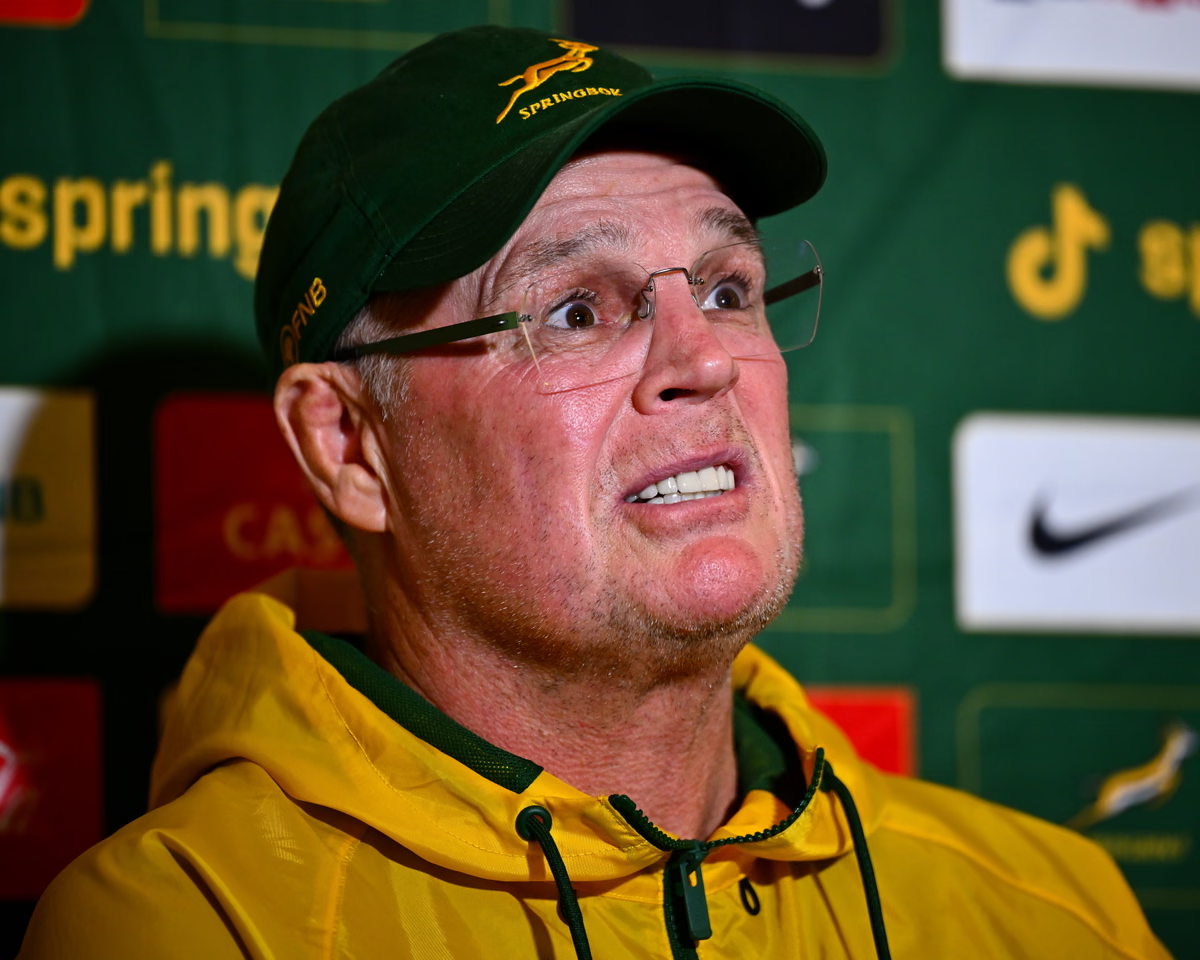
World Rugby has imposed an immediate six-match international suspension on South Africa head coach Rassie Erasmus. This disciplinary action follows an investigation into remarks made by the 54-year-old on Monday, where he openly questioned whether match officials were involved in match-fixing. Meaning it will not affect South Africa’s defence of their World Cup title, it is likely to expire at some point during next year’s Rugby Championship.
A disciplinary panel concluded that Erasmus’s conduct crossed the threshold for serious misconduct. The governing body highlighted that his public comments impugned the integrity of referees, suggesting they displayed bias toward northern hemisphere nations during the Nations Championship. The panel specifically cited the timing and reach of his statements, alongside allegations of bad faith, as justification for the automatic six-match ban.
The suspension mandates that Erasmus cannot engage in any match-day activities. This includes coaching, communicating with players or team management, entering the playing enclosure, technical area, or coaches’ box, and participating in official feedback processes or media duties on match days. Consequently, he will be absent from South Africa’s upcoming fixture against Ireland and the subsequent Nations Championship finals. Erasmus will be forced to sit out South Africa’s clash with Ireland on Saturday as well as the Springboks’ match on finals weekend.
South Africa Rugby has moved to challenge the ruling, exercising its right to request a full misconduct hearing. The union issued a statement expressing its desire to clarify the coach’s comments, asserting that it was never Erasmus’s intent to allege that officials were acting with ulterior motives.
The controversy stems from comments made after last Friday’s loss to France, where Erasmus complained about 17 unpunished knee-drop tackles. He argued that if the television match official saw these incidents and opted not to intervene, it raised questions about whether the game was being manipulated. He also suggested technology might be failing or that officials were showing undue leniency, specifically referencing an incident involving Ireland fly-half Sam Prendergast. Suggesting that incidents of foul play are not being picked up in what he described as a “manipulation of the, the South Africa head coach claimed that officials had missed 17 knee-drop tackles committed against his side. Referring to the 17 knee-drop tackles he claims went unpunished, Erasmus said: “The TMO [television match official] doesn’t come in once. It must be a technology problem, i’m saying if he didn’t see it. Is that not interfering with the outcome of a game if you see this injury that happens there?”. What does that boil down to, if he saw it and he ignored it.
This is not the first time Erasmus has faced such sanctions. In 2021, he received a 10-and-a-half-month ban for a verbal attack on referee Nic Berry during the British & Irish Lions series. Additionally, he served a two-match ban in November 2022 following social media posts about English referee Wayne Barnes, who subsequently faced death threats. World Rugby reiterated that while robust debate is acceptable, attacking the integrity of officials remains a violation of fundamental rugby standards. “Robust, respectful debate is natural, but teams have access to well-established and supported channels and protocols for raising officiating matters before and after matches.
In its official response, World Rugby emphasized that match officials are central to the sport and deserve protection from abuse and intimidation. The organization clarified that although challenging a decision is permitted, doing so in a manner that questions an official’s personal integrity or invites abuse is strictly prohibited. The current disciplinary process was launched in July specifically to curb the rising trend of abuse directed at match officials.