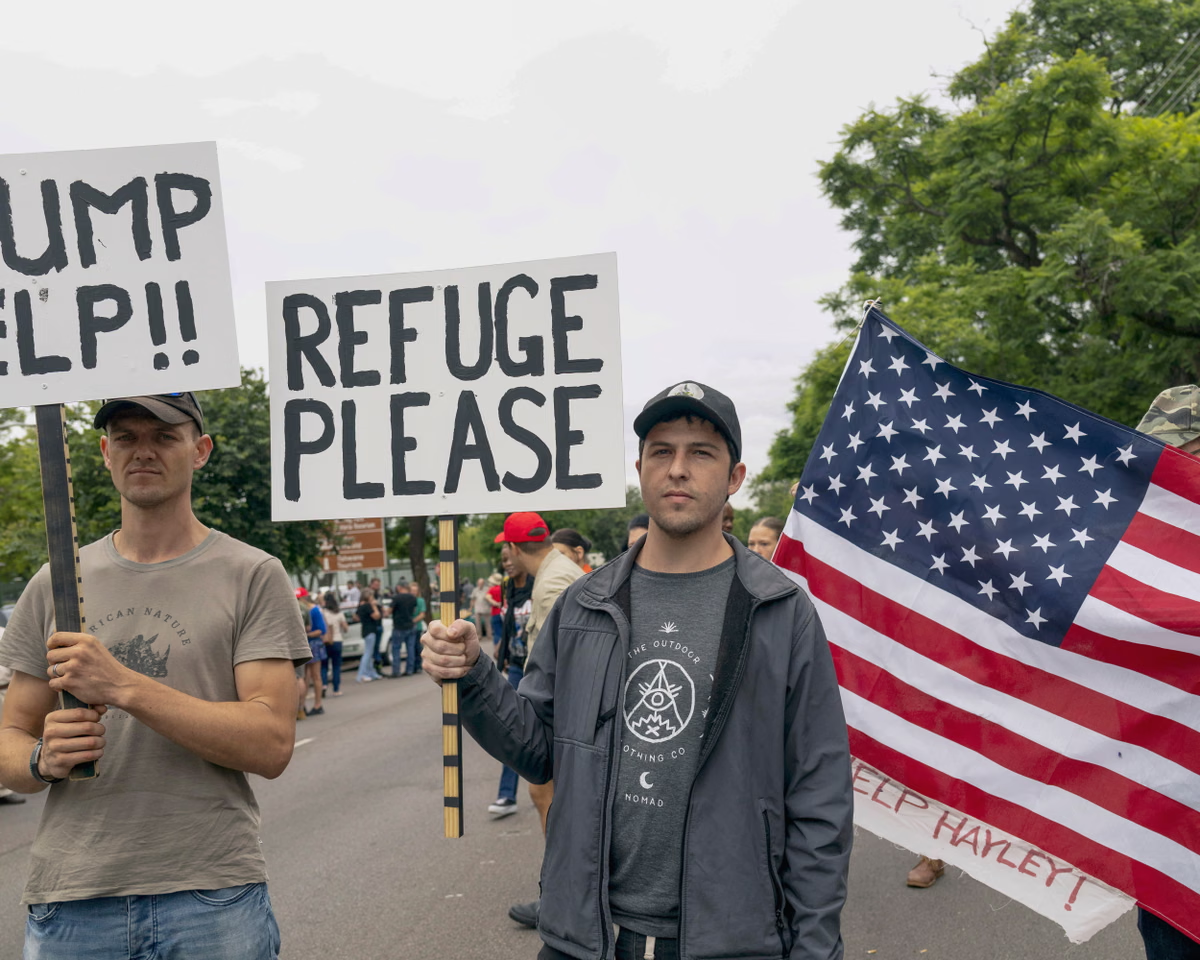
When Donald Trump announced in February 2025 that the United States would prioritize Afrikaner refugees from South Africa, many white citizens who felt targeted by local racial tensions viewed the policy as a lifeline. After an executive order expanded the program to include members of a “racial minority,” the first group of 68 Afrikaners arrived in the US that May. While the government simultaneously shuttered refugee access for those fleeing other wars and forms of persecution, the specific pathway for South Africans grew rapidly.
State Department records indicate that more than 13,000 individuals have relocated to the US through this initiative since its inception. The pace of arrivals showed significant growth, with over 2,600 people admitted during August 2026 alone. Despite this volume, recent months have seen a sharp increase in application denials, leaving many applicants bewildered and stranded after they had already dismantled their lives in South Africa.
The current climate follows decades of socio-economic shifts in South Africa since the end of apartheid. While affirmative action and “black economic empowerment” policies aimed to address historical inequities, they have contributed to a perception among some white South Africans that they are now victims of systemic discrimination. Far-right narratives have frequently cited the murders of white farmers as proof of a “white genocide,” a claim that has been widely debunked by official crime statistics but remains a central component of the discourse amplified by Trump.
By late June 2026, social media platforms including Facebook and WhatsApp became hubs for applicants sharing news of rejection notices. Multiple letters reviewed by reporters show that the US Citizenship and Immigration Services (USCIS) deemed these applications ineligible for further processing, with no option to appeal the decision. One support group for rejected individuals, “Hope beyond the Letter,” reported 311 members as of September 10.
For some, the rejection proved devastating. One applicant, who finished the screening process in November, expressed deep regret for trusting the program, stating he “believed the hype.” Another couple, identified by the pseudonyms Pieter and Liesl, faced a similar outcome on July 24. Having sold their home, vehicle, and various belongings, they were forced to restart their lives after being told they were no longer eligible. They noted that USCIS had incorrectly documented their US-born daughter’s status, erroneously claiming she would be separated from the family.
Other applicants reported bureaucratic hurdles and misunderstandings. A 67-year-old man attributed his rejection to language barriers regarding his native Afrikaans. Official documents released through a Freedom of Information request cited “crime involving moral turpitude” and “commission of acts of torture or extra judicial killing” as grounds for his denial. The man acknowledged shooting a person in 1995 while working as a security guard, but maintained it was a justified act of self-defense during a shop break-in, asserting he was fully cleared by authorities at the time.
USCIS spokesperson Zach Kahler addressed the denials in an emailed statement, noting that the agency is mandated to review every refugee case individually. While the Department of Homeland Security maintains its commitment to assisting Afrikaners facing persecution, Kahler emphasized that the department must prioritize public safety and welfare. He confirmed that individuals found ineligible due to criminal histories or public safety concerns receive formal notification and are excluded from further processing.
The cumulative effect of these rejections has tempered the initial optimism surrounding the resettlement program. As the government continues to weigh individual security screenings against its political commitments, thousands of families who moved to join the program now find themselves in a precarious position, waiting for clarity that may never come. The report also notes that however, in the past few months, dozens of applicants to the refugee programme have been rejected, with many left dismayed and confused as to why they would be left to face what Trump has falsely claimed is a “white genocide” in South Africa. The report also notes that while keeping white people safe and wealthy, the regime repressed the black majority. The report also notes that affirmative action policies have helped to create a black elite and middle class, since the end of apartheid more than 30 years ago. The report also notes that compared with 9% of white South Africans, according to official data, but about 38% of black South Africans are unemployed. The report also notes that in the face of the South African government’s furious rebuttals, that has not stopped Trump amplifying these claims.