
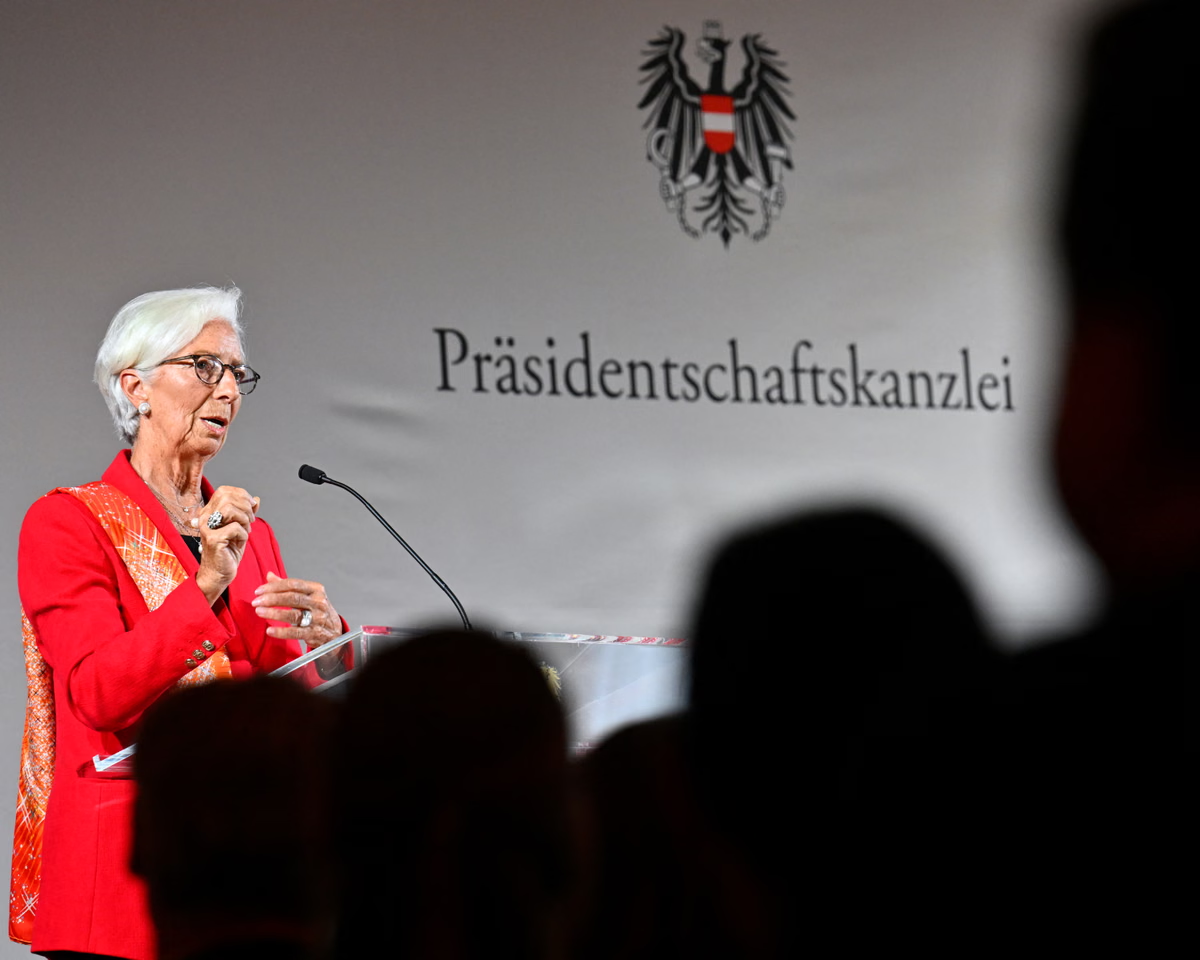
European Central Bank President Christine Lagarde has issued a stark warning that Europe must urgently cultivate its own artificial intelligence infrastructure and data centers to mitigate the risk of being marginalized by the United States and China. According to Lagarde, the continent must develop AI models that are sufficiently capable of handling routine domestic tasks. Achieving this technological self-sufficiency would effectively negate the strategic threat of being cut off from external digital resources, which currently hold immense power over European operations.
Addressing an audience in Vienna, Lagarde highlighted a severe imbalance in the global landscape. Last year, the United States produced 59 notable AI models and China developed 35, whereas the United Kingdom and France each contributed only one. Furthermore, the US currently controls 75% of global AI computing capacity, leaving Europe with a mere 5%. This reliance forces the continent into what she termed an “awkward choice”: risking slow economic growth due to data protection constraints or adopting foreign AI tools at the cost of losing control over its economic values.
The potential for economic disruption is vast. Lagarde noted that as AI becomes integrated into essential infrastructure—from border security and tax auditing to public transit, medical monitoring, and banking—a sudden withdrawal or change in access terms by foreign providers would have immediate, widespread impacts across every sector. This unprecedented level of leverage could be exploited in future trade negotiations, such as discussions surrounding tariffs or digital taxation.
Despite historical ties, the relationship between Europe and the US has been tested by previous administrations, marked by trade tariffs and political friction. Lagarde emphasized that rapid AI adoption could boost European productivity by as much as 4% over the next decade, providing a massive boost to public finances. However, the current infrastructure gap is critical; Europe already lacks sufficient data center capacity to meet local demand, and this deficit is projected to increase more than sixfold within the next ten years.
The current financial landscape is further complicated by US technology firms absorbing significant borrowing capacity in European markets, which drives up costs for local enterprises. Additionally, with substantial European pension funds invested in American tech stocks, the region remains highly susceptible to shifts in US market valuations. Ultimately, Lagarde’s message is clear: if Europe fails to secure its own digital foundation, its economic future will be dictated by the policy shifts of dominant international partners. The report also notes that christine Lagarde said the continent needed AI models – the technology that powers AI tools such as chatbots – that were “good enough” to carry out most tasks and run from domestic datacentres. The report also notes that and it could be used in any negotiation, on tariffs or on digital taxes, for example”, lagarde said this represented leverage that “no trade partner has ever held over Europe.