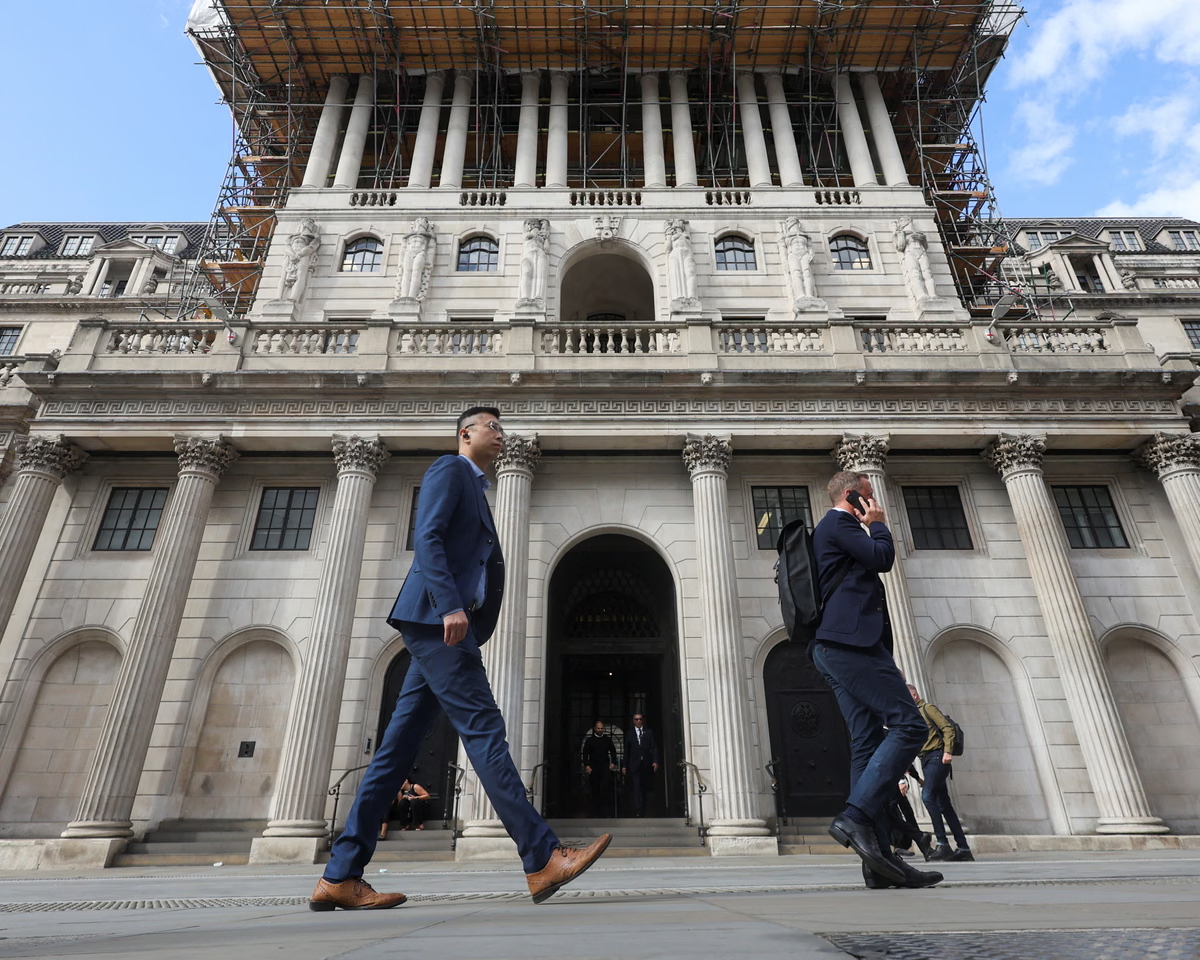
The Bank of England has maintained interest rates at 3.75% as policymakers signal that ongoing conflict in the Middle East could necessitate future borrowing cost increases to counter inflationary pressures. The monetary policy committee reached this decision with a six-to-three vote, reflecting cautious optimism while acknowledging the risks posed by rising energy costs.
Bank Governor Andrew Bailey noted that while higher global energy prices have not yet significantly impacted domestic wage and price settings, this could change. He warned that if volatility persists, the resulting inflationary impact will likely force the Bank to raise rates to meet its 2% target. Financial markets have reacted to these signals, with traders forecasting a quarter-point rise as early as November and a potential trajectory toward 4.75% by next year.
Economic data highlights the current challenge, with inflation climbing to 3.1% last month from 2.9% in July, fueled largely by a 25% surge in fuel costs. Despite this, the central bank maintains that there is limited evidence of material second-round effects—where businesses and workers drive further inflation through wage demands—and noted some easing in food price inflation.
Alongside the interest rate decision, the Bank unveiled a strategic pivot regarding its quantitative tightening program. Officials intend to sell approximately £146bn in government bonds back to the Treasury at a rate of £20bn annually through 2034. This plan, which awaits approval from Chancellor John Healey next April, is designed to reduce market turbulence by allowing the Treasury’s Debt Management Office to manage the buyback via shorter-term debt.
The Bank currently holds about £488bn in gilts and aims to retain roughly £120bn to support physical currency circulation. By coordinating with the state, the Bank hopes to ensure value for money and preserve the independence of monetary policy. This approach marks a pause in the active selling of long-dated bonds to the private sector until a deal is finalized.
The shift follows similar moves by the US Federal Reserve and the European Central Bank, both of which recently raised borrowing costs in response to energy-driven inflation. Following the announcement, the UK’s 10-year gilt yield dropped by six basis points to 5.243%, hitting a one-week low.
Official economic projections suggest inflation could reach 4% by early next year, complicating the fiscal planning for the upcoming budget. While politicians have discussed providing breathing space for households, the economic outlook remains tethered to the geopolitical instability driving energy markets. The report also notes that however, the Bank said the increasingly probable prospect of a lengthy war fanning intense volatility in global markets had dramatically raised the chance of it putting up borrowing costs in future. The report also notes that with Threadneedle Street under pressure to guard against high rates of inflation becoming entrenched, City traders predict a quarter-point rise in borrowing costs from as early as November with three more increases to 4.75% likely to happen next year. The report also notes that after a decision last week by the European Central Bank to raise eurozone borrowing costs, the sharp rise in global energy prices prompted the US Federal Reserve to raise interest rates on Wednesday for the first time since 2023. The report also notes that official figures on Wednesday showed inflation rose to 3.1% last month from 2.9% in July as the escalating hostilities in the Middle East drove up the average price of petrol and diesel by almost a quarter. The report also notes that it came after Andy Burnham said he was prepared to take “difficult decisions” to tackle high inflation and keep the economy on track and would take action at next month’s budget on the cost of living. The report also notes that the process will be used to complete Threadneedle Street’s “quantitative tightening” programme – which has involved the sale of gilts held on its books since 2022, which has reduced its holdings to about £488bn. The report also notes that it said this amount would be disposed of by allowing maturing debts to expire, and through active sales to the state if a deal was agreed, leaving about £222bn of bonds.