Prime Minister Andy Burnham’s recent declaration that he would avoid “banging on about Europe” echoes a political moment from two decades ago. In 2006, a young David Cameron rose to Conservative leadership with an identical promise to stop talking about the issue, a strategy that famously culminated in the 2016 referendum on the United Kingdom’s membership in the European Union. My mind flashed back 20 years, when the prime minister told MPs “there will be no banging on about Europe” from him. Promising, yes you guessed it, to stop “banging on” about Europe, it is 2006 and a fresh faced David Cameron had just taken over as the Conservative leader. He held and lost a referendum on whether the UK should stay in the European Union, as he advocated, or leave, and we all know how that turned out: a decade later as prime minister.
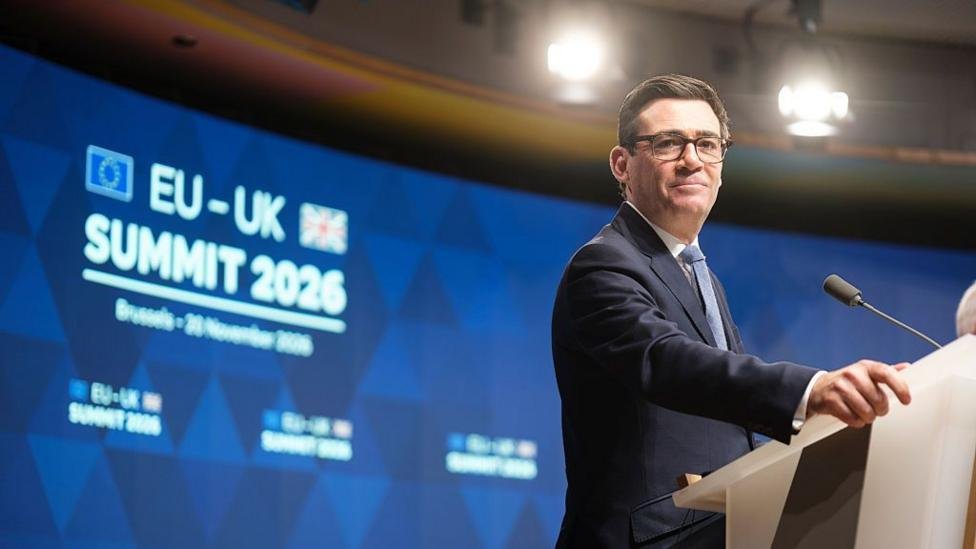
Following Friday’s EU-UK summit in Brussels, Burnham’s address to the Commons appeared to be a calculated effort to dampen the intense discourse he had helped amplify earlier this autumn.
The situation now hinges on two primary uncertainties: whether he can successfully manage this political pivot and what specific commitments Labour will present to voters in the next general election.
Future Policy Considerations
- Referendum stance: Burnham did not rule out seeking a mandate for a new in-out referendum.
- Decision criteria: He stated, “If it’s in Britain’s national interest, I will recommend it to this House. If it is not, then I won’t.”
- Strategic ambiguity: Burnham maintained flexibility, noting, “There is no fixed opinion here. There is no fixed destination.”
Ultimately, Burnham’s current positioning leaves his future policy direction open-ended. Whether he intends to propose a referendum or adopt a different approach remains unclear, leaving room for either path as the political landscape evolves.