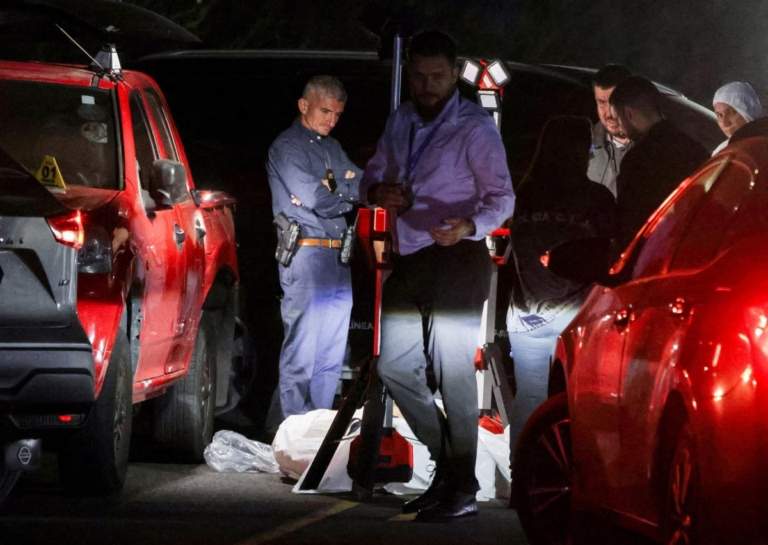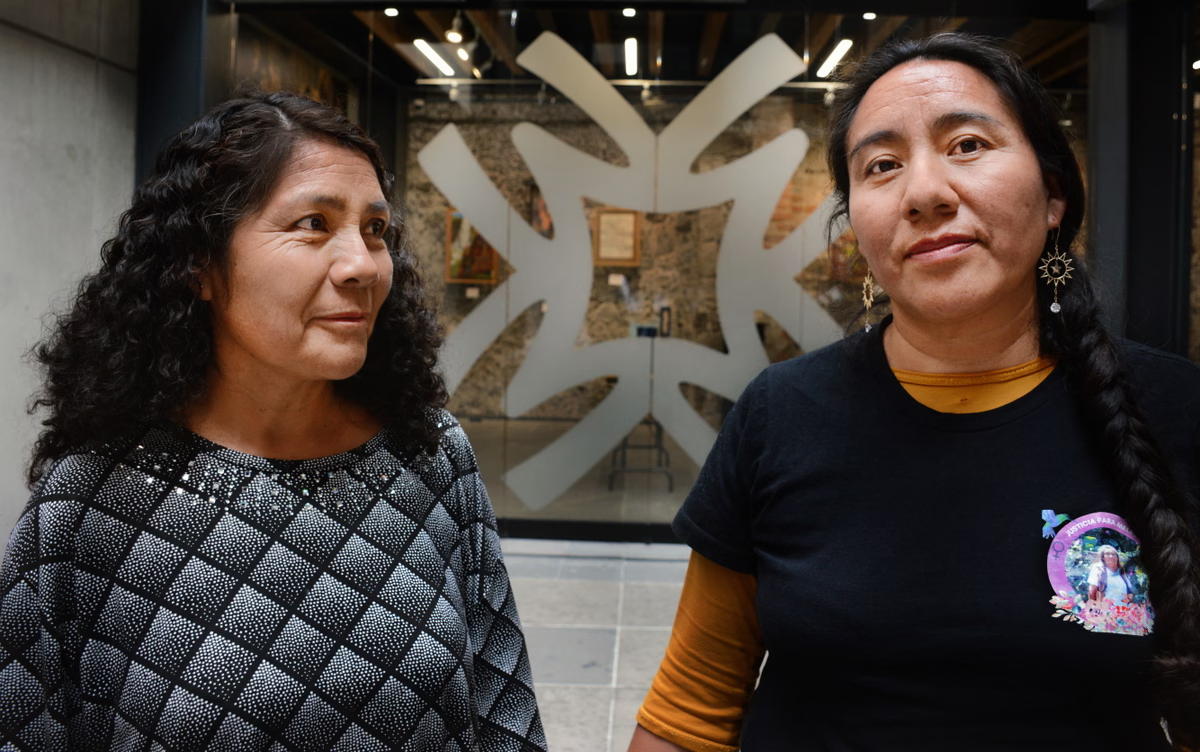
Paz Rodríguez woke up around 5am at her home in Milpa Alta, a suburb of Mexico City, on 20 March 2021. Upon checking her phone, she discovered a series of urgent text messages from her sister, Oliviera Rodríguez. “Mum’s dog is barking a lot,” her sister had written. “I keep calling and she won’t respond.”
Concerned by the messages, Rodríguez rushed directly to her mother’s nearby house. After calling out through the slightly open front door without receiving an answer, she entered the residence to search the rooms. Inside the bedroom, she found her mother lying face down on the floor, completely unresponsive. “There was so much blood around her body,” Rodríguez recalls. Her 72-year-old mother, Melesia García, had been brutally attacked the previous evening. Police officers later confirmed that assailants had broken into the home, raped her, and killed her. “They did terrible things to her,” Rodríguez says. “I don’t understand why. My mother never hurt anyone.” She thought about her plans for the day: pick up yellow lilies and cacti from her mother’s house and sell them in the market. They would cook mole, a traditional Mexican dish, together, later that evening. Usually lined up against the wall, scattered across the floor, she walked through the kitchen and saw gas cylinders. She has not yet found the killer, though she has been through every piece of footage available from nearby cameras and flagged suspects. Even if there is no sign of sexual assault, forensic officers swab fingernails and the pubic area.
Following the initial investigation, the siblings transported their mother to Oaxaca to be buried in the mountain region where she grew up among native flowers and cacti. García was among 1,022 official victims of femicide in 2021, a period when intentional murders of women and girls reached a historic peak across Mexico. When law enforcement officials informed Rodríguez that they were investigating the murder as a femicide, she had never encountered the term before. The investigators assigned to the case were part of a newly formed specialized unit operating within Mexico City. Having a specialised unit can help cases reach the courts. This year, Mexico City’s prosecutor has recorded 33 femicides, 32 of which have reached the courts.
Official Data and Specialized Law Enforcement Units
Six years after the specialized unit was established, official government data demonstrates that Mexico’s overall femicide rate has begun to decrease, falling from 1,022 victims in 2021 to 736 last year. Eduardo Guerrero Gutiérrez, director of the public safety consultancy Lantia Intelligence, explained that the reduction is partially attributable to appointing qualified professionals to key law enforcement positions. Before President Claudia Sheinbaum took office, these roles were frequently occupied by political appointees who failed to address gender-based violence with appropriate severity, according to Guerrero Gutiérrez. LGBTQ+ flags, pink anti-violence posters and a photo of a missing girl with a short black fringe hang on the walls.
Although independent researchers maintain that the actual occurrence of femicides exceeds official figures, the specialized unit marks measurable progress against gender-based violence in Latin America. Operating from the first floor of Mexico City’s police headquarters, the female-led unit remains on the front line of gender violence investigations. Femicide, defined legally as the murder of a woman because of her gender, often requires advanced digital forensics and dedicated field intelligence to secure convictions. The unit still represents cautious progress on one of Latin America’s most intractable problems, while independent research suggests the true number of femicides is higher than in official statistics. According to independent, Show that victims and their families are worn down by incompetent police, authorities’ unwillingness to take action, delayed investigations and pervasive impunity. And the man jumped on his bike and left, the woman fell to the ground.
Inside the unit’s headquarters, investigators analyze digital evidence, security video footage, and undercover surveillance data. During a recent afternoon, an anonymous female officer demonstrated surveillance footage showing a helmeted suspect shooting a victim. In another active investigation involving a young girl killed inside her home, officers have spent months analyzing regional camera feeds to trace potential suspects. The intelligence team routinely conducts covert operations to locate individuals hiding in high-risk areas across the country. The detectives arrested him at the location where the suspect believed he was meeting a woman. Femicide detectives come and go at all hours. Both men were arrested in 2025. The judge acquitted both defendants, but on 28 July. The verdict, reviewed by, found DNA evidence from the vaginal swab linked to at least two men and matched one defendant’s family, but the judge decided not to rely on it as the samples were “not collected an. She located a possible perpetrator hiding in Tijuana through his TikTok posts, chatted to him, and set up a date, in a recent undercover operation. She says, and witnesses were too scared to come forward, local people misled the team to protect each other.
Origins of the Femicide Prosecutor’s Office
The institutional framework for a specialized femicide prosecutor was originally proposed by feminist activists in 2017. The movement gained momentum following public outrage over the death of 22-year-old Lesby Berlín Osorio, whose body was discovered inside a telephone booth at the National Autonomous University of Mexico. Initial police investigations mishandled the crime scene, and the original prosecutor assigned to the case faced heavy criticism for public social media posts framing Osorio as a college dropout who was drinking and taking drugs.
In March 2020, human rights attorney and activist Sayuri Herrera Román was appointed as the country’s first dedicated femicide prosecutor. Román noted that the activist movement actively claimed the institutional space to ensure rigorous investigations. When the office opened, it operated with just eight officers, lacking basic office furniture and storing active case files inside cardboard boxes on the floor. García’s murder became one of the early major cases handled by Román’s team.
While standard investigations by the unit average six months from initial inquiry to prosecution, García’s case extended over four years. In 2022, Román was elevated to special prosecutor overseeing crimes related to violence against women nationwide. Rodríguez, now 45, actively participates in public demonstrations demanding systemic accountability while wearing a shirt featuring her mother’s portrait inscribed with the phrase “Justice for Melesia.” The team has expanded to 86 people, including a photographer, forensics experts, litigators and psychologists, over the years. “This case was very difficult for us, but in the end we managed to bring these two individuals to justice,” Varela says. As the sentencing hearing approached for García’s alleged killers, Rodríguez started to hope that justice would be served in her mother’s case.
Legislative Reforms and Systemic Challenges
Despite the operational expansion of specialized units, families of victims continue to report significant judicial obstacles. Rodríguez expressed frustration over court rulings that resulted in the release of suspects in her mother’s case. “These men feel protected by the system that should have punished them,” she stated. “I am still mourning. The judge killed my mother one more time by letting the perpetrators go free.”
To address systemic inconsistency across state boundaries, activist organizations are currently lobbying the senate to pass legislation signed by Sheinbaum in July. The proposed bill aims to standardize femicide investigation protocols, mandate the creation of a specialized femicide prosecutor and investigative unit in every Mexican state, and increase statutory prison sentences for convicted perpetrators from 40–60 years to 50–70 years.