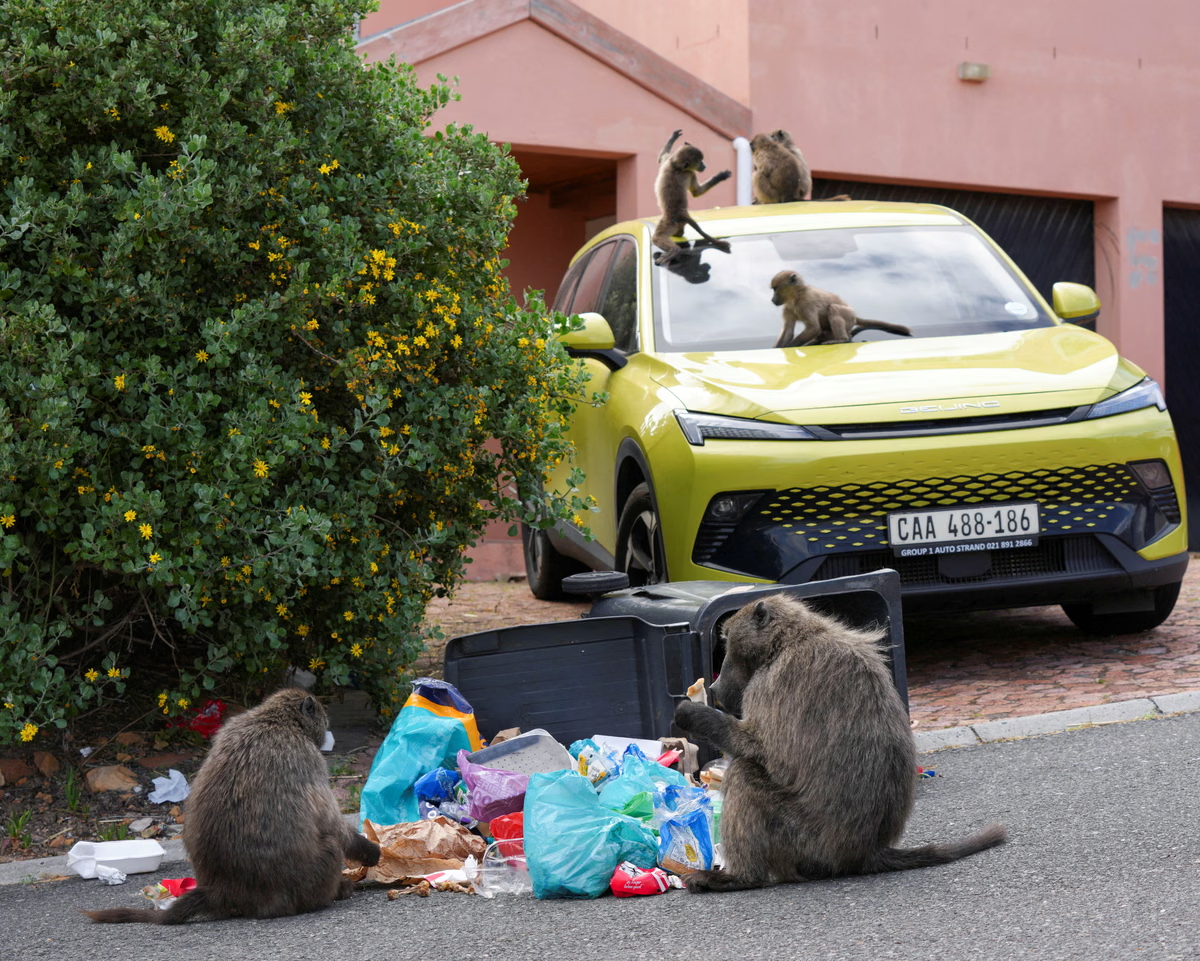
A relocation operation involving the 44-member Waterfall baboon troop in Cape Town has triggered significant unrest among locals who vehemently oppose the intervention. City authorities initiated the capture of the primates in the coastal suburb of Simon’s Town last Friday and Saturday, citing the urgent need to mitigate persistent human-wildlife conflict and ensure public safety. A smaller troop, known as the Seaforth group, is also scheduled for relocation. The 44-member Waterfall troop (named after the area they mainly inhabit) was captured in the southern seaside suburb of Simon’s Town on Friday and Saturday.
During the process, the situation turned volatile as protesters attempted to obstruct vehicles transporting the animals. One individual reportedly deployed a fire extinguisher at the scene. In response to the friction, the local Society for the Prevention of Cruelty to Animals (SPCA) issued a statement cautioning activists against impeding the transport process, noting that, “Capture and transport are already stressful for the baboons. Delaying their arrival prolongs their time in crates and risks adding to that stress – this is not fair on the baboons.” The SPCA maintained its opposition to the relocation but emphasized that their personnel were present solely to monitor the welfare of the animals. According to the Daily Maverick, a local news outlet, one person sprayed a fire extinguisher. According to it, It remained opposed to the baboon’s relocation, adding: “Our presence did not imply support … our inspectors are present because the animals need someone looking out for them.”.
Public opposition has been organized through channels such as the Save Kogelfontein Baboons Facebook group, where administrator Mandy Neal decried the relocation, declaring, “CAPTIVITY IS NOT CONSERVATION.” Supporters of the movement held a silent protest outside the wildlife facility on Sunday, placing flowers along the boundary fence as a sign of resistance.
The City of Cape Town reported that the relocation was executed successfully. Officials confirmed that the animals are undergoing constant monitoring by staff and veterinarians. As part of the management plan, female baboons have received contraceptive implants. The city justified the move as a “last resort” intended to manage urban risks, noting that alternative interventions had proved insufficient to address the ongoing conflict in the Simon’s Town environment. According to the City of Cape Town, In a statement on Sunday that the relocation had been successful, with the baboons being monitored 24/7 after being checked by vets and the females receiving contraceptive implants.
University of Cape Town behavioural ecologist Professor Justin O’Riain noted that the current management strategy follows two years of public consultation. He expressed disappointment regarding the public response, suggesting that some non-governmental organizations and residents who failed to engage during the formal stakeholder process are now compromising animal welfare through confrontational tactics aimed at both staff and the baboons themselves. Meanwhile, a heated debate has raged between people who believe that baboons and humans can coexist and those who argue that baboons in urban areas are in danger and in some cases need to be relocated.
The underlying tensions stem from rising urban populations in Cape Town, which have led to increased mortality rates among local wildlife. While some activists argue that coexistence is possible, authorities remain focused on the potential for safety hazards, arguing that relocation is the only remaining alternative to culling the animals.