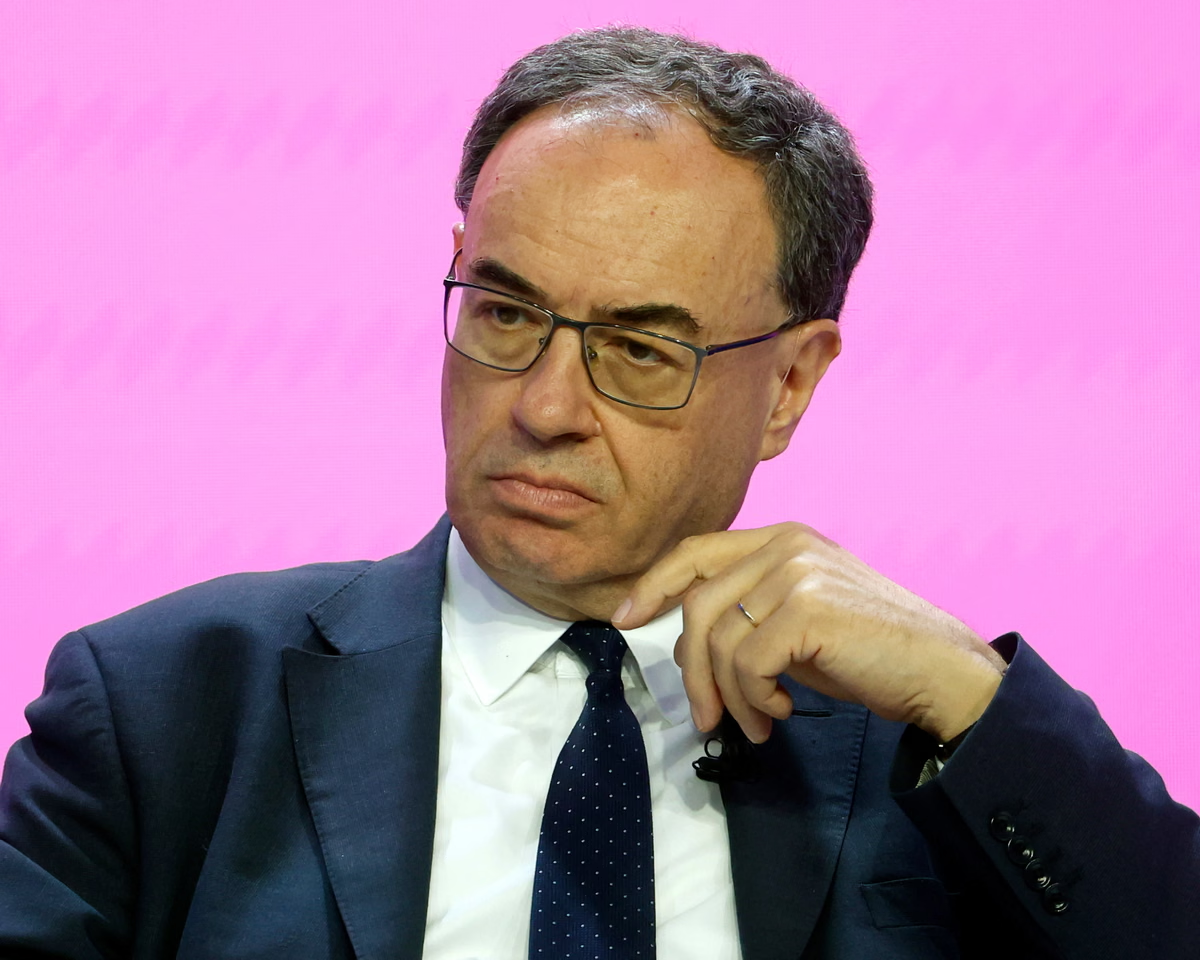
Bank of England Governor Andrew Bailey joined a group of senior international finance officials who walked out of an International Monetary Fund (IMF) meeting in Bangkok to protest against Russia’s ongoing role. The demonstration occurred as Russian Finance Minister Anton Siluanov began his address, prompting a departure by delegates from the UK, Germany, France, and various Scandinavian and Baltic nations. Germany had warned against efforts to bring Russia back on to the international stage.
German Bundesbank President Joachim Nagel noted that nearly half of all attendees left the hall while Siluanov spoke. A European diplomat stated that the war in Ukraine remains an existential crisis for Europe, asserting that normalizing diplomatic or economic relations with Moscow is not possible.
Saudi Finance Minister Mohammed al-Jadaan, who chairs the IMF’s steering committee, acknowledged the protest but emphasized that the meeting still achieved its goals. He noted that all members endorsed the official closing statement. And we achieved it, al-Jadaan said: “We came here for a reason. According to look at this chair statement, it clearly, All members agreed to the statement, so that’s what matters.”.
The diplomatic rift underscores ongoing tensions regarding Russia’s participation in global economic forums. Despite objections from several European capitals, the United States has maintained a supportive stance toward Russia’s attendance, with Treasury Undersecretary Erin Browne confirming Washington’s position. Siluanov has notably participated in G20 finance discussions earlier this year.
Economic Outlook Summary
- Resilience: The global economy has demonstrated unexpected strength despite the conflict in Ukraine and disruptions linked to the bombing campaign near the Strait of Hormuz.
- Risk Factors: Policymakers cautioned that economic buffers have been significantly eroded, and that high public debt and interest rates leave little room for complacency.
- Warning: Global stability remains threatened by escalating trade tensions and conflicts which could further strain supply chains, commodity pricing, and energy security.
Al-Jadaan concluded that while the global economy has navigated recent shocks, resilience can no longer be assumed as a certainty given the complex geopolitical and fiscal environment.
Key Job Details
- Exacerbate commodity price pressures, including in refined energy products, and worsen energy and food security.”, he added: “Escalating conflicts and trade tensions could further disrupt critical trade routes.