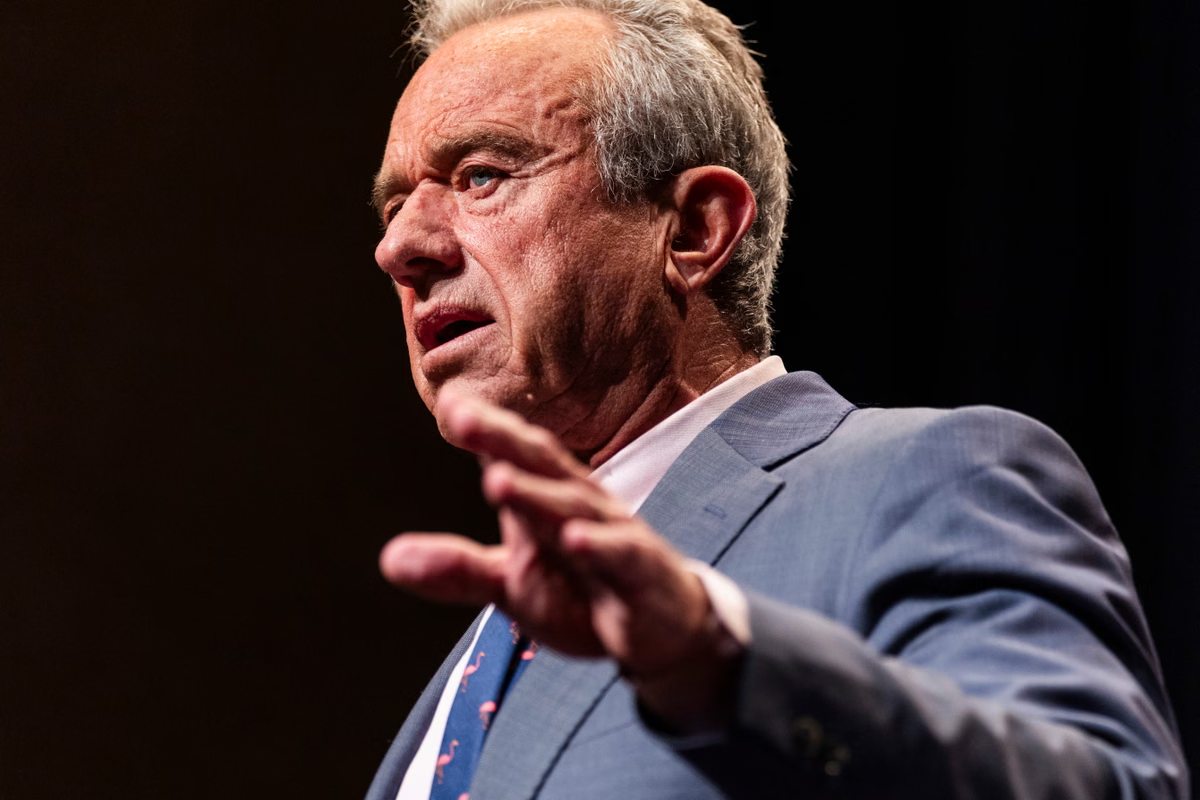
Judicial police in Guinea-Bissau have raided offices belonging to controversial vaccine researchers who were recently lauded by US Health and Human Services Secretary Robert F. Kennedy Jr. During the operation, authorities confiscated doses of hepatitis B vaccines, according to an official social media post translated from Portuguese.
Authorities clarified that the action involved “investigative procedures aimed at clarifying the circumstances related to the said batch of vaccines.” Officials stressed that the seizure did not stem from any detected “irregularities in the quality, safety, or effectiveness of the vaccines.”
The search centers on a disputed $3.2m clinical study involving African newborns. The project secured $1.6m from the US Centers for Disease Control and Prevention (CDC), alongside matching funds provided by the Bluebell Foundation and the Pershing Square Foundation.
Although the Bandim Health Project published a study approval document from Guinea-Bissau’s national ethics committee—dated July 14 and signed by committee president Mouhammed Djicó Ould Ahmed—the country’s leadership disputes its status. Quinhin Nantote, health minister for the transitional government, flatly rejected assertions that the trial would proceed, stating, “This is not even remotely true.” Earlier this month, a Danish research ethics board also cleared the trial after modifying its guidelines.
Despite a summer redesign, the proposed trial design would withhold hepatitis B vaccinations from 7,000 infants during their first six weeks. In Guinea-Bissau, roughly 20% of adults carry the virus. Chronic hepatitis B causes liver failure and cancer, leading to death in 15% to 25% of infected individuals. While newborns face severe vulnerability, receiving a dose within 24 hours of birth provides a safe and effective defense. But it would still deny hepatitis B vaccines to 7,000 newborns in the first six weeks of life, in a country where about one in five adults have the virus, the study was redesigned over the summer.
World Health Organization spokesperson Tarik Jašarević criticized any research model that denies immunizations to infants, describing birth-dose vaccination as an “essential public health intervention” and warning that withholding it is “unethical and exposes newborns to serious and potentially irreversible harm.” He added that the WHO country office has been counseling the health ministry regarding the planned vaccine rollout and the trial’s implications. The organization is now fundraising to help roll out the vaccines at birth to all newborns in the country.
Anthropologist Peter Aaby established the Bandim Health Project in 1978, and today runs it alongside his wife, epidemiologist Christine Stabell Benn. Kennedy has frequently praised the duo, calling them “the deities of vaccine research” at a recent anti-vaccine conference. He has repeatedly cited their past study on the diphtheria-tetanus-pertussis (DTP) vaccine—even after a follow-up trial produced contradictory findings—and referenced Aaby on Joe Rogan’s podcast in 2023 when announcing cuts to Gavi funding. Which the same researchers later conducted again and found completely different results, he has several times referenced the results of a study they conducted on the diphtheria-tetanus-pertussis (DTP).
Stabell Benn previously served on the ACIP hepatitis B working group, presenting evidence to the US panel before a federal judge stayed its decision to end universal birth dose recommendations. She also co-hosted a podcast with former FDA official Tracy Beth Høeg, who advocated eliminating “unnecessary” vaccines. Aaby, Stabell Benn, and lead investigator Frederik Schaltz-Buchholzer did not respond to queries regarding the raid or trial.
Non-profit organization Stand Up for Science (SUFS) published a report indicating that Bandim has done little to build local medical infrastructure despite operating in Guinea-Bissau for nearly 50 years. SUFS founder Colette Delawalla noted that citizens harbor “significant distrust” toward Bandim, though many rely on it due to a lack of healthcare options. Delawalla observed that the raid highlights the instability of the nation following a military coup less than a year ago, stating that Guinea-Bissau is using its limited leverage “to protect their youth, their future, from exploitation by two powerful western nations.” SUFS is currently raising funds to support universal newborn hepatitis B vaccination across the country.