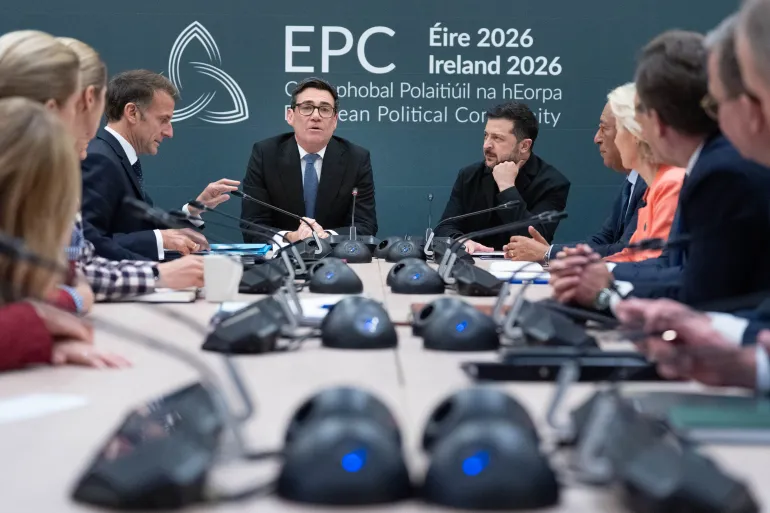
European leaders are currently locked in a tense debate over how to represent the continent in upcoming peace talks between Russia and Ukraine. As the 27-nation bloc gathered for a summit in Dublin, Ireland, on Friday, members remained split on whether a single envoy or a multi-nation team should lead the diplomatic effort. While there is a consensus that Europe must have a seat at the table to avoid being marginalized, the lack of a unified strategy has stalled progress.
The push for representation comes amid growing fears that a United States-backed negotiation process could allow Washington and Moscow to dictate the security architecture of Europe without meaningful input from those most affected by the conflict.
German Chancellor Friedrich Merz issued a sharp warning during the summit, urging President Donald Trump to avoid repeating the events of the Alaska summit, which he described as a potential ‘second Anchorage moment’ where Western allies were blindsided by direct overtures to the Russian leadership.
Merz stressed the importance of maintaining a cohesive front, stating, ‘I want to state our message to the United States very clearly: please, no surprises. Continue to play as part of Team Europe and Team Ukraine.’ The German Chancellor’s concerns highlight a deeper anxiety within the bloc that without a single, authorized voice, European interests will be secondary to the geopolitical maneuvering of larger powers.
Internally, the EU is struggling with its own selection process. Italian Prime Minister Giorgia Meloni has emerged as a vocal proponent for a single envoy, arguing that the current system of fragmented diplomacy allows smaller groups to pursue freelance initiatives that undermine overall effectiveness. ‘There are too many different groupings discussing the issue,’ Meloni noted, emphasizing that the absence of a unified stance weakens Europe’s bargaining power.
Top EU diplomat Kaja Kallas has actively campaigned for the role, asserting that her institutional position on foreign and security policy makes her the logical representative. However, her candidacy faces pushback from some members who view her as overly uncompromising regarding Russia. Meanwhile, European Council President Antonio Costa is also being considered as a strong contender for the diplomatic post. What the job might entail is also unclear and contested. “I know that the Russians don’t want me, but, you know, do we have a say, ‘Who is representing Russia?’” she said. “We can’t send any person that has no institutional role like the Americans are sending.”.
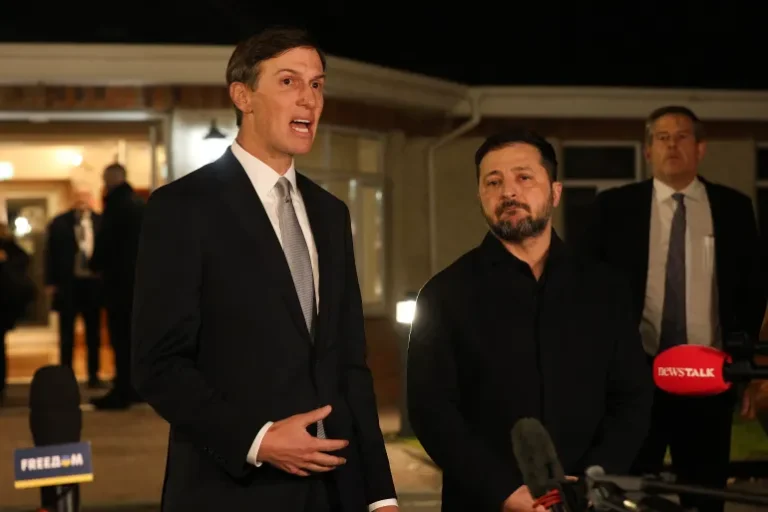
External pressure is further complicating these internal deliberations. Following US-brokered talks in the United Arab Emirates earlier this week, US envoy Jared Kushner remarked that Europe securing a single representative would be a more significant development than actually getting the Russians to include them in the negotiation process. Yet, the Kremlin remains a significant barrier; despite initial claims from US officials that Europe would be invited, Moscow has yet to confirm any such agreement. According to after talks in Moscow with Russian President Vladimir Putin on Thursday, US envoys, Europe would join future negotiations – but the Kremlin appeared to slam the brakes on that plan, saying no decision had been made. According to yulia Shapovalova, reporting from Moscow,, The Kremlin has not confirmed that Putin agreed to expand the trilateral talks to include Europe.
Russian authorities have maintained a cynical stance toward European involvement. Spokesman Dmitry Peskov recently compared the internal divisions of European leaders to ‘spiders in a jar,’ highlighting the skepticism in Moscow regarding the bloc’s role. While Russian officials have indicated a willingness to discuss the broader revision of European security architecture, they continue to resist keeping EU leaders at the table, often citing the support provided to Kyiv’s military as a reason for their exclusion.
As the summit concludes, the pressure is mounting for the EU to resolve its internal discord. The challenge remains to bridge the gap between Kallas’s firm stance and the broader desire for a representative who can effectively navigate the complex and often hostile demands of both Kyiv and Moscow. Whether a consensus can be reached before the next round of international talks remains an open and urgent question for the bloc.