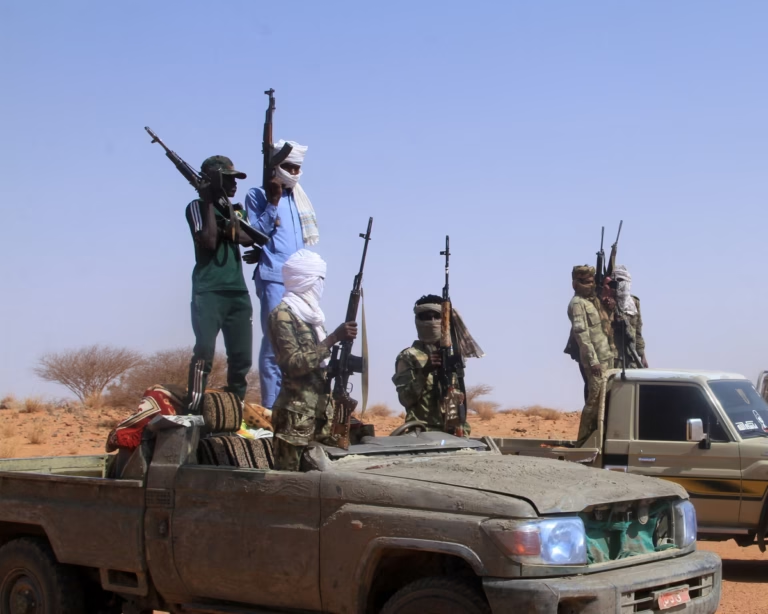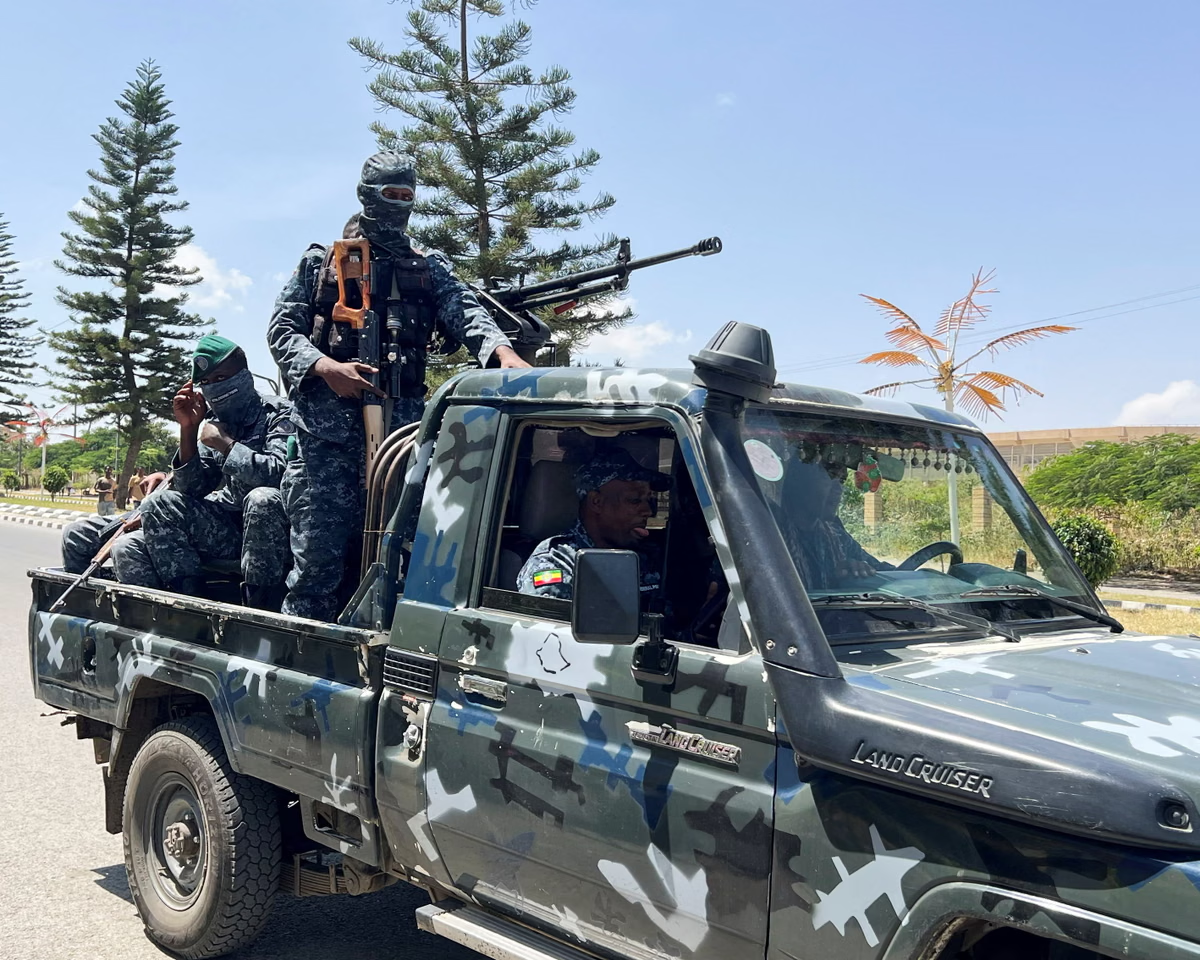
Ethiopian government forces have launched drone strikes against Eritrean troops who crossed into the northern Tigray region, an escalation that threatens to widen the country’s internal unrest into a broader regional conflict. The incident follows reports from civilian witnesses, a militia commander, and the conflict monitor Acled, which confirmed that military vehicles carrying Eritrean soldiers moved across the southern border into Tigray on Wednesday. The column advanced as far as the town of Adigrat, located approximately 25 miles (40km) from the frontier.
Acled reported that the arriving Eritrean units were subsequently targeted by Ethiopian government drones during the evening of Wednesday and the morning of Thursday. This friction occurs against a backdrop of complex regional animosities; while Eritrea shares a long-standing historical rivalry with the Tigray People’s Liberation Front (TPLF), analysts suggest the current move is driven by Asmara’s fears of potential Ethiopian aggression regarding Red Sea maritime access.
The TPLF, which ruled Ethiopia from 1991 to 2018, initiated an offensive against the federal government on September 23. This sparked recent hostilities involving six other armed groups across Tigray, Amhara, and Afar. Federal military forces pushed back effectively, and an allied militia known as the Tigray Peace Force successfully occupied the regional capital, Mekelle, on October 4 after the TPLF withdrew its fighters from the city. After a rapprochement between the two countries in 2018, which earned Ethiopia’s prime minister, Abiy Ahmed, the 2019 Nobel peace prize, eritrea intervened on the side of Ethiopia in that conflict. Eritrea, which gained independence from Ethiopia in 1993, has a long enmity with the TPLF, which ruled Ethiopia from 1991 to 2018. The two countries fought a war from 1998 to 2000. Relations between the countries have deteriorated again in recent years.
Eritrean Information Minister Yemane Ghebremeskel dismissed the reports of a troop presence, stating that his government is not in the business of responding to wild allegations or narratives. Conversely, the Ethiopian Foreign Ministry issued a statement on Monday asserting the country’s readiness to defend its sovereignty and territorial integrity, while advocating for regional actors to pursue dialogue over confrontation. Ethiopia has recently emphasized its need for Red Sea access, with state media highlighting claims to the port of Assab. According to ethiopia’s foreign ministry, In a statement on Monday: “Ethiopia stands ready to defend its sovereignty, territorial integrity, and core national interests, while urging all regional actors to address shared challenges through constructive dialogue, partnership, and adherence to the principles of good neighbourliness rather than confrontation and zero-sum approaches.”. The US-Israeli war on Iran – leading Iran to limit shipping through the strait of Hormuz – has further raised the stakes of Red Sea access.
Tensions are further strained by Ethiopia’s pursuit of what it describes as sovereign access to the sea. Yemane claimed via a social media post that Ethiopia is beating the drums of war and attempting to frame its agenda as self-defense. Magnus Taylor, Horn of Africa deputy director at the Crisis Group, noted the risk that Prime Minister Abiy Ahmed might be attempting to address multiple strategic objectives simultaneously, including regime change in neighboring regions and securing maritime interests. Both sides and their allies were accused of war crimes.
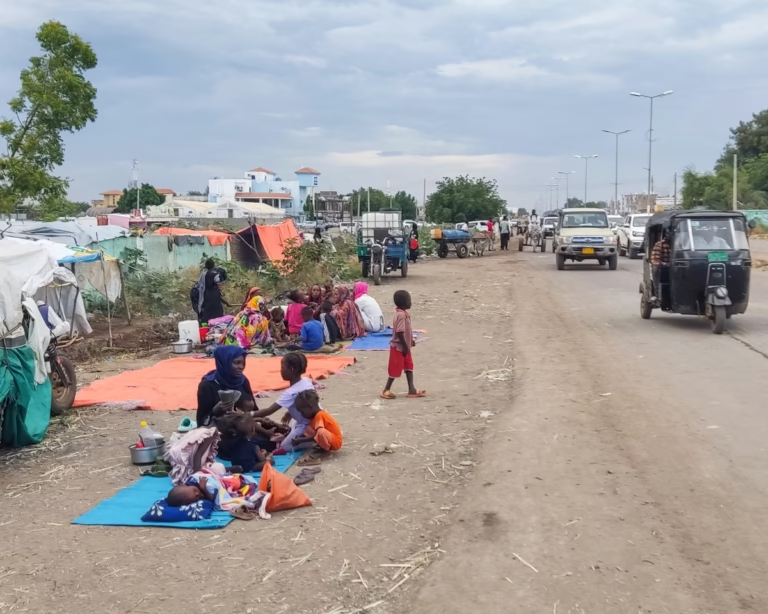
The humanitarian situation remains grave, with reports emerging that the TPLF is forcibly recruiting children as young as 15 for combat roles. Jalale Getachew Birru, an analyst for Acled, warned that communities in Tigray, Amhara, and Afar had only recently begun to recover from the devastating civil war that occurred between 2020 and 2022. That conflict claimed between 300,000 and 800,000 lives, and fears are growing that this latest violence could reverse the fragile stability achieved since the 2022 peace agreement. Between 300,000 and 800,000 civilians died, according to British government estimates.