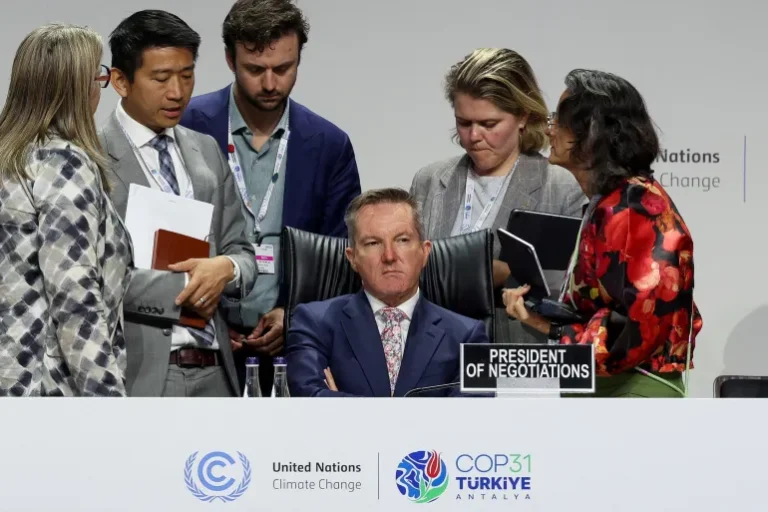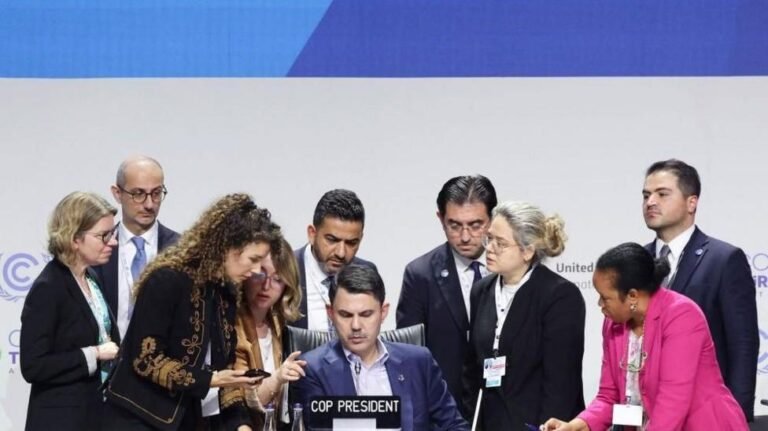
Negotiations at the Cop31 UN climate summit in Antalya reached an impasse on Saturday, as participating nations considered a direct confrontation with Saudi Arabia to secure a global commitment to phase out fossil fuels. The fortnight-long summit, co-convened by Australia’s Chris Bowen and Turkey’s Murat Kurum, has already exceeded its scheduled end time with no resolution in sight, sparking growing frustration among delegates and climate advocacy groups. Instead, we are fighting to stop governments retreating from promises they have already made. Abundantly clear by now that we will not be able to combat climate change as long as those who control the global economy can make money from coal, oil and gas.”. At last year’s Cop30 the Brazilian hosts got around this by pledging to draft a global roadmap on the phaseout of fossil fuels. The world should know why this Cop failed, whatever deal emerges in Antalya. Many delegates were rescheduling their flights home.
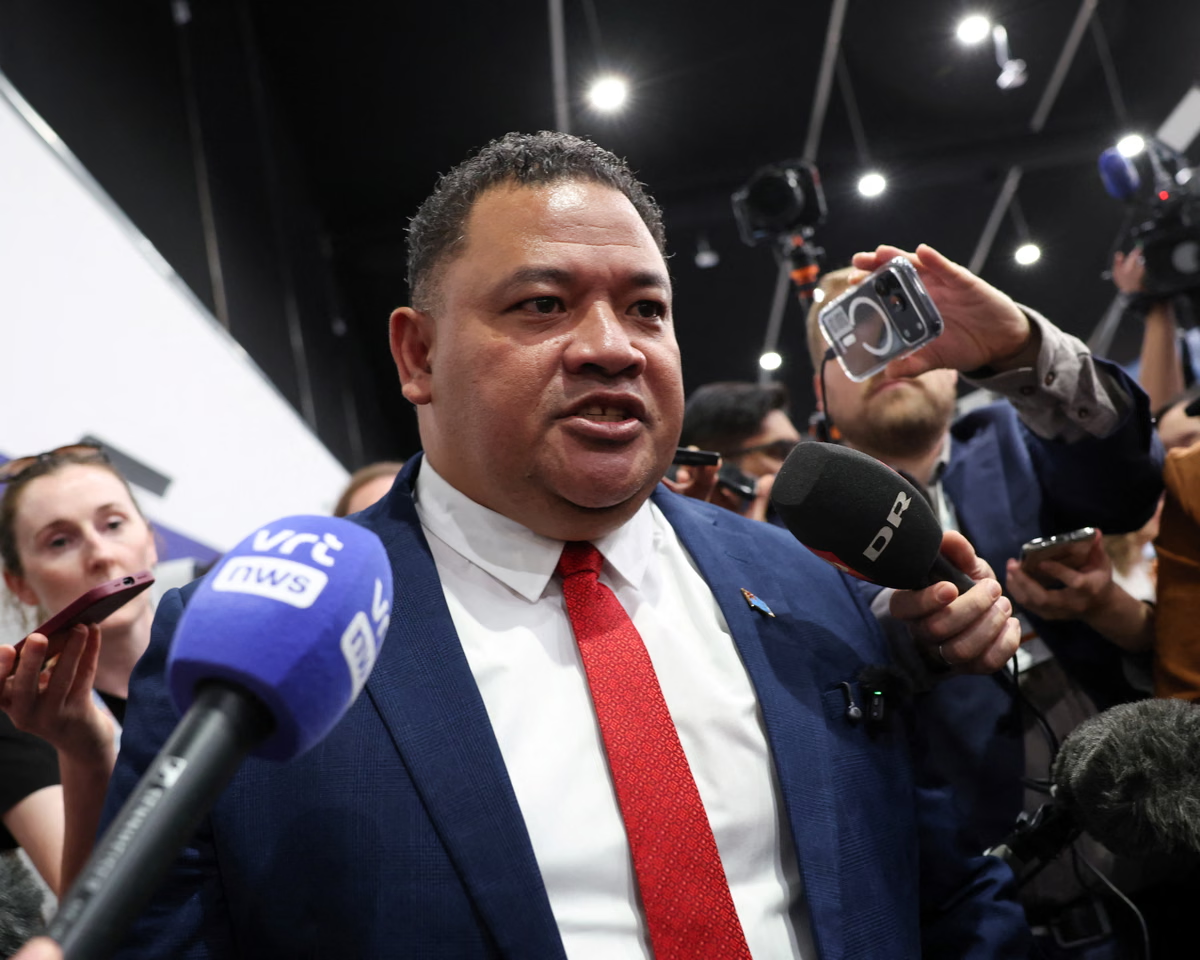
At the center of the deadlock is a loose alliance of approximately 130 countries demanding that the final agreement explicitly mention a “transition away from fossil fuels.” This coalition is also pressing for increased financial commitments from wealthy nations to assist developing countries in adapting to the escalating effects of climate change. Maina Talia, Tuvalu’s climate minister, emphasized that this inclusion is a “red line,” asserting that without addressing the primary cause of the crisis, the summit’s efforts are futile. The key sticking points concerned the insistence by a loose coalition of about 130 countries on including a reference to the “transition away from fossil fuels” in the final outcome of the talks, as well as demands by de. We’re talking about the root cause of all this. [Without it] we are wasting our time here.”.
The dispute also extends to the use of controversial carbon capture and storage (CCS) technology and a global goal to source 35% of energy from electricity by 2035. While Saudi Arabia is pushing for a formal “cover decision” that promotes CCS, many other nations fear the technology serves only to prolong the fossil fuel era. Some observers suggest a potential compromise could involve de-emphasizing CCS while bolstering electrification targets. Some suggested, if the role of CCS is downplayed and the push for electrification is strengthened, a compromise is possible.
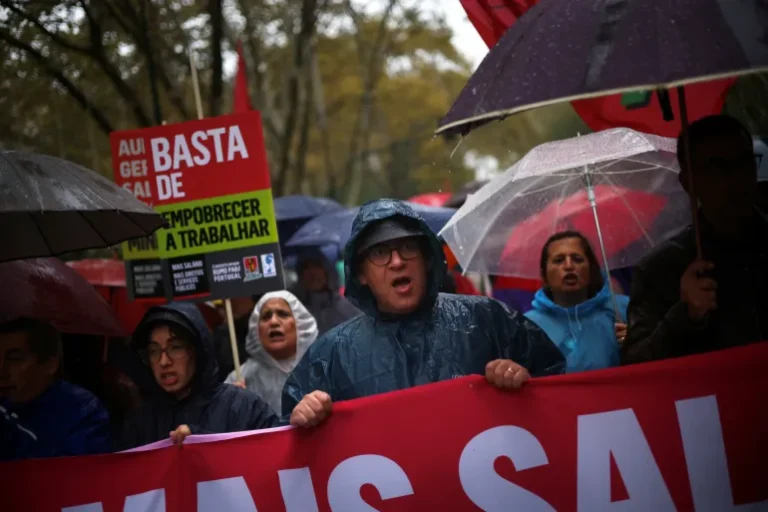
Mohamed Adow of Power Shift Africa described the situation as “unravelling,” noting that after two weeks of debate, many rich countries appear to be creating excuses to avoid fulfilling earlier financial pledges. Harjeet Singh, convener of the Fill the Fund campaign, echoed these concerns, stating that the summit’s failure stems not from a lack of viable solutions, but from a deficit of financial support and political will. And on rich countries’ failure to deliver on promises of finance for poorer countries. “This must be the, campaigners laid the blame for the lack of progress on the fossil fuel industry and the countries dependent on it.
Tensions reached a breaking point on Thursday when a reference to transitioning away from fossil fuels, which had appeared in the initial draft, was removed from a subsequent version. By Saturday evening, a broad group of nations—including the UK, the EU, African countries, and vulnerable island states—marched to the presidency office to demand the language be reinstated. The “transition away from fossil fuels” was previously agreed upon at Cop28 in 2023, though Saudi Arabia has consistently worked to stall its practical implementation.
Some analysts suggest the difficulty stems from the summit’s unique dual presidency, which Claudio Angelo of the Observatorio do Clima described as a “weak presidency” struggling with geopolitics. With the conference expected to stretch into Sunday, organizers face the risk of losing the necessary quorum as delegates begin to depart. A final plenary is scheduled for 9 a.m. local time, though the threat of collapse remains significant.
One strategy under active consideration is forcing an open meeting where Saudi Arabia would be compelled to state its opposition publicly. Veteran climate negotiator Bill Hare expressed belief that if the vast majority of countries insist on a strong agreement, Saudi Arabia may ultimately choose not to stand against the global consensus. Furthermore, there are indications that China and India, while not formal members of the progressive coalition, are unlikely to block an agreement.
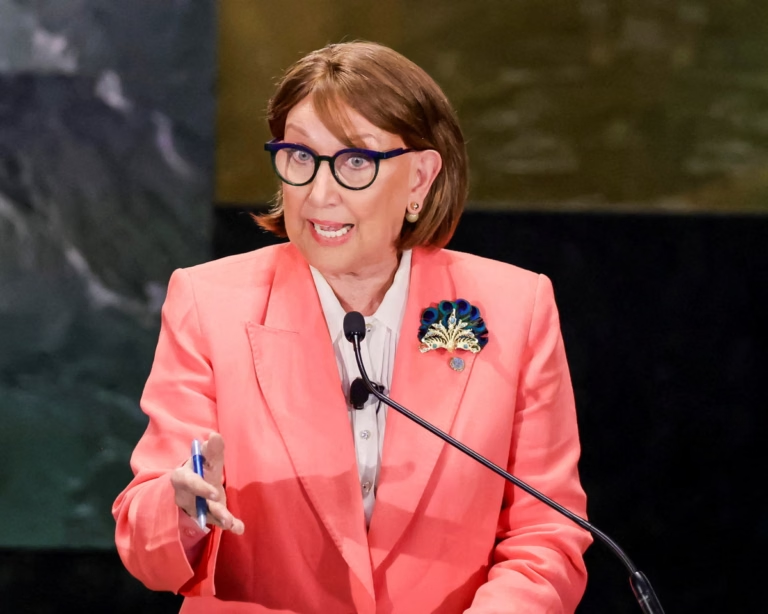
Despite the standoff, UK energy minister Miatta Fahnbulleh indicated that ongoing efforts are focused on securing a path forward. However, campaigners like Nick Dearden of Global Justice Now have demanded that fossil fuel interests, which he argues are profiting from the climate crisis, no longer be allowed to dictate terms at international summits.