A British healthcare worker has been confirmed to have contracted Ebola while serving in the Democratic Republic of the Congo. The individual is currently being transported back to the UK for specialized medical care, a move the government states follows established procedures for high-risk infectious disease cases.
Official reports indicate the patient is in stable condition. Upon arrival in Britain, the worker will be transferred via a specialized ambulance to a high-consequence infectious disease unit. While the specific hospital location was not named in official documents, the UK maintains advanced isolation facilities at the Royal Free Hospital in London, as well as in Newcastle and Liverpool.
The affected individual was deployed to the region by a humanitarian organization to assist in controlling the current outbreak, which has been identified as the seventeenth since the virus was first documented in the country. This specific strain, caused by the Bundibugyo virus, has escalated into the deadliest and largest in DR Congo’s history. Since its declaration by the health ministry on 15 May, the outbreak has resulted in over 10,000 recorded cases and 5,000 fatalities.
Dr. Jean Kaseya, director-general of the Africa Centres for Disease Control and Prevention, warned last month that the geographical spread of this outbreak is unprecedented, urging nations globally to increase preparedness for potential treatment needs. He emphasized that countries cannot consider themselves safe without taking proactive measures to manage the virus’s reach. “We want all countries to know that they are not safe if they don’t take appropriate measures,” he said. “Each country, not only in the African region, but all continents, must now increase the preparedness level and the possibility for treatment.
Public health officials in the UK have maintained that the risk of transmission to the general population remains very low. The UK Health Security Agency notes that Britain has recorded only four confirmed cases of Ebola since 1976.
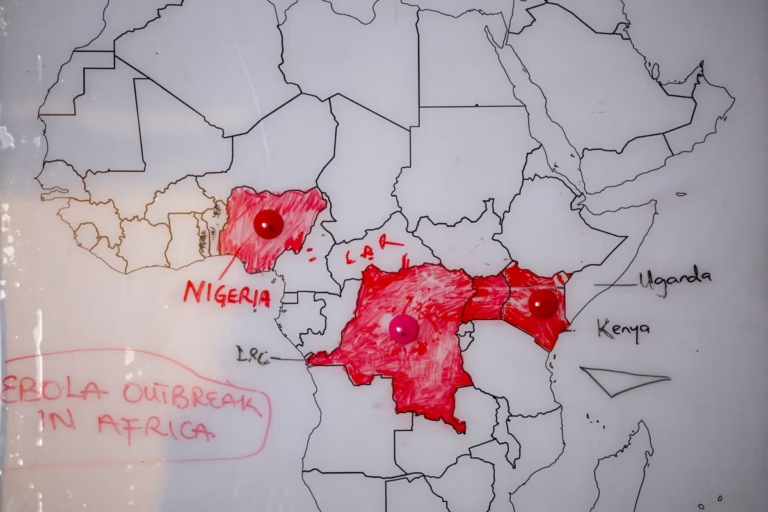
The virus, which is highly contagious and spreads through direct contact with infected bodily fluids—such as blood, vomit, or deceased remains—has also triggered recent cases in neighboring regions. Severe and often fatal illness, ebola is a highly contagious.
Nigeria previously confirmed a case in Abuja involving a traveler from Uganda, leading to the patient’s evacuation to Switzerland. Similar medical evacuations have occurred throughout this outbreak, with patients transferred to Germany, the Netherlands, and France for specialized treatment. She, along with a close contact, were evacuated to Switzerland for treatment. Other patients who have been medically evacuated for specialised care since the start of the outbreak include two sent to Germany and one to the Netherlands. According to another case was, In France in July.
While no approved treatment exists for the Bundibugyo virus, clinical trials for vaccines are ongoing. Authorities continue to monitor the situation closely as international health agencies coordinate responses to contain the spread across African regions and beyond.