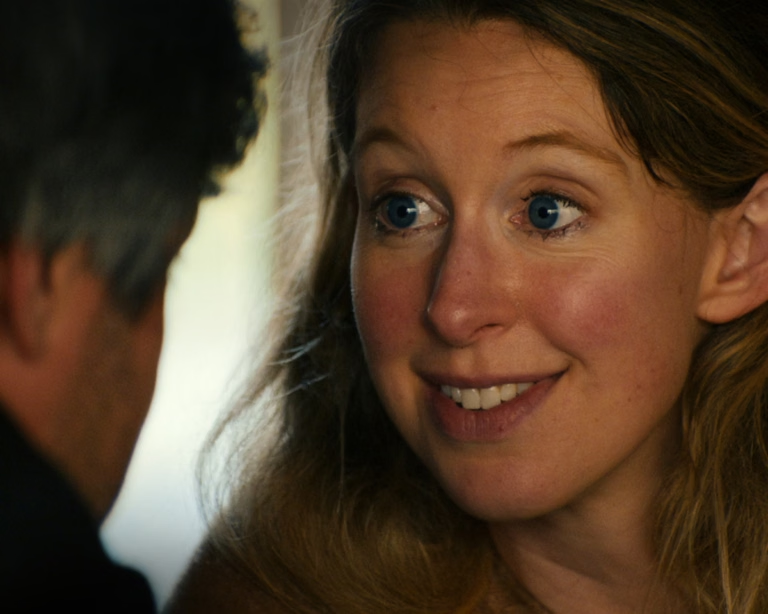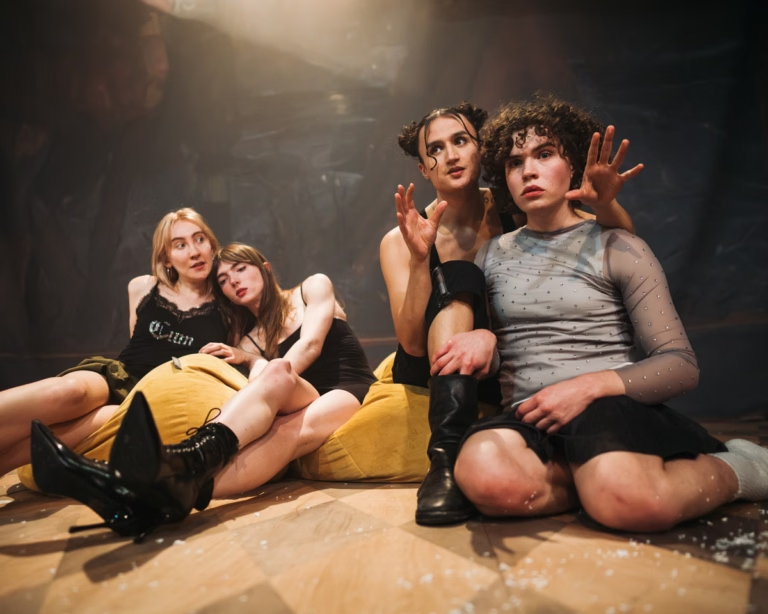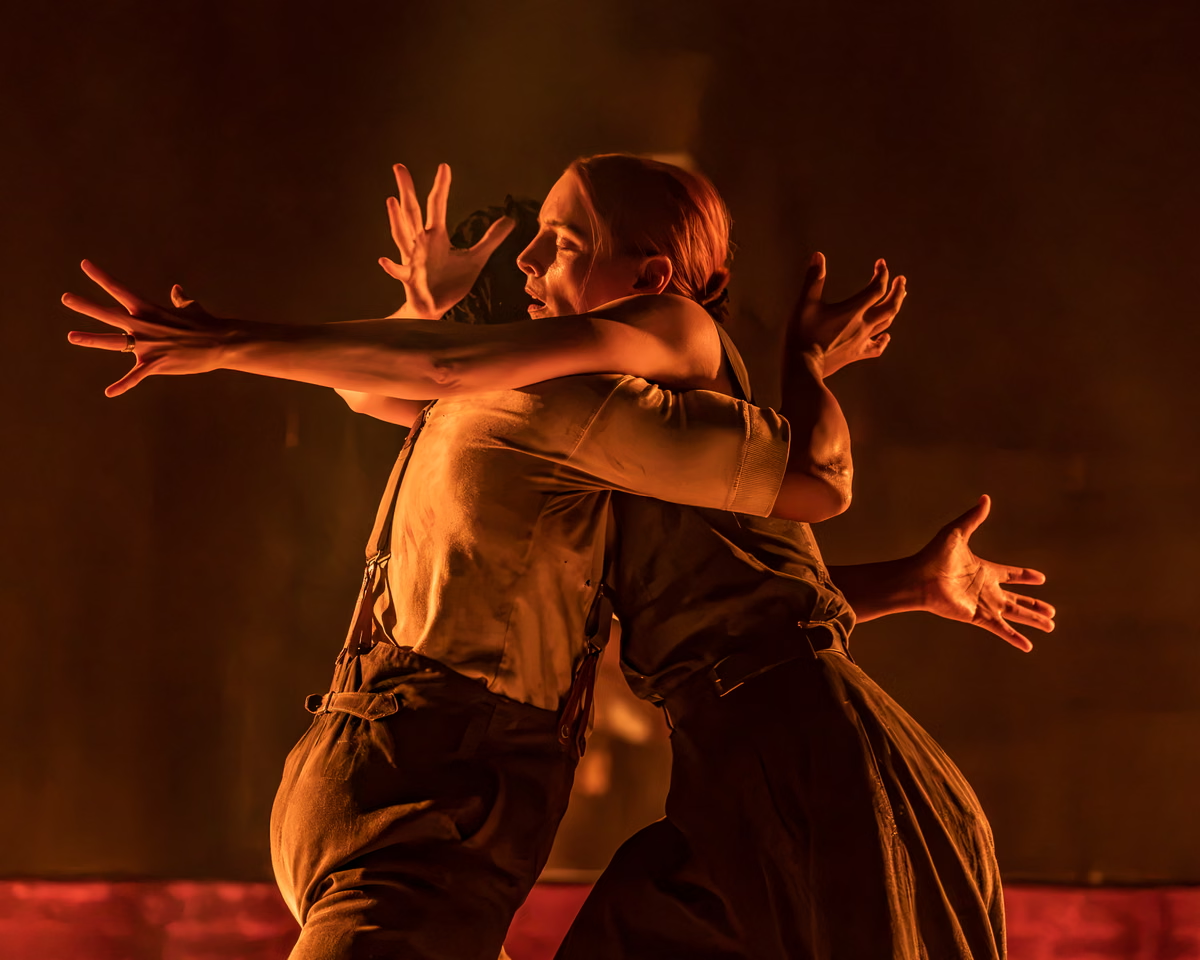
Eugene O’Neill’s 1924 play about illicit desire and land disputes has been reimagined in a striking new production at London’s Almeida Theatre. Directed by Ebenezer Bamgboye, this version strips away the traditional 19th-century farm setting in favor of a sleek, modern aesthetic that emphasizes the ancient Greek tragedy foundations of the source material. The production, which runs until December 23, offers a bold, if occasionally uneven, perspective on a story defined by generational conflict. With a racial element added, there is an attempt to tell O’Neill’s story on another level.
The narrative centers on the tyrannical Ephraim, played by Antony Byrne, and his calculating son, Eben, portrayed by Zackary Momoh. Tension erupts when Ephraim returns to the farm with his young new bride, Abbie, played by Kelly Gough. Upon seeing the property for the first time, Abbie exclaims, “I can’t believe all this is mine,” setting the stage for a fractious and complex relationship between herself and her stepson. Beguiling and bewildering in equal measure, it makes for a strange mix at first.
Bamgboye incorporates a modern racial dynamic by shifting the setting to the American Deep South, recasting the father-son tension as a struggle between a white patriarch and a Black son. Through this lens, Ephraim’s authoritative rule over the land takes on the unsettling appearance of a plantation owner’s control. The production further heightens its atmosphere with a live musical score featuring guitar and trumpet, while movement and dance are used to externalize the characters’ intense emotions and violent outbursts. Eben speaks of his father’s slave-driving and his wrongful ownership of stolen land; Ephraim’s iron-rod rule begins to look like that of a plantation owner.
While the first half of the show suffers from an excess of stylized directorial flourishes—relying heavily on gothic elements, smoke, and choreographed movement that occasionally dampens the sexual chemistry between the leads—the second half finds its footing. When the production allows the performers to focus on the raw, elemental drama of the script, the results become far more compelling. The script sharper with less of the exposition that might date it, but the directorial flourishes come so thick and fast that it is stylised to the bone, it is an original refashioning.
Kelly Gough delivers an extraordinary performance, echoing the work of her sister, Denise, who tackled the same role 14 years ago. Blending the qualities of Phaedra and Medea, Gough portrays Abbie with a potent mix of steeling ambition and vulnerable desire. Her unraveling on stage is both painful and profound, elevating the production to the heights of classical tragedy. As artistic director Rupert Goold’s final project before his departure, the show stands as an intense, if imperfect, testament to the enduring power of O’Neill’s storytelling. Bamgboye employs some of the striking theatricality that he brought to his magnetic adaptation of The Lonely Londoners two years ago. Bamgboye has previously worked with Rebecca Frecknall (who staged the leaden O’Neill drama A Moon for the Misbegotten last year) and the first half seems to pay too big a debt to her style of work. Music interprets emotion, from screams to sexual overtures and angry clashes, as in Frecknall’s production of A Streetcar Named Desire.