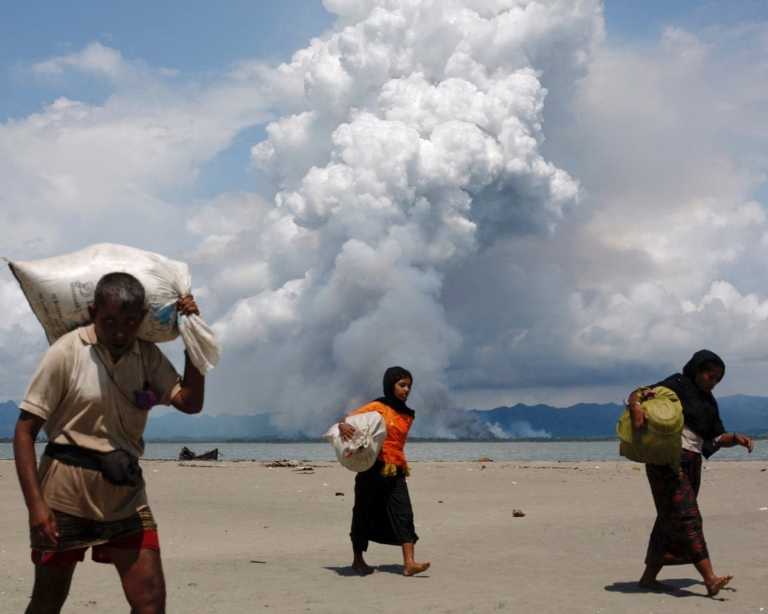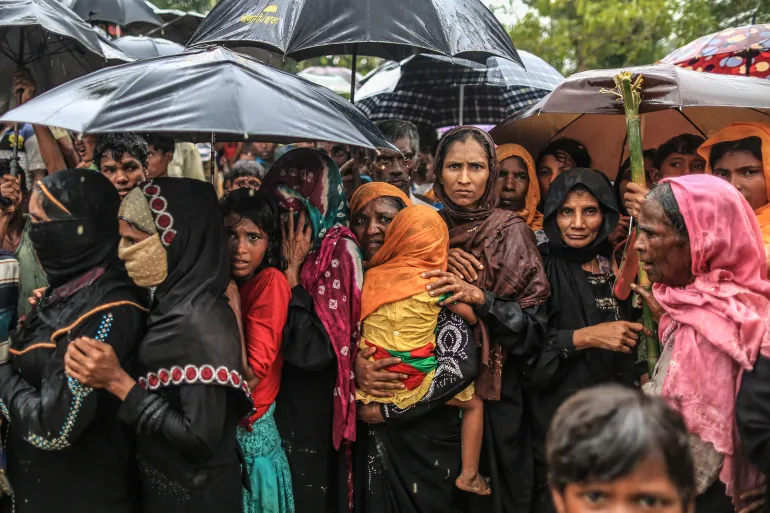
In a historic legal development, the United Nations’ top court has issued a landmark verdict confirming that Myanmar committed genocide against its Rohingya Muslim minority. The ruling, delivered on Thursday at the International Court of Justice (ICJ) in The Hague, marks the first time a state has been formally held responsible for genocide at the court, and only the fourth such instance since the Nazi Holocaust. The United Nations’ top court has ruled that Myanmar committed genocide against the Muslim minority Rohingya population in a brutal 2017 military crackdown that drove more than 730,000 Rohingya to flee to neighbouring Bangladesh, in a landmark verdict. “By finding that Myanmar committed genocide, ordering a guarantee of non-repetition, and ordering restitution and compensation, the world’s highest court has permanently shattered that state-sponsored lie,” she said. The verdict is “extremely important for the Rohingya,” our correspondent said. “They’ve been waiting for 10 years for any kind of justice, but it’s also important for the whole international community because genocide is such a difficult act to prove.”. It added that all crimes under international law “must be effectively investigated and those suspected of responsibility brought to justice”. Conflict, shrinking humanitarian aid and dangerous sea crossings continue to leave many members of the community displaced and vulnerable.
ICJ President Yuji Iwasawa, announcing the 9-6 decision, stated that the court found Myanmar acted in clear violation of its obligations under the Genocide Convention. Evidence presented during the proceedings revealed that security forces were responsible for the deaths of 10,000 Rohingya. The court’s findings detailed systematic violence, including widespread sexual assault and brutal acts against children, specifically targeting those attempting to flee to neighbouring Bangladesh. According to evidence showed Myanmar forces killed 10,000 Rohingya people, Iwasawa, During a three-hour readout of the verdict.
The court explicitly concluded that Myanmar’s security forces operated with “genocidal intent.
The judgment established four specific genocidal acts: the mass killing of civilians, the forced displacement of hundreds of thousands, serious bodily and mental harm, and measures intended to prevent births. Judges noted that the Rohingya had faced long-standing persecution, including forced participation in birth control programs, well before the escalation of the 2017 military crackdown. Well before 2017, according to the judge, Vaessen said, the Rohingya have long been treated as second-class citizens. She added, they were also forced to take part in a birth control programme. “So the judge really saw this as a very strong explanation that … a genocidal act was committed there.”.
Myanmar had previously contended that its security operations were a legitimate response to militant attacks on police outposts by the Arakan Rohingya Salvation Army (ARSA). However, the ICJ rejected this, stating that the only reasonable inference from the widespread evidence was an intent to destroy a substantial portion of the Rohingya population.
Under the court’s order, Myanmar is now mandated to provide comprehensive reparations and restitution.
These measures include facilitating the safe and voluntary return of displaced persons, replacing damaged collective property, conducting searches for the disappeared, ensuring proper burials, and providing medical and psychological rehabilitation for victims. The court further emphasized that Myanmar violated its preventive obligations by allowing armed civilians to participate in the military campaign.
The international community and human rights organizations have largely welcomed the decision. Gambia, which initiated the case, praised the ruling as a historic day for justice and urged Myanmar to comply immediately. British Foreign Secretary Ed Miliband announced the expulsion of Myanmar’s defence attaché and called for an urgent session of the UN Security Council to address enforcement.
Advocacy groups including Amnesty International and the Women’s Peace Network hailed the verdict as a victory against years of state-sponsored denial. Activist Wai Wai Nu described the ruling as a moment that has “shattered that state-sponsored lie” regarding the military’s actions. Founding member of the Special Advisory Council for Myanmar, Yanghee Lee, noted that while justice has been decided, it is not yet fully delivered, stressing the need for ongoing accountability. According to “For decades, the Burmese military tried to erase our identity, deny our existence, and dismiss our suffering,”, Wai Wai Nu, executive director of the Women’s Peace Network and a former political prisoner.
Legal experts suggest that the road to enforcement remains complex.
International human rights lawyer Toby Cadman highlighted that while this ruling sets a precedent for the “high threshold” of proving genocidal intent, future progress will depend on potential UN Security Council sanctions and other binding remedies. According to cadman, The situation does not come to an end with the ICJ’s ruling and a lot will depend on what comes next.
The ICJ’s decision serves as a significant milestone for the 1.3 million Rohingya currently displaced across South and Southeast Asia, including 1.2 million living in refugee camps in Cox’s Bazar, Bangladesh, who have awaited legal recognition of their suffering for a decade.