President Volodymyr Zelensky recently disclosed that US negotiators have proposed the possibility of Ukraine withdrawing its remaining forces from the eastern Donbas region in exchange for NATO membership. This development marks the first time such an exchange has been explicitly raised as a point of discussion, according to comments released by the Ukrainian president’s office on Saturday. The Americans raised a question: ‘What if Ukraine joins Nato. It is not clear the US is actually proposing Nato membership â the White House has not yet replied to a request for comment and it is understood that Ukraine itself sees that as unrealistic. So it is also possible that Zelensky made this suggestion public in order to re-open a discussion that had been considered all-but closed.
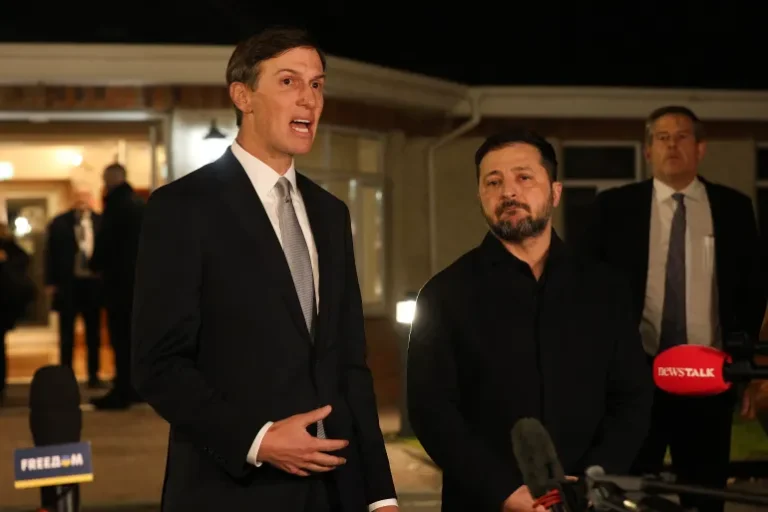
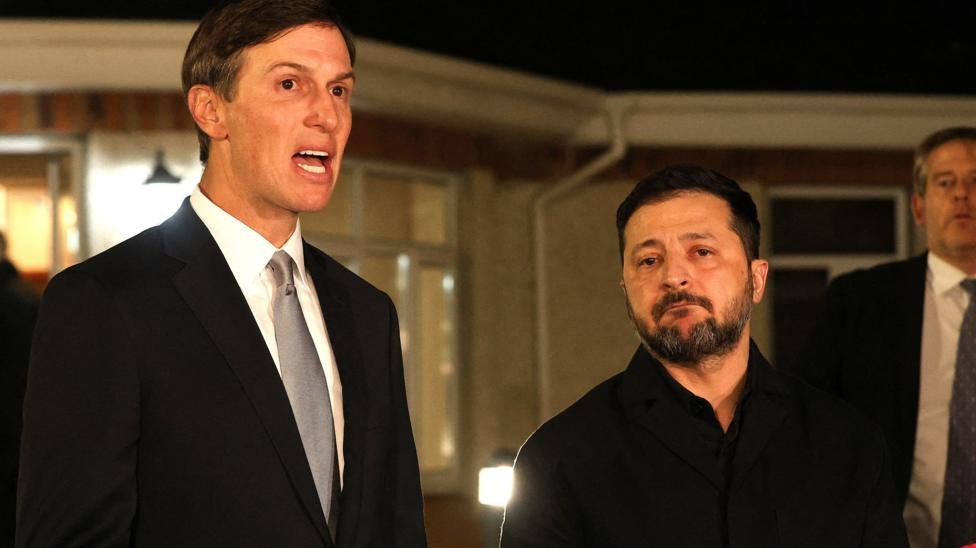
The US government has yet to confirm these remarks, which emerged following a series of diplomatic meetings. US envoys Jared Kushner and Steve Witkoff held talks with Zelensky in Dublin on Thursday, shortly after conducting a round of discussions with Russian President Vladimir Putin in Moscow. These meetings are part of a broader effort by the United States to address the ongoing war that began with Russia’s full-scale invasion of Ukraine in February 2022. It is one reason why Russia started this war in the first place. The issue appears to have been the main focus at the latest round of talks between Ukraine, Russia and the US in Abu Dhabi this week.
Kyiv has long pursued entry into the Western military alliance, a goal that historically faced resistance from the US and other member states. Conversely, Russia has consistently maintained that any expansion of NATO along its borders is unacceptable. Currently, Moscow controls the majority of the industrial Donbas region, and Zelensky has repeatedly affirmed that Ukraine is not prepared to surrender its sovereign territory. Other Nato members are wary and the Kremlin has always been fiercely opposed.
Zelensky indicated that should he receive a formal, concrete proposal that guarantees Ukraine’s security, prevents constraints on its military capabilities, and provides funding for national reconstruction, he would be willing to put the decision to a national referendum. He emphasized that this concept is now back on the agenda as part of a complex conversation regarding European security architecture.
The Kremlin’s stance appears largely unchanged, as Moscow continues to call for limits on the size of the Ukrainian military, territorial concessions, and a guarantee of neutrality. Ukraine has rejected these terms, contending they would leave the nation vulnerable to future aggression. Furthermore, Russia maintains that a ceasefire is contingent upon a final peace agreement that includes land currently held by Ukrainian forces, alongside the Crimean Peninsula, which was illegally annexed in 2014. Russia has insisted again that it will not agree to cease fighting until a final peace deal is in place that would include handing over territories its troops have not captured, in addition to the Crimean peninsula it annexed illegally in 2014.
The diplomatic situation remains tense. Recent relations between Kyiv and Washington have been strained over Ukrainian strikes against Russian oil infrastructure, which Donald Trump had urged be halted to facilitate diesel supplies and stabilize fuel prices. Zelensky had previously accused US officials of restricting Ukraine’s Starlink internet service, vital for defensive coordination. In turn, Trump has publicly called for fresh elections in Ukraine, despite polls being suspended under current martial law.
While Zelensky has previously suggested a willingness to step down from the presidency within months of a peace deal to facilitate NATO integration, the practicality of the current US proposal remains uncertain.
Observers believe the American envoys may be probing Ukraine’s red lines in the Donbas.
Zelensky has expressed concern that US mediators are applying significant pressure, seeking an expedited deal, yet he remains adamant that Russia harbors far-reaching ambitions that only NATO membership can truly deter.