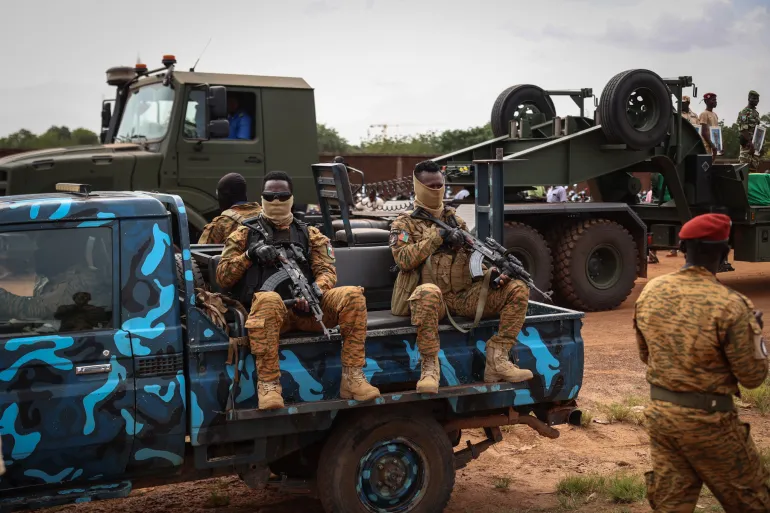
Armed militants from two rival factions are locked in a series of increasingly violent confrontations along Burkina Faso’s northern border with Mali. As the national government struggles to maintain authority across wide swaths of the country, the competition for territorial dominance between the al-Qaeda-affiliated Jama’at Nusrat al-Islam wal Muslimin (JNIM) and the ISIL affiliate in Sahel Province (ISSP) has grown more volatile since early September. JNIM’s expansion raises concern across West Africa. “Over the longer term, several underlying factors contribute to their likely continued expansion into littoral West Africa, such as porous borders, high levels of marginalisation in northern regions of littoral West African countries and communal tensions, particularly anti-Fulani sentiment.”.
These confrontations have resulted in competing claims of heavy casualties, though the figures released by the ISIL-linked group remain unverified. A significant clash near the border town of Kacham occurred in early September, where the ISSP claimed to have killed more than 200 JNIM fighters, captured over 30 individuals, and seized various weapons and motorcycles. While the claim lacks independent verification, Heni Nsaibia of the Armed Conflict Location & Event Data (ACLED) project noted that if the death toll were confirmed, it would mark the deadliest battle recorded between the two groups to date. JNIM remains active across several countries, while ISSP’s battlefield successes could strengthen its position in areas where the two groups compete. According to he, The group had struggled to counter ISSP, which had repeatedly emerged victorious from some of their most significant battles in recent years.
Violence escalated further on October 9 in the northern Oudalan province near Ganadaouri.
Following the incident, ISIL’s weekly publication, Al-Naba, asserted that over 400 JNIM fighters had been killed.
JNIM has not offered a public rebuttal to this claim, and no objective assessment has yet established an accurate casualty count.
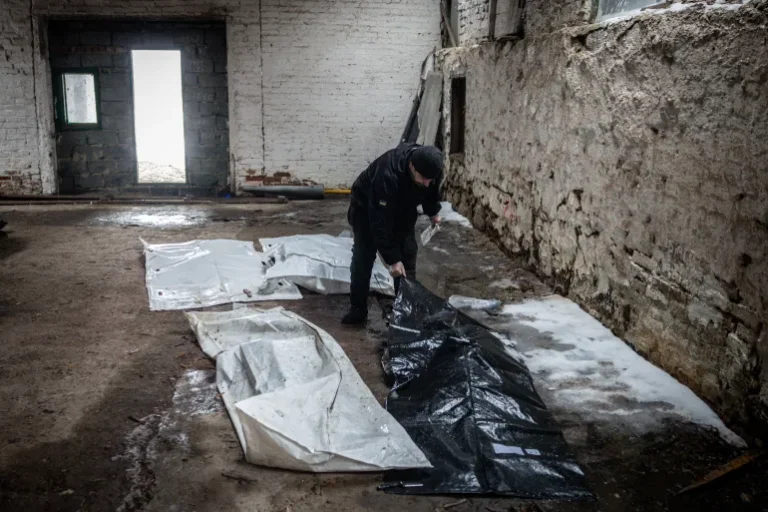
The scale of the reported loss faced scrutiny after ISSP released photographs on November 1 purportedly showing the battle’s aftermath.
Regional news outlet i-Sahel, which analyzed the images, identified at least 120 bodies but stated it could not verify the context, noting that the visible number was significantly lower than the total claimed by ISIL.
This ongoing rivalry dates back to 2019, with ACLED documenting approximately 320 armed clashes between the two groups and more than 2,200 total fighter deaths since the conflict’s inception. Despite this infighting, JNIM continues to make strategic gains against state forces. According to the International Crisis Group, JNIM maintains an extensive presence in the northern, north-central, western, and eastern regions of Burkina Faso, consistently challenging state authority while operating simultaneously in Mali and Niger. When the two groups began fighting over territory, influence and access to local populations across the Sahel, the confrontation is part of a rivalry that has persisted since 2019. The prospect of one organisation weakening another offers little certainty of relief, for communities caught between the armed groups and government forces.
Data from ACLED’s March 2026 review highlights the pressure on the state, noting over 30 JNIM-led attacks in February alone during an offensive against the military and the state-backed Volunteers for the Defense of the Homeland (VDP). Those operations resulted in the deaths of more than 120 soldiers, militia fighters, and forest guards. While some observers suggest that the diversion of JNIM resources toward fighting the ISSP might offer the government a temporary respite, there is no evidence to suggest this will lead to lasting state recovery.
The wider security crisis continues to devastate the civilian population, with an estimated 4.5 million people in Burkina Faso requiring humanitarian assistance in 2026. Official estimates from March 2023 indicated approximately 2.1 million people were internally displaced, though this figure does not reflect current 2026 conditions. A Nigerien citizen, speaking on condition of anonymity, described the pervasive fear in the borderlands, suggesting that if the two militant groups continue to weaken each other, it might theoretically reduce the pressure on local communities attempting to farm and travel safely. Published in March 2023, put the number at approximately 2.1 million, the last consolidated official estimate of internal displacement. That figure should not be mistaken for a newly verified 2026 count. “In Tillaberi, where I have family members, our people have endured too much fear. Travel safely, and raise their children without fearing attacks from either group.”, people here deserve the chance to work their fields.
The scope of the rivalry is expanding beyond Burkina Faso and Mali, now reaching into Nigeria’s Kebbi State and the Tillaberi and Dosso regions of Niger. Between January 1 and November 28, 2025, ACLED recorded over 10,000 deaths from political violence across Burkina Faso, Mali, and Niger. Security analysts warn that the shifting conflict patterns pose an escalating risk to coastal nations in the Gulf of Guinea.
Viraj Pattni, a senior associate at security risk management firm Castor Vali, emphasized that the threat of Islamist militancy spreading to coastal states is significant. Over the last 24 months, JNIM has intensified operations in western and southern Mali. Although their presence is currently less pronounced in southern Burkina Faso, JNIM’s control over the Est Region has facilitated operational expansion into Togo and Benin. The group also claimed its first official attack in Nigeria’s Kwara State in October 2025, signaling a broader regional shift in their reach and fighting capacity.