The United Kingdom has spearheaded a new military collaboration designed to integrate the maritime defense capabilities of ten European nations. This initiative, dubbed the Northern Navies Initiative, focuses on sharing warships and sea-based drone technology to address what regional officials describe as a rapidly escalating threat profile originating from Russia. Including the sharing of sea drones and warships, in response to what European countries see as a growing threat from Russia, the United Kingdom has unveiled a plan to integrate the maritime defence capabilities of 10 countries. What did the UK say when announcing the plan. How has Russia responded to European accusations.
First Sea Lord General Gwyn Jenkins emphasized the urgency of this cooperation following the agreement’s signing on Tuesday. He stated that the challenges facing the region are multiplying and required a unified response, noting that the alliance demonstrates the effectiveness of like-minded nations operating toward a shared strategic purpose.
Central to the plan is a 90 million pound ($121 million) investment by the British government. These funds are earmarked for artificial intelligence systems, advanced sensors, and drone technology intended to assist the Royal Navy in monitoring undersea threats across the North Atlantic and securing critical infrastructure. Concerns about threats to undersea cables have particularly grown since Russia launched its full-scale invasion of Ukraine in 2022. For which Russia was initially blamed, moscow has accused the UK of carrying out the attack on the Nord Stream pipelines in 2022.
The initiative brings together the Royal Navy with members of the Joint Expeditionary Force (JEF), a partnership focused on crisis management in the High North, the Baltic Sea, and the North Atlantic. Participating nations include Denmark, Estonia, Finland, Iceland, Latvia, Lithuania, the Netherlands, Norway, and Sweden.
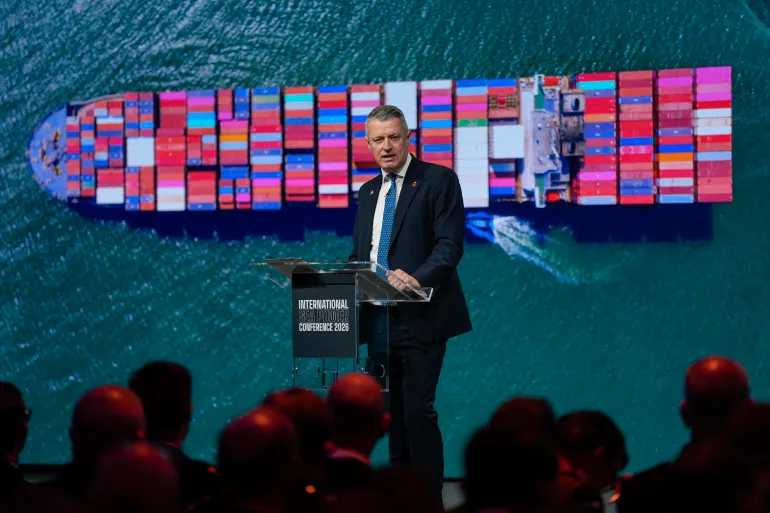
Luke Pollard, the UK minister for defence readiness, noted that Russian naval activity near the UK has surged by 41 percent within the first nine months of the year. During an International Sea Power conference held on the HMS Prince of Wales aircraft carrier in Oslo, Pollard argued that this increase in violations necessitates a more integrated defense approach.
The defense framework aims to allow allied navies to operate as a singular, cohesive force rather than ten fragmented entities. Under this model, operational responsibilities, such as command of sensor networks or uncrewed vessels, can be transferred seamlessly between a British warship and an allied vessel from countries like Denmark or Norway, without disrupting mission momentum. Sailing the warship to Norway was “a really important deterrent signal that we stand ready to defend every single inch of NATO territory”, Pollard said. According to the agreement aims to support maritime deterrence and defence for the citizens of the JEF countries, allowing them to “act early, combine quickly and transition seamlessly into NATO command should the Alliance need to mobilise at scale,” the British Royal Navy, In a statement. “In practice, greater interoperability means a Royal Navy frigate could transfer operational responsibility to another JEF member without losing momentum,” it added. “One nation’s task group could direct allied sensors and uncrewed vessels, while a warship could repair, refuel and resupply in an allied port rather than returning home,” it said. Future autonomous platforms will be able to plug in and out of each other’s command and control systems, “creating one large maritime force instead of 10 separate ones”, it added. As a result, oil tankers linked to Russia remain active but have been “sailing around the UK” to avoid coming through the English Channel, Pollard said. Pollard, the defence minister, blamed the opposition Conservatives for these shortfalls. “Now, because of the decisions taken 10, 15 years ago, we have fewer ships and fewer submarines than I would like available,” the minister said. However, Russia has repeatedly denied targeting them. It has opposed NATO membership for Ukraine as one of the conditions to end the nearly five years of war – Europe’s deadliest conflict since World War II.
Guntram Wolff, a senior fellow at the Bruegel think tank, characterized the alliance as a vital initiative for continental security. He argued that no individual Western European nation possesses the capacity to defend itself credibly against contemporary threats, stressing that interoperability and clear command structures are essential for deterring hybrid attacks on sensitive infrastructure, including deep-sea cables and renewable energy assets.
Western officials have grown increasingly concerned over Russian efforts to map subsea infrastructure. The British government has cited instances where Russian spy ships, such as the Yantar, have attempted to gather data on critical national assets. Furthermore, the Royal Navy noted that Russian frigates have been observed escorting vessels in UK waters, and in one instance in June, a Russia-linked tanker was seized after shots were fired at a private yacht south of the Isle of Wight.
The UK is also grappling with its own naval resource constraints, with the number of operational frigates projected to fall from 12 in 2021 to just three by 2030. Pollard attributed these shortfalls to legacy policy decisions made over the last decade, reinforcing the necessity for the new, shared surveillance and deterrent capabilities. Last month, UK officials called attention to the dwindling number of British frigates, which is expected to drop from 12 in 2021 to three by 2030, The Guardian said, and which could explain why the initiative was launched.
Moscow has consistently rejected allegations of posing a maritime threat.
The Russian embassy in London has previously dismissed claims regarding submarine activity near undersea cables, accusing the British government of promoting militaristic hysteria. “We are not interested in British underwater communications,” the Russian embassy said.
Despite these denials, the UK maintains that any attempt to interfere with vital infrastructure will result in serious consequences, highlighting the strategic importance of the new Northern Navies Initiative in safeguarding regional stability. Two Ukrainian nationals have been arrested in connection with the sabotage.