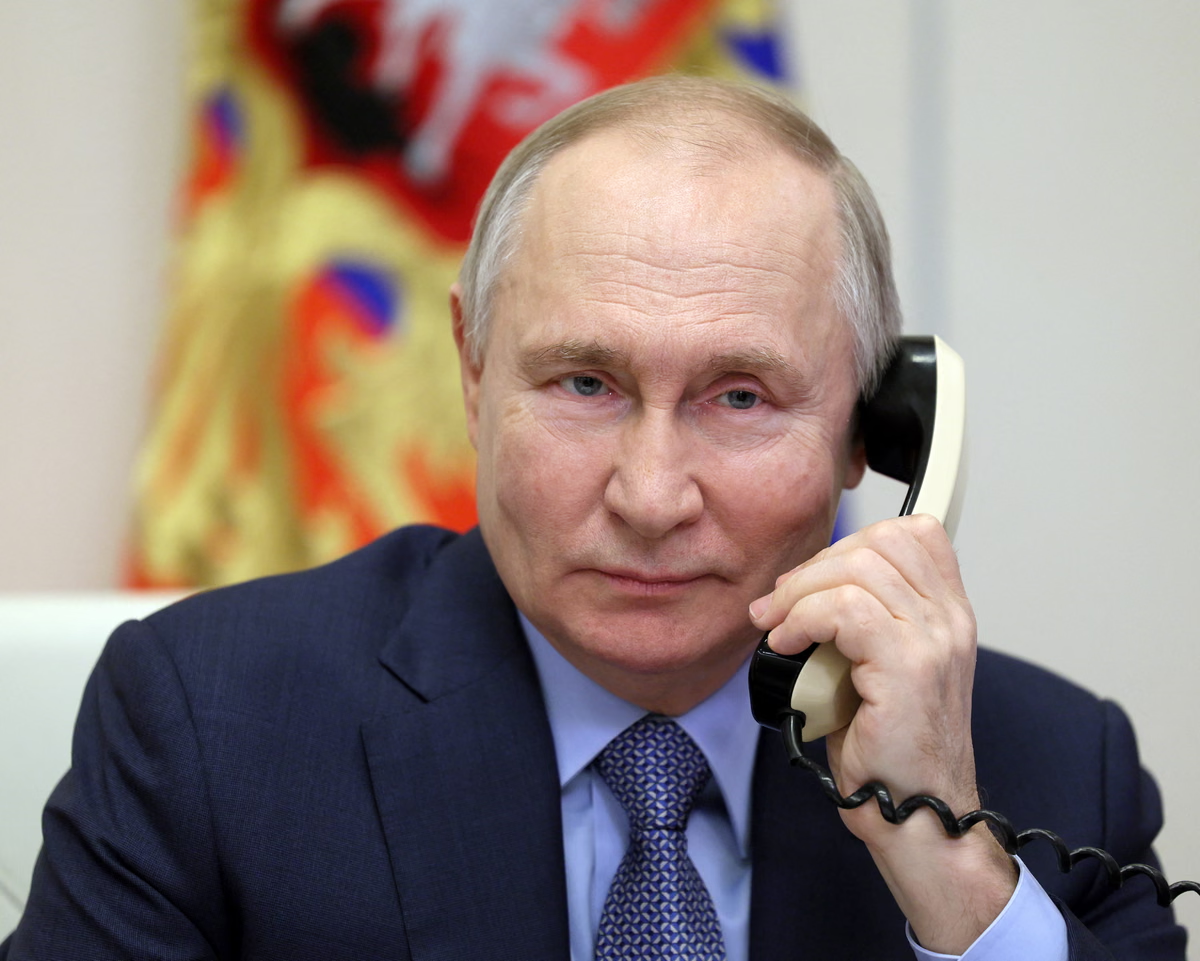
The Nordic nations are facing an unusual public dispute over foreign policy toward Russia following a 90-minute phone call between Vladimir Putin and the leaders of Finland and Norway. On Tuesday, Finnish President Alexander Stubb and Norwegian Prime Minister Jonas Gahr Støre engaged in a rare high-level conversation with the Russian leader, drawing sharp criticism from neighbouring allies who said they were not consulted.
Danish Prime Minister Mette Frederiksen voiced strong disapproval of the uncoordinated call, stating, “I am very sceptical about this independent initiative by Norway and Finland. I honestly don’t know what they think they can achieve by this.” Swedish Prime Minister Ulf Kristersson also condemned the outreach, noting that his government had not been informed ahead of time.
Analyst Arkady Moshes, director of the Russia programme at the Finnish Institute of International Affairs, observed that the dispute highlights a significant break in regional unity. “Instead of looking like a firmly united, homogeneous group, we see a rift,” Moshes remarked. “By the standards of the Nordic world, it’s pretty serious.” According to “On substance there is actually quite a good level of unity in Europe, but then there are different views on how to approach Russia, when is the right time to reopen dialogue at the highest level and who should be doing it,”, Kristi Raik, director of ICDS, a leading Estonian thinktank. Calculating that the US midterms could leave the president politically weakened, moshes suggested that Moscow was tiring of Trump’s unpredictability and looking to Europe as an alternative.
The controversy underscores broader European debates on whether to establish direct communication with Moscow. A senior European diplomat, speaking anonymously, noted, “There is an agreement overall that we need to talk to Putin, but the outreach is starting to feel like a free-for-all. Too many leaders believe they can be the one to get Putin to negotiate.” This marks a notable shift from the diplomatic isolation imposed on the Kremlin immediately following Russia’s 2022 full-scale invasion of Ukraine. Since the summer, European leaders have been discussing, without much progress, whether to appoint a representative to negotiate directly with Moscow on ending the war in Ukraine. The debate has grown more urgent as Donald Trump has moved closer to Moscow in recent weeks at Ukraine’s expense. The call appeared to have broader aims, initially framed as an effort to convey Ukrainian messages to Putin. In theory, the task of speaking to Moscow could fall to Kallas. Still, Moscow has appeared more willing to entertain European involvement in diplomacy since US special envoy Steve Witkoff met Putin in St Petersburg last week.
Throughout this year, diplomats and officials from Britain, France, and Germany have held separate discussions with Russian representatives. French President Emmanuel Macron’s top diplomatic adviser recently traveled to Moscow, and European Council President António Costa’s office has pursued independent engagement. However, European Union leaders have struggled to reach a consensus on appointing a single representative to manage relations with Moscow. While Germany and Britain have been more cautious, france has long advocated keeping a channel to Putin open. While Russian officials have made clear they have little appetite for engaging with her, moscow has placed her on a wanted list.
Nordic-Moscow Contact Key Details
- Nordic phone call duration: 90 minutes on Tuesday
- Key participants: President Alexander Stubb (Finland) and Prime Minister Jonas Gahr Støre (Norway)
- Key critics: Prime Minister Mette Frederiksen (Denmark) and Prime Minister Ulf Kristersson (Sweden)
- Underlying motive cited: Preventing bilateral misunderstandings and addressing regional security concerns
- Kremlin response: Putin repeated pseudo-historical lectures on medieval Slavic history during the call
The messaging surrounding the outreach has generated confusion among analysts. During his 2024 presidential campaign, Stubb had asserted that he would not accept calls from Putin. Following the call, Stubb indicated that the conversation was aimed at avoiding misunderstandings between Russia and its Nordic neighbours. Former Finnish diplomat Joel Linnainmäki remarked, “Stubb and Støre can’t seem to get their message straight on whether this was about Ukraine or also about their own security concerns. If it looks messy, it probably is.”
Linnainmäki noted that the EU faces structural challenges in coordinating its diplomacy, stating, “The EU must speak with one voice, and Ukraine must always be involved.
If you take those two things into account, then I think it makes perfect sense for Europe to engage in talks. However, he acknowledged that achieving unanimous support is difficult due to the potential for single-member state vetoes. He warned that this week’s call could prompt other European leaders to launch independent outreach, asking, “If the Finns and Norwegians are calling Putin, why should our country not do it?” Leaving European governments anxious about being sidelined in negotiations that could shape the continent’s security for decades, a new round of peace talks is expected to take place in Abu Dhabi next month. Citing the need to manage shared fish stocks in the Barents Sea and maintain security along the countries’ common border, støre later defended Norway’s decision to engage directly with Putin. According to you are such a small country,” he, At a conference in Prague in May. For now, no single figure has a clear mandate to negotiate on behalf of the EU’s 27 member states. A Dutch member of the European parliament, has called on EU leaders to convene a summit and agree on a single representative to engage with Putin, reinier van Lanschot.
Security experts expressed concern that fragmented communication play into Moscow’s strategy. Analysts noted that the Kremlin views these independent diplomatic moves as evidence of European and Ukrainian weakness, giving Putin opportunities to exploit divisions among allies. Furthermore, reports in the Financial Times indicated that Putin spent part of the conversation lecturing Stubb and Støre on medieval Slavic history, reiterating claims questioning Ukraine’s sovereignty. “My concern is that the way the Kremlin is reading this step now is that the Europeans are in trouble, the Ukrainians are in trouble,” she said. “Knowing how Putin looks at Europe, I think he’s always keen to try to use opportunities to create divisions, or at least appearances of division,.”.
Observers stress that despite the renewed contacts, there is no sign of a diplomatic breakthrough or an end to hostilites. Experts emphasize that direct communication has not altered Moscow’s overarching objectives, as Putin remains committed to achieving a total military defeat of Ukraine rather than pursuing a genuine ceasefire or peace agreement. “It doesn’t mean we are moving anywhere towards a ceasefire, let alone peace, because it’s clear that Putin’s plan A is a military defeat of Ukraine.”.
Important Details
- Beyond the question of who should speak to Putin lies a more basic question: whether there is any point in Europe talking to him at all.