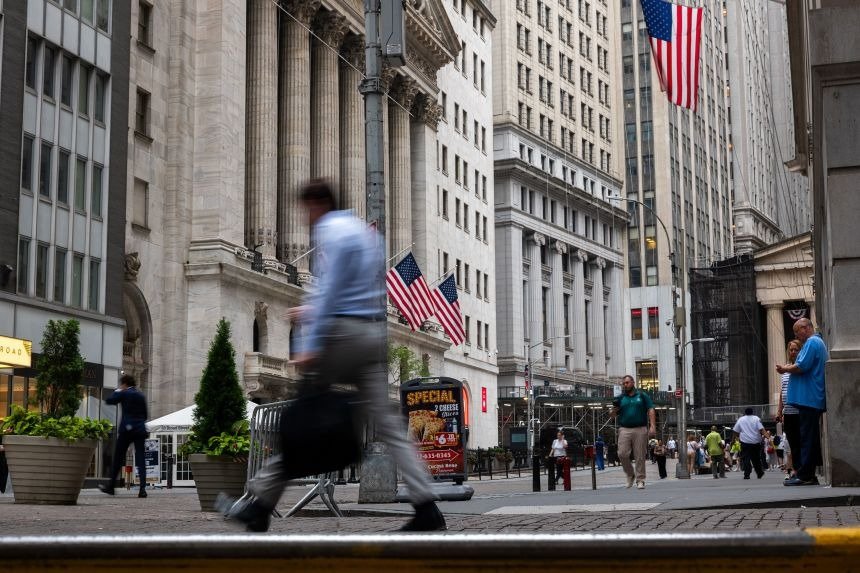
Wall Street experienced a remarkably strong start to 2026, driven by a massive infusion of capital into artificial intelligence, heightened trading volumes, and a favorable regulatory environment under the current White House administration. According to the latest data from the New York State Comptroller, the securities industry generated $45.9 billion in profits during the first half of the year alone. This figure represents a 51% increase compared to the same period in 2025. If this trajectory continues, annual profits are expected to surpass $90 billion, shattering previous records, including those established in 2009 after adjusting for inflation. Wall Street rolled into 2026 on a hot streak and continued with a booming first half. But risks remain, the good times are expected to keep rolling. The New York City comptroller’s office had forecasted in May that Wall Street would earn $45.3 billion in profits for the entire year — a figure that has already been surpassed.
New York State Comptroller Thomas P. DiNapoli noted that the industry has demonstrated significant resilience despite ongoing geopolitical tensions and broader economic instability. This financial success is mirrored in the compensation packages for industry professionals. In 2025, the average annual salary within the New York City securities sector, including bonuses, climbed 11.1% to reach $561,770. Additionally, the industry-wide bonus pool hit $49.2 billion, which equates to an average bonus of $246,900 per employee—a 6% increase over the prior year.
A primary catalyst for this growth has been the rapid expansion of the AI sector. Venture capital spending in artificial intelligence soared to $407 billion in the first half of 2026, already outpacing the $264 billion recorded for all of 2025. This surge has benefited Wall Street firms significantly, as underwriting revenues from IPOs and other offerings rose 68% year-over-year. Future activity remains promising, with the anticipated public offering of Anthropic—a company potentially valued at $2 trillion—expected to provide further fee-generating opportunities for major banks. Sign up here for nine-week Savings Challenge. Expert answers to your questions and challenges to help you get your savings on track, jeanne Sahadi delivers a newsletter every Friday with savings tips. Bonds and currencies, fees from supervising and advising clients’ investments, underwriting initial public offerings and a pickup in mergers and acquisitions, the surge in profits has been driven by robust trading in stocks. AI-related venture capital spending hit $407 billion in the first half of the year, more than 50% higher than the annual total of $264 billion in 2025, the report found. The AI boom, a pickup in M&A and a series of IPOs have created a sweet backdrop for earnings.
However, analysts are signaling caution regarding the industry’s outlook. On Monday, the yield on the 10-year Treasury note hit 5.35%, the highest level seen since 2002. DiNapoli warned that these rising bond yields could dampen profitability by increasing interest liabilities for firms and cooling off the dealmaking market. Higher borrowing costs for consumers, ranging from mortgages to automotive loans, may also weigh on the broader economy, eventually trickling down to affect financial institutions. “Rising yields for bonds issued by the U.S. and other governments in recent weeks are another concerning indicator for investors,” DiNapoli wrote in the report.
The current profit surge has provided a substantial fiscal boost to local government, with Wall Street’s contribution to New York City tax collections rising 15.8% for the 2026 fiscal year. While these revenues are currently at record levels, DiNapoli emphasized that a potential industry downturn remains an increasing risk to public finances. He cited a combination of factors—including persistent inflation, geopolitical conflict, reliance on the volatile AI sector, and the current administration’s deregulation efforts—as key variables that could disrupt the industry’s recent momentum. The boon for traders and bankers comes as AI investment is fueling US economic growth even as consumer sentiment hovers at historic lows due to concerns about the cost of living, from rising energy prices to stubborn food inflation.