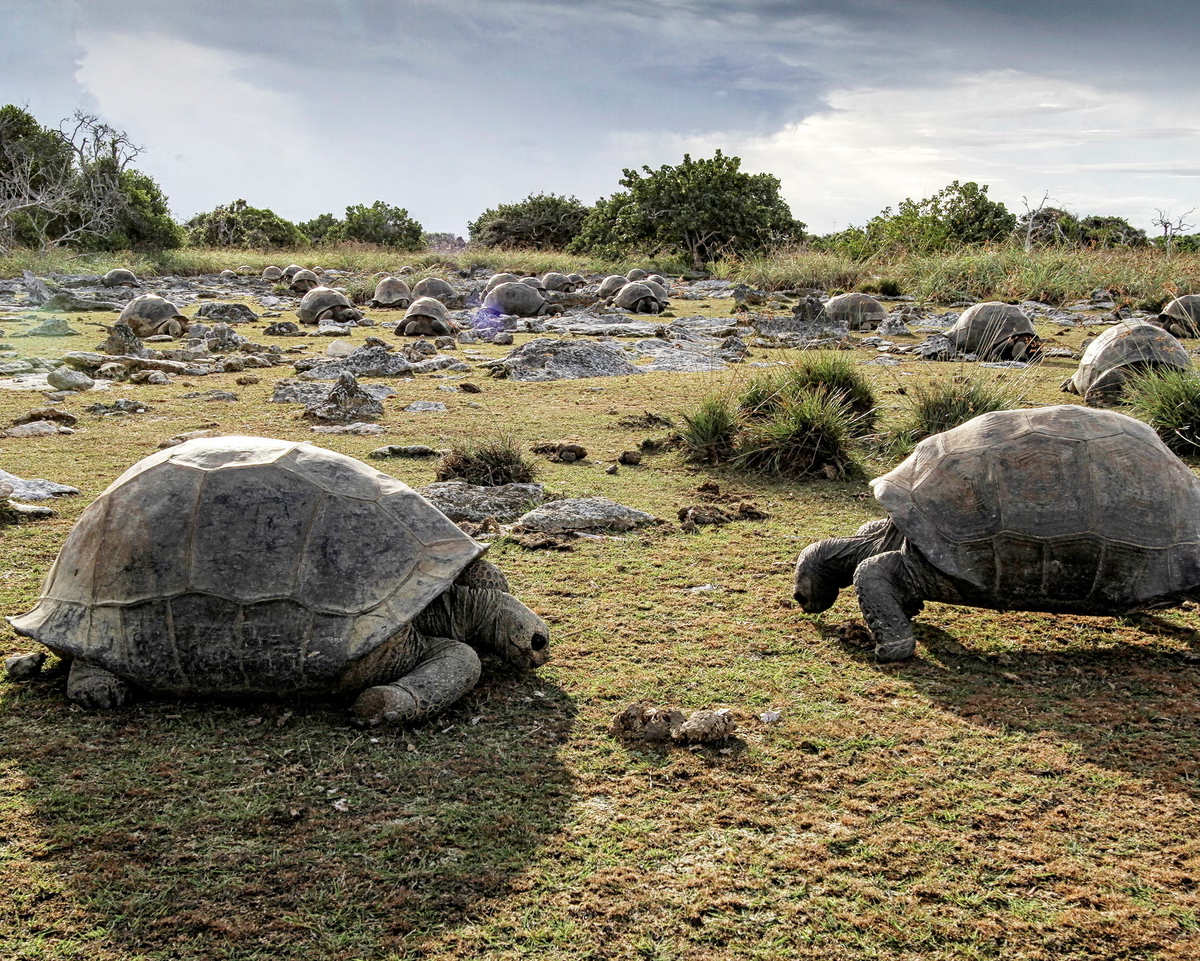
A comprehensive assessment of the Aldabra giant tortoise population has revealed a thriving ecosystem, with approximately 180,000 individuals roaming the Seychelles atoll. This figure represents the highest recorded population for the species, significantly outpacing the human population of the Seychelles archipelago.
Led by the Seychelles Islands Foundation (SIF) and the University of Exeter, the study synthesized five years of monitoring data collected between 2018 and 2022. This update serves as the first official census since the late 1990s, when previous research estimated the population at 100,000. Published in the journal Ecology and Evolution, the research confirms a stable population with a best estimate of 183,000 adult and sub-adult tortoises.
This resurgence is widely regarded as a major conservation milestone for the Indian Ocean. In the 19th century, the species faced near-extinction due to human exploitation, with fewer than 1,000 tortoises remaining. Subsequent protective measures, including the site’s designation as a strict nature reserve in 1981 and a Unesco World Heritage site in 1982, were pivotal in the recovery.
Dr. Frauke Fleischer-Dogley, CEO of the SIF, hailed the results as evidence of long-term conservation commitment. Co-author Dr. Nancy Bunbury noted that while the atoll’s dense vegetation complicates field counts, the team utilized advanced modelling to account for unseen individuals, establishing a robust baseline for future population tracking.
Despite this success, experts emphasize the need for continued vigilance. Climate change poses a significant risk to the habitat; researchers anticipate that rising sea levels and more frequent, prolonged droughts will limit the availability of shade and food resources essential for the tortoises.
Additional threats persist in the form of invasive species, specifically feral cats and black rats, which remain a danger to eggs and hatchlings. Conservationists suggest that targeted eradication of these invasive animals could remove the final obstacles to further population growth and bolster the resilience of the species against environmental pressures.
Reflecting on the findings, Dr. Dave Hudson of the University of Exeter stated that these results demonstrate the effectiveness of field efforts. However, he cautioned that the figures represent a baseline rather than an endpoint, providing necessary evidence for managers to anticipate future climate-related challenges.
Aldabra Atoll stands as one of only two global strongholds for wild giant tortoises, the other being the Galápagos Islands. This new data confirms that the Aldabra programme remains one of the longest-running and most successful wildlife monitoring initiatives in the region.