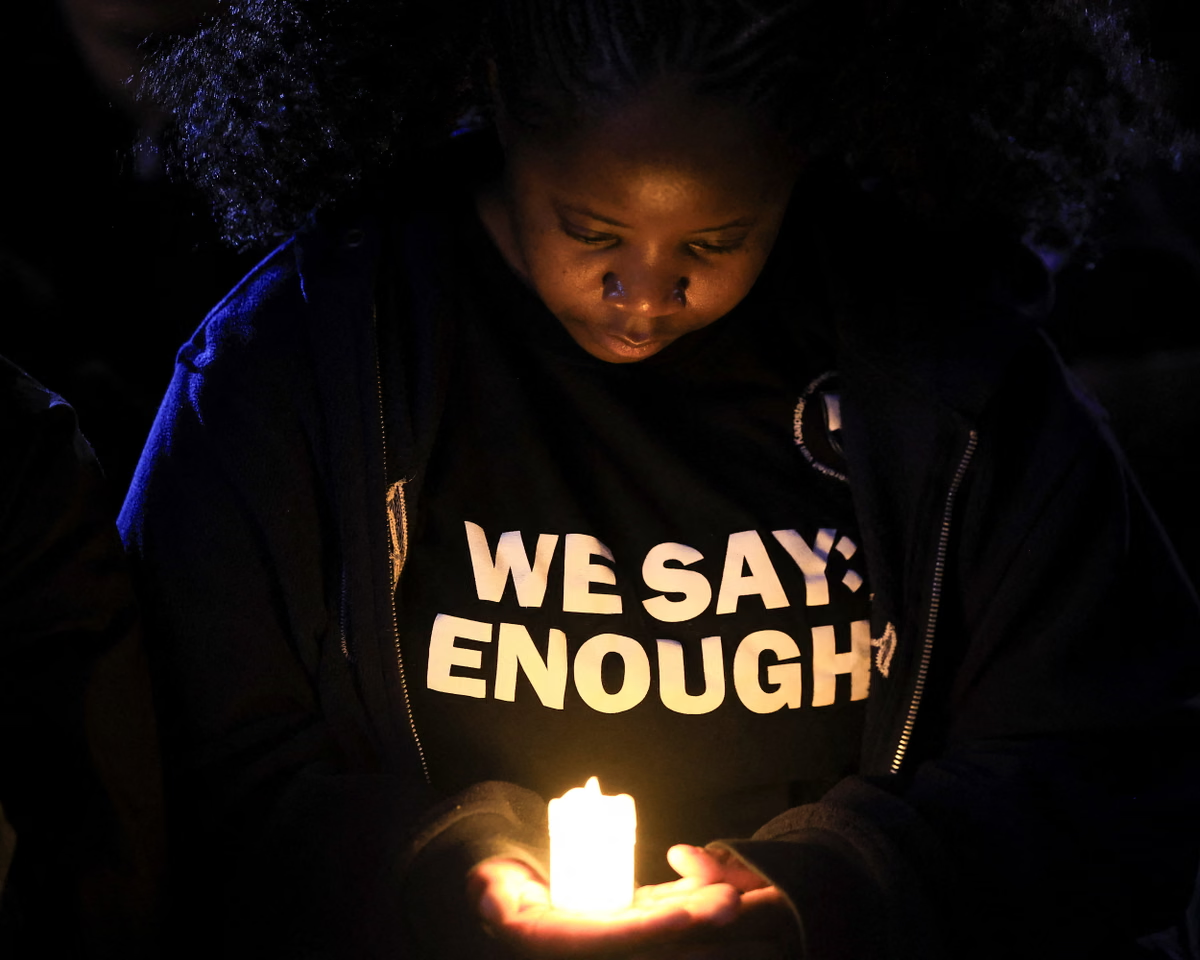
South African President Cyril Ramaphosa has launched a series of administrative and security reforms aimed at curbing gender-based violence, following an intense national outcry over the discovery of eleven women’s bodies in the Ekurhuleni municipality since July 15. The president acknowledged that the state has historically failed to adequately protect women, placing a disproportionate burden on them to adjust their daily lives to avoid danger. The municipality adjoining Johannesburg to the east, since 15 July, south Africa has been gripped by grief and fury after the discovery of 11 women’s bodies dumped across Ekurhuleni. “For too long, gender-based violence has been treated as a woman’s problem to solve.
Addressing the nation on Tuesday, Ramaphosa outlined a strict timeline for executive action. Within 60 days, police are required to review all unsolved murders, attempted homicides, and serious sexual offenses involving women and children. Furthermore, a funded initiative must be established during this period to clear the significant forensic backlog currently hindering these investigations.
Local municipalities have been granted a five-month mandate to rectify environmental factors that contribute to insecurity, including repairing broken streetlights and clearing abandoned buildings or overgrown public spaces. Additionally, the president has assigned a task force of five cabinet ministers to develop a comprehensive plan within 60 days to address the role of harmful alcohol consumption in interpersonal violence.
While noting that alcohol does not excuse an offender’s actions, the president emphasized that substance abuse remains a significant aggravating factor. He maintained that legal and personal accountability must always rest with the perpetrator, stating, “Women should not have to live in fear because government has failed to repair a light, clear a public space, process evidence or enforce a law.”
Investigators have confirmed that suspects have been apprehended in three of the recent Ekurhuleni cases. While police are still exploring all possibilities, they have stated there is currently no evidence to suggest a single serial offender is responsible for all eleven fatalities. Among the victims identified was Elizabeth “Tsontso” Moselakgomo, who disappeared after an evening run on September 12. Including Elizabeth “Tsontso” Moselakgomo, who was discovered on 12 September after she went missing when she went for a run after work, eight of the women were found in the last three weeks. According to ramaphosa, Suspects had been arrested in connection with three of the killings and that the other cases would not be left to go cold.
In an direct appeal to the male population, Ramaphosa urged citizens to confront relatives and colleagues who perpetuate harassment or abuse. “It is time for good men to stop being silent men,” he said, arguing that the struggle against violence has been unfairly treated as solely a women’s issue. He added that the culture of women having to change their routes or avoid public spaces must end. Women march, the women of our country organise, they speak out, they protest, they confront and they comfort survivors,” Ramaphosa said. Avoid going out at night and warn one another about dangerous places and dangerous men.
Despite the official announcements, some civil society organizations remain skeptical regarding the efficacy of these proposed measures. Shenilla Mohamed, executive director of Amnesty International South Africa, noted that these discussions have been ongoing since the 2019 protests, stressing that policy pronouncements only hold value if they lead to tangible consequences for inaction.
Representatives from the NGO Sonke Gender Justice, Mpiwa Mangwiro-Tsanga and Bafana Khumalo, also expressed concern that the government’s current strategy remains reactive rather than preventive. They argued that while forensic and infrastructure upgrades are necessary, they do not constitute a holistic prevention strategy, particularly given that the assigned infrastructure tasks are already existing municipal mandates that have frequently gone unfulfilled.