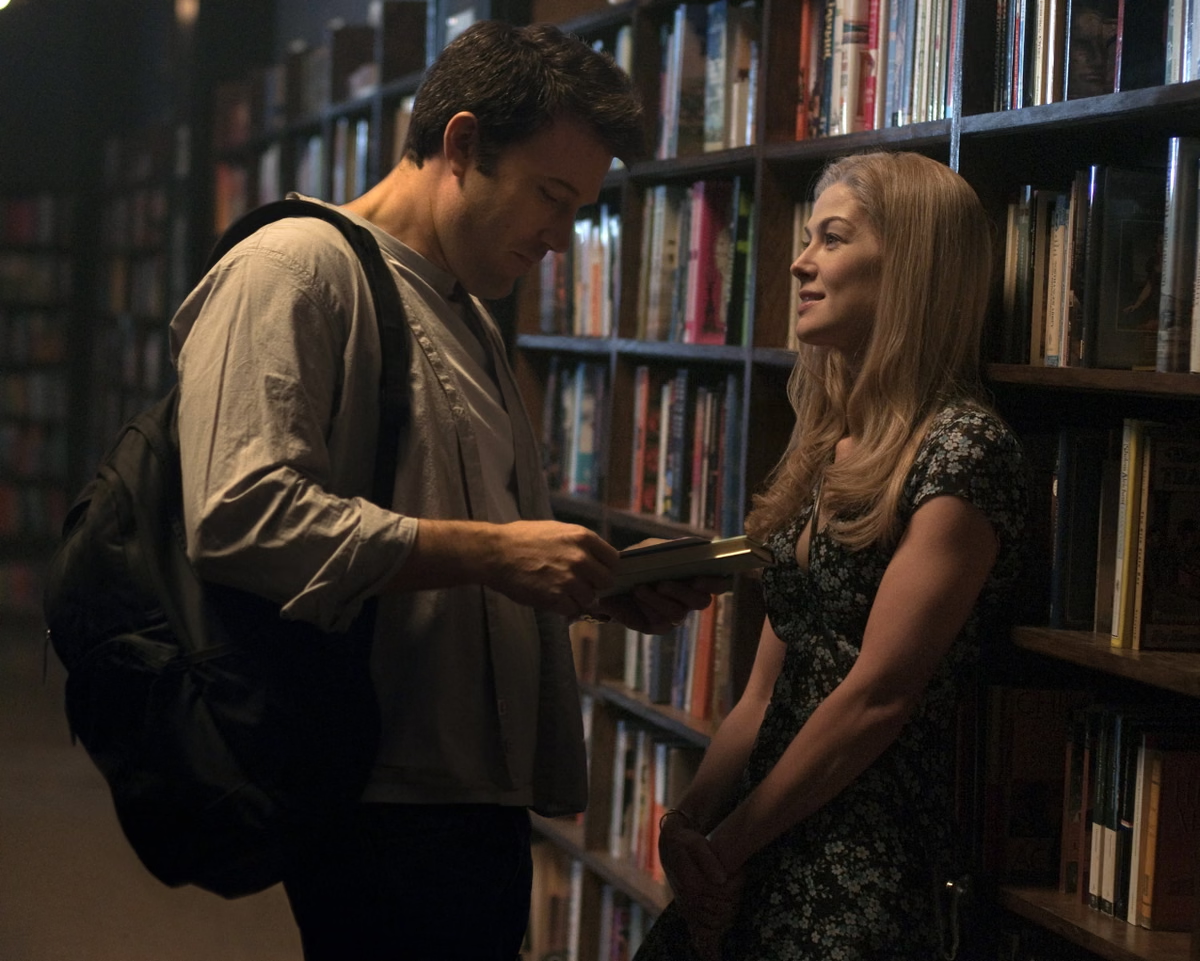
When Ben Affleck, playing the husband in David Fincher’s 2014 adaptation of Gone Girl, narrates the film’s opening scene, his words set a haunting tone: “When I think of my wife, I always think of the back of her head. I picture cracking her lovely skull, unspooling her brains, trying to get answers to the primal questions of any marriage: What are you thinking? How are you feeling? What have we done to each other?” For many, this dark thriller might seem an unlikely choice for a comfort watch, yet there is a unique catharsis in witnessing the meticulously planned revenge of Amy Dunne.
The story centers on Nick and Amy, a couple whose lives initially look like a lifestyle magazine feature. They live in a suburban home with high-thread-count linens and a state-of-the-art kitchen, but their relationship is failing. Nick has become an unfulfilled, philandering husband, while Amy feels trapped in the role of a “nagging shrew” and a “controlling bitch.” When Amy suddenly disappears, Nick becomes the prime suspect in a massive media trial, leading viewers through a classic murder mystery until the narrative shifts entirely with Amy’s chilling admission: “I am so much happier now that I’m dead.”
The film’s appeal as a comfort movie is rooted in the calm, omnipresent narration by Rosamund Pike. Her voice carries a soothing quality reminiscent of classic television dramas. Despite the severity of the plot—where Amy frames her husband for her own murder—her absolute certainty about her actions offers an odd sense of relief. She views Nick’s behavior as a form of metaphorical violence, stating, “Nick Dunne took my pride and my dignity and my hope and my money. He took and took from me until I no longer existed. That’s murder.”
A major draw for viewers is the film’s critique of gendered expectations. In a pivotal scene, Amy explains the exhaustion of maintaining the facade of the “cool girl”—a woman who can eat cold pizza and watch sports without gaining weight, all while never being enough to satisfy her husband. This performance of the self feels increasingly relevant, mirroring the pressure to curate perfect personas online. Amy leverages these societal perceptions, appearing as the helpless victim to the public, even as she orchestrates a subversion of those very stereotypes.
Watching Amy navigate the unraveling of her plans with an immaculately cut bob and a relentless spirit is both terrifying and aspirational. She refuses to fade into the background, declaring, “You think I’d let him destroy me and end up happier than ever? No way. He doesn’t get to win.” For the audience, this determination to reclaim agency, even in the most extreme way, creates a perverse sense of satisfaction. The film is currently available on platforms including Paramount+ in the US, Amazon Prime and HBO Max in the UK, and Stan in Australia.