British food producers and exporters have broadly welcomed a new agreement between the UK and the EU designed to eliminate the vast majority of physical checks on animal products, plants, and food items. The sanitary and phytosanitary (SPS) deal is set to ease trade hurdles for UK exporters while enabling British specialty retailers to resume importing European cheese and wine, a trade that had become financially unviable due to high Brexit-related administrative costs.
Scheduled to take effect on 1 March 2028, the agreement aims to reopen European markets for British goods, including fresh sausages, burgers, seed potatoes, and live bivalve molluscs. However, after years of post-Brexit disruption to established supply chains, several business leaders remain cautious about the timeline.
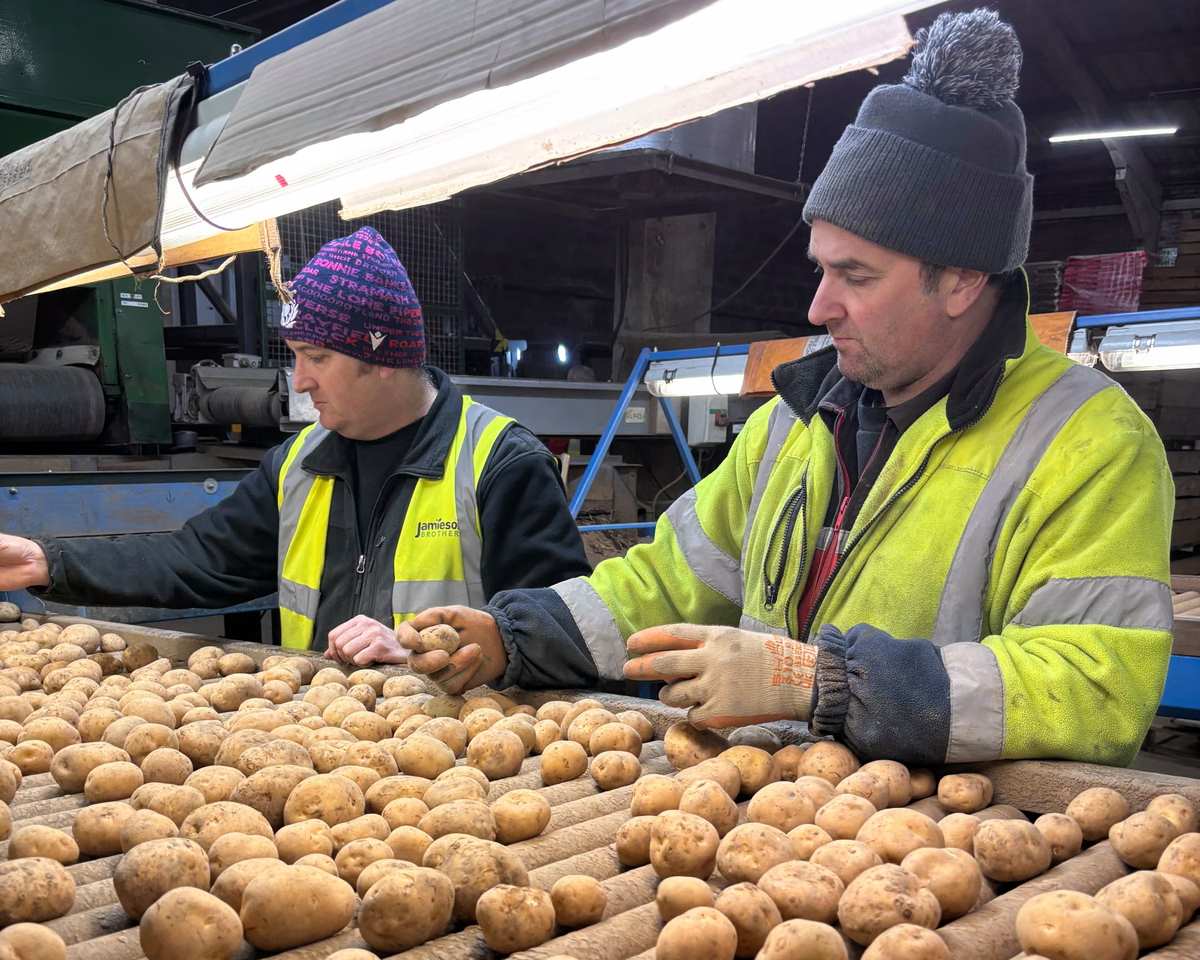
Iain Barbour, operations director at Scottish seed potato producer Jamieson Brothers, noted that industry trust will take time to restore. “Nobody’s going to believe this until it has actually physically happened,” Barbour said, adding that growers will likely be wary of planting crops until the arrangement is fully finalized. He anticipates that most producers will wait until 2029 to fully resume normal trading operations. Barbour anticipates most growers will be wary and will only fully resume trading in 2029. “People are obviously going to be a little bit hesitant to grow anything until it’s 100% official,” he said.
Seed potatoes were excluded from the original post-Brexit trade deal following certification disputes between the UK and the EU, halting exports despite the high health status of Scottish crops. The ban hit Scottish growers particularly hard, as they previously accounted for three-quarters of UK production in a sector valued at about £112 million annually, providing stock for global crisp and chip manufacturers. Whose farmers were among the biggest exporters for the production of chips and crisps in the world, as well as growers in northern England, the exclusion particularly hit the Scottish industry.
Prior to Brexit, Ireland and the broader EU accounted for a fifth of Jamieson Brothers’ business. The loss of the Irish market was especially damaging because the firm cultivated specific potato varieties favoured across Ireland. To survive the loss of trade, the company spent approximately £500,000 adapting its facilities to take on packaging work previously performed inside the EU. “We evolved, we worked with more partners and that’s what kept the business going,” Barbour explained.
Barbour also pointed out that reviving discontinued potato varieties stored in seed banks will take at least three years, as varieties popular in Ireland were phased out when access was cut off. Furthermore, he noted that the March 2028 start date comes a couple of months too late for the annual trade cycle, since seed potato crops must be planned and grown well in advance of early-year sales. Varieties that had been going about 100 years were killed off in a couple of years,” he said. “So we’ll have to look at bringing them back.”. According to barbour is looking forward to supplying his Irish customers once againHowever, he, It would take at least three years until he could revive varieties that were no longer being grown and were instead stored in a seed bank.
The deal is also expected to provide a crucial lifeline for the UK’s live bivalve mollusc sector, which includes mussels, oysters, clams, cockles, and scallops. Although relatively small—valued at under £12 million annually before Brexit—the industry is vital for several coastal communities.
Devon-based Offshore Shellfish, which produces rope-grown blue mussels in Lyme Bay, managed to continue exporting to Europe despite heavy paperwork and occasional disruptions by French customs. The company exports most of its yield to the Netherlands for processing before it is distributed to Belgian restaurants and supermarkets for use in moules-frites. Before most end up in restaurants or on supermarket shelves in Belgium, where they are prized as a key ingredient in moules-frites, one of the country’s national dishes, it sends to the Netherlands for processing.
Sarah Holmyard, commercial director at Offshore Shellfish, emphasized that the most critical element of the agreement is an assurance allowing live bivalve molluscs to be exported even if they originate from waters not rated at the highest quality level. Offshore Shellfish operates in waters classified as “class A” for most of the year, but temporary drops to “class B” status previously threatened export halts. “That’s a huge win for us because we’ve been pushing and pushing and pushing for that,” Holmyard stated.
Despite the positive outlook for surviving firms, the deal arrives too late for companies that collapsed under Brexit pressures. In the Menai Strait of North Wales, three out of four mussel fishing operations shut down after export barriers proved insurmountable.
In the dairy sector, Rich Clothier, managing director of Somerset-based Wyke Farms, welcomed the promised end of physical border checks on meat, dairy, and fish. Wyke Farms exports about 25 percent of its cheddar cheese to EU markets, primarily France, Germany, and Spain. While dairy trade suffered fewer complete bans than shellfish or seed potatoes, Clothier described the veterinary sign-off system as highly bureaucratic and outdated. The removal of veterinary checks is viewed as a significant benefit by Clothier.
“The agreement will save a huge amount of cost and product waste as well, because these are perishable,” Clothier noted. While praising the reduction in friction, he voiced frustration over the delayed rollout. “Any reduction in friction saves cost, it makes business more efficient. But it is really frustrating that it’s going to take so long [to be implemented] because, to be honest, we’re all pretty aligned anyway.”