The Tooro kingdom in Uganda is currently facing a volatile power struggle following the death of King Oyo Nyimba Kabamba Iguru Rukidi IV, who passed away on August 27 in the United States while undergoing cancer treatment. King Oyo, who ascended to the throne in 1995 as the world’s youngest reigning monarch at just three years old, left behind a legacy that has now become the subject of an intense dispute over his successor.
The controversy ignited after a succession committee representing the royal clan announced the selection of Prince Edward Rukidi Kijanangoma, a popular television news anchor and editor at the public broadcaster UBC, as the new crown prince. This decision was promptly and forcefully rejected by the late monarch’s immediate family.
Shortly after the announcement on Wednesday, the King’s sister, Princess Ruth Nsemere Komuntale, held a press conference to assert that her brother’s will contains provisions for an heir whose identity had remained hidden until the King’s death. The kingdom’s spokesperson subsequently released a portion of the document, which explicitly directs that if the monarch were survived by a “lawfully recognised” biological son, that individual should be appointed as the successor to the Tooro throne.
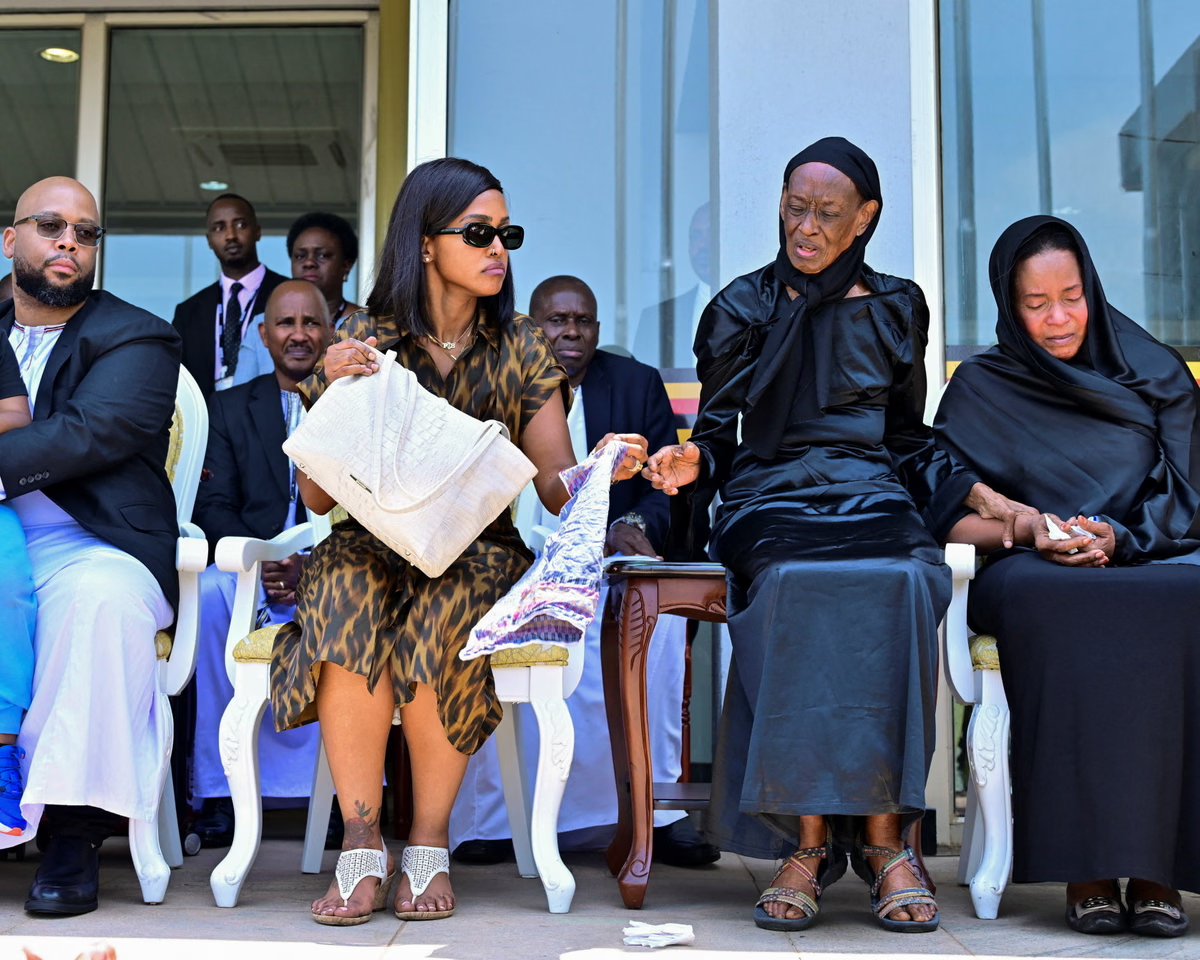
Queen Mother Best Kemigisa Akiiki issued a formal statement on Thursday denouncing what she described as a “self-appointed group of clan members” for attempting to install a new king before the provisions of the will could be properly addressed. The Queen Mother further alleged that the royal family has been placed under house arrest, claiming that troops removed their security detail without notice and established a perimeter around the palace. She noted that their movements are restricted, making it impossible to receive visitors or leave the premises freely.
While King Oyo remained unmarried and had no publicly known children during his lifetime, the kingdom’s prime minister, Calvin Armstrong Rwomiire Akiiki, confirmed the existence of a son on August 27. He stated that the prince’s identity would be revealed at an appropriate time in alignment with Tooro traditions. Another potential candidate, Prince George Desmond-Kamurasi—a goalkeeper for the London-based amateur side South East Dons—reportedly declined the throne due to his existing commitments.
The legitimacy of the proposed heir remains a point of contention. A committee representative told NTV that, according to established custom, a child must be formally introduced to elders to qualify for leadership, specifically noting that a successor should ideally be born to a queen officially married to the monarch. Prominent journalist Andrew Mwenda, a relative of the royals, noted on social media that the family has yet to provide visual evidence or details regarding the purported heir’s mother.
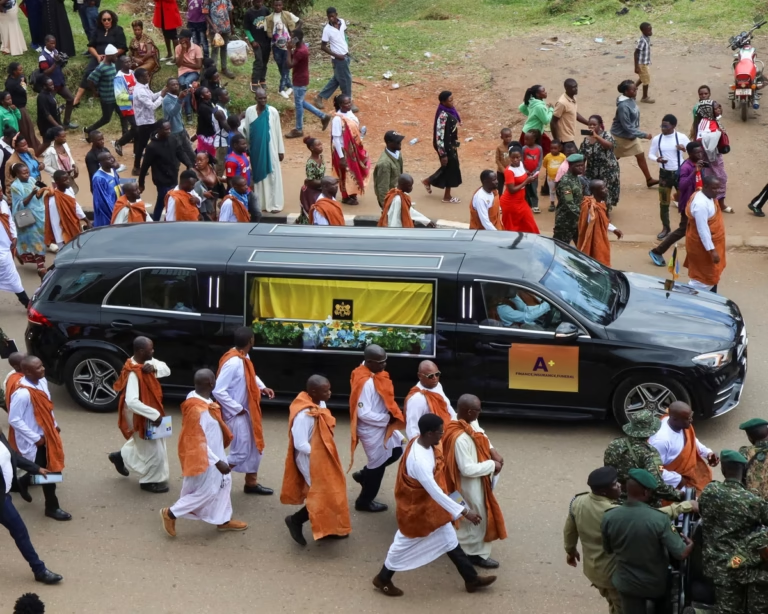
Prime Minister Akiiki has publicly called for calm, urging all parties to refrain from confrontational maneuvers while the King awaits his funeral. He stressed that there must be a measured period to examine the legal documents, consider ancestral customs, and evaluate the appropriate institutional protocols for succession. The burial is scheduled for Saturday at the Karambi royal tombs in Fort Portal.
The Tooro kingdom is one of five traditional Ugandan monarchies restored by President Yoweri Museveni in 1993, decades after they were abolished in 1967 by then-president Milton Obote. While these monarchs hold no formal political power and are barred from partisan involvement, they remain deeply influential figures of cultural tradition. This current impasse mirrors broader regional succession tensions, similar to the 15-month delay in the coronation of South Africa’s Zulu King Misuzulu Sinqobile kaZwelithini following his father’s passing. The report also notes that “That process should take place calmly and credibly, not through competing announcements, confrontation, or attempts to establish facts on the ground while our king still awaits burial.”. The report also notes that but whose leaders are revered as symbols of tradition and wield vast social influence, uganda has several ancient kingdoms that lack formal sovereignty. The report also notes that the reigning king of the Zulu people in South Africa, waited 15 months for his coronation after the death of his father because of a bitter feud involving accusations of forgery and poisoning, king Misuzulu Sinqobile kaZwelithini. The report also notes that reuters and the Associated Press contributed reporting.