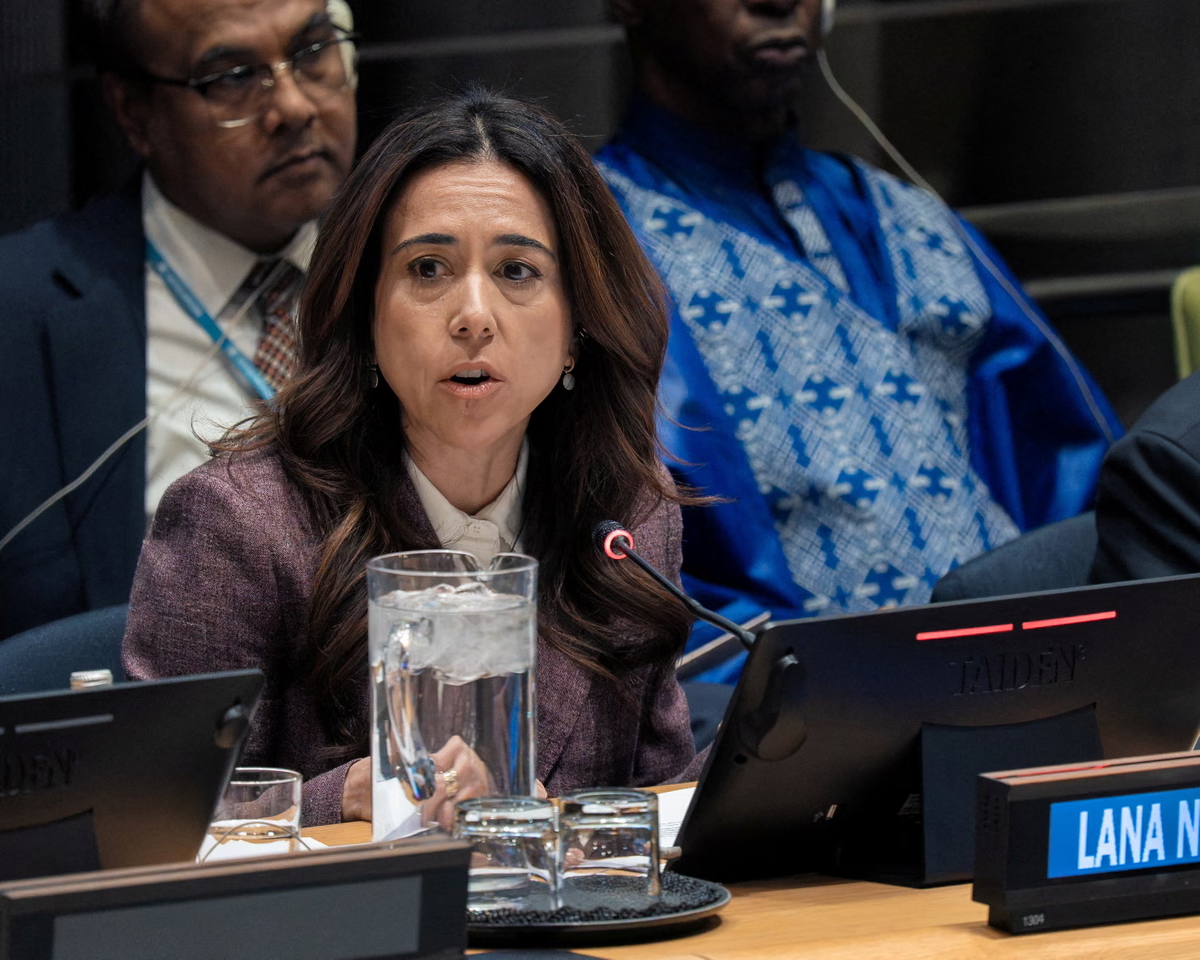
A coalition of Sudanese diaspora members and international human rights advocates has formally opposed the nomination of Lana Nusseibeh for the United Nations secretary-general position. The UAE put forward the veteran diplomat last week as a candidate to succeed António Guterres at the conclusion of his term, aiming to resolve an ongoing deadlock in the selection process. Nusseibeh, the UAE’s representative to the UN until 2024, has repeatedly reflected the UAE’s blanket denials of the accusations. That is not what we need as UN secretary-general.”. And we must not be naive nor hide behind the pretence of naivety.
Critics argue that Nusseibeh is unfit for the role, pointing to her repeated rejection of reports documenting UAE assistance to the Rapid Support Forces (RSF) in Sudan. International investigators have long linked the UAE to the paramilitary group, which is currently engaged in a brutal conflict against the Sudanese army. UN assessments of an October 2025 offensive in El Fasher explicitly stated that the violence bore the “hallmarks of genocide.” At Tuesday’s briefing, Roth said: “It’s fair to say the RSF would not have been able to be nearly as successful militarily as it was and has been without that support from the UAE. It didn’t just fight the Sudan armed forces, and with that support.
Hala al-Karib, head of the Strategic Initiative for Women in the Horn of Africa, asserted that Nusseibeh lacks any evidence of independence from her government’s policies in Sudan. She warned that electing a candidate who dismisses such atrocities would essentially validate the genocidal acts committed by the RSF.
During a virtual briefing organized by Avaaz, Sudanese activists expressed deep concern over the implications for the UN’s credibility.
Ibrahim Alduma, co-founder of the Sudan Action Hub, questioned how the organization could maintain the trust of conflict victims worldwide if it elevated a defender of an involved state. Similarly, Husam Mahjoub of Sudan Bukra TV stated that such an appointment would hand control of key institutions to a government that is a primary enabler of the violence.
Former Human Rights Watch leader Kenneth Roth described the nomination as highly unsuitable, noting that Nusseibeh has consistently refused to engage with facts regarding the arming of the RSF. Bruno Stagno Ugarte of Human Rights Watch added that her dismissal of UN findings has severely hindered international efforts toward accountability for war victims.
Responding to the backlash, Nusseibeh issued a statement pledging that if she were appointed, she would fully support UN-led fact-finding and transitional justice initiatives. She described the RSF’s actions as “atrocious” and noted she had taken a leave of absence from her ministerial duties to demonstrate her commitment to the independence required for the UN leadership role, calling the Sudan conflict a “litmus test” for the next secretary-general.
Securing the position requires a candidate to gain at least nine affirmative votes from the 15-member Security Council while avoiding a veto from any of the five permanent members: the US, UK, China, France, or Russia. An informal straw poll held earlier this month saw former Costa Rican vice-president Rebeca Grynspan emerge as a narrow frontrunner, though she and other contenders faced multiple blocking votes. But she and all other candidates received two or more opposing votes from the permanent council members.
Kate Ferguson, co-executive director of Protection Approaches, emphasized that there was insufficient evidence of Nusseibeh’s independence from state interests, characterizing the nomination as an example of “autocratic capture” of a vital multilateral institution. The next stage of the selection process remains uncertain as diplomats continue to negotiate the timing and format of subsequent polls. But the format and exact timing are still being negotiated by the diplomats, the next straw poll could take place as soon as Friday. Additional reporting by Kaamil Ahmed.