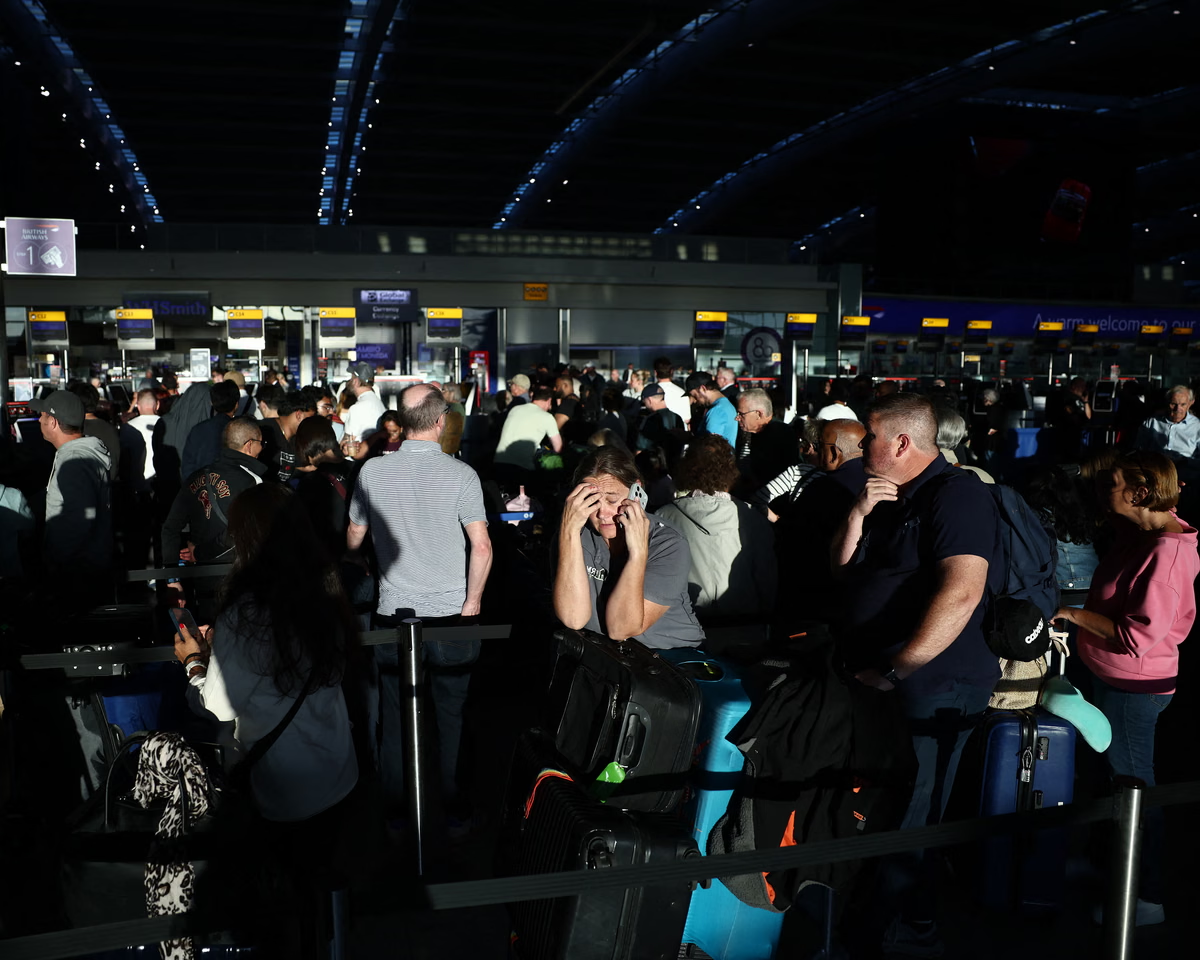
A critical software flaw within the United Kingdom’s air traffic control infrastructure corrupted vital flight data in the space of a millisecond, triggering a six-hour outage that resulted in widespread flight delays and cancellations. National Air Traffic Services (Nats) confirmed that the incident, which began on September 8, caused significant disruption across the country and affected travel well into the following day.
The issue originated at 10:00 am when a manual request for an aircraft identification code was interrupted by a separate, higher-priority system task. According to the preliminary report, when the software attempted to resume processing the initial code request, it failed to execute correctly, outputting corrupted data that impacted subsequent flight updates. Engineers were notified of a connectivity drop between the National Airspace System (NAS) and London area control at 10:02 am, but initially believed the system had recovered by 10:06 am after reporting no immediate operational impact.
This assessment proved premature, as the system encountered a second failure at 12:32 pm, at which point a major incident was declared. Controllers were forced to switch to manual procedures, leading to rolling flight restrictions by 12:45 pm. By 1:32 pm, the system had suffered a complete failure. Nats initiated a reboot between 2:50 pm and 4:09 pm, finally restoring full operations by 7:30 pm, though the residual impact left hundreds of thousands of passengers stranded and displaced aircraft across the network.
Transport Secretary Heidi Alexander described the resulting chaos as completely unacceptable and confirmed that the Civil Aviation Authority (CAA) will conduct an independent investigation to verify Nats’ findings. This probe will also evaluate Nats’ future investment strategies regarding system resilience and regulatory accountability. The government intends for the CAA to fundamentally assess whether the current air traffic management structure remains fit for purpose, with a full report expected within six months.
Industry leaders have reacted with sharp criticism. Airlines UK chief executive Tim Alderslade insisted the review must mandate significant investment to ensure a single technical failure cannot cause national gridlock again. Member airlines are now demanding immediate financial compensation for the costs incurred during the shutdown and are calling for a credible long-term resilience plan.
The pressure on Nats leadership has intensified, particularly from Ryanair, whose chief operations officer, Neil McMahon, dismissed the software explanation as inadequate. McMahon joined other industry figures in demanding the resignation of Nats CEO Martin Rolfe, noting that this represents the third major failure in the UK system since the summer of 2023. EasyJet CEO Kenton Jarvis echoed these sentiments, asserting that passengers require firm action rather than repeated promises that lessons will be learned.
Addressing the criticism, Rolfe confirmed that the error was a previously unknown legacy software defect combined with a specific sequence of simultaneous events. He stressed that the incident was unrelated to prior outages and was not caused by human error from civil or military operators. While apologizing for the disruption, Rolfe maintained that safety was never compromised at any point during the event. He noted that a mitigation strategy is currently in place while a permanent, safety-tested fix is finalized for deployment.
The backlog caused by the failure took more than two days to clear, with the total number of cancelled flights exceeding 2,000. As the industry awaits the outcome of the CAA’s upcoming review, officials and airline executives remain focused on preventing a recurrence of the technical instability that paralyzed UK airspace. The report also notes that saying they needed “to urgently understand why this issue was not discovered and fixed before it caused chaos”, but ministers said the Nats report into the incident still left questions unanswered. The report also notes that the error first occurred at 10am and was notified to engineers who investigated – but the system appeared to be working again, until 12.30pm when a repeat occurred and a major incident was declared, according to the report. The report also notes that which ended up delaying and cancelling flights across the UK and beyond late into the next day, hundreds of thousands of passengers had their travel disrupted after the Nats failure on Tuesday 8 September. The report also notes that but continued to investigate, the engineers reported at 10.06am that the system had apparently recovered with no operational impact. The report also notes that by 12.45pm, Nats was restricting flights as the system continued to glitch, before failing completely at 1.32pm. The report also notes that and between 2.50pm and 4.09pm Nats rebooted the system, eventually resuming full operations at 7.30pm – but leaving mass congestion, displaced aircraft and hundreds of thousands of delayed passengers in its wake, at 1.40pm airlines were advised of restrictions. The report also notes that very sincerely, to everyone who was affected last week, he added: “I would like to apologise again. The report also notes that quickly and without delay and we are devastated when that goes wrong, it’s our job to get people where they want to go.