Microsoft announced on Saturday that it has successfully restored services for all customers and regions impacted by a major global outage. The disruption, which began on Thursday, caused widespread connectivity issues across businesses, courts, healthcare providers, airlines, and banks internationally.
On the official Microsoft 365 status page, the company confirmed that efforts to resolve the underlying incident were complete. Users can continue to find updates regarding the event under reference code MO1550821 in the Microsoft 365 admin center.
The outage severely hampered public services across multiple nations. In the UK, NHS England reported significant challenges, with hospital staff forced to revert to paper-based records to maintain care. One union highlighted the “serious impact” the failure had on ambulance services. Meanwhile, the UK court system faced substantial delays, with some juries dismissed early and prisoners unable to appear in court due to administrative technical failures. With juries in some cases being sent home early or prisoners not being sent to court, while at Minshull Street crown court in Manchester staff scrambled to locate a fax machine, the already backlogged court system was also hit.
Operations in several other countries were similarly affected.
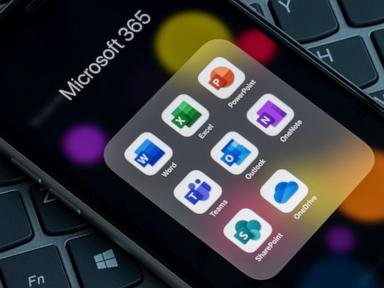
In Australia, the federal police and the domestic intelligence agency, Asio, experienced service interruptions, though Director General Mike Burgess noted their systems operate on multiple levels and were not completely incapacitated. Government agencies in the Netherlands, Belgium, and France also reported functional problems, with some local authorities urging citizens to use telephone communication instead of email. According to governments including those of Japan, Singapore and Australia, The hours-long episode had affected some of their operations. According to in Australia, many people who rely on Microsoft 365, Being unable to access their inboxes, including at councils, courts and schools. According to users, Microsoft 365 services, including Outlook, Teams and the AI assistant Copilot, were interrupted. The disruptions offer the latest example of the cascading problems that can erupt when multiple communications and technology platforms depend on the same provider. According to the total number of people affected was not clear, but Microsoft, In January it had more than 450m paid commercial subscriptions to its 365 services.
Asian markets saw similar disruptions. Japanese government email services were rendered unavailable, forcing staff to use text messaging, while firms like Sagawa Express and Taisho reported difficulties in processing reservations and orders. Indian carriers IndiGo and Akasa Air, along with various Taiwanese security and investment firms, also cited significant operational hurdles.
The incident was attributed to a network capacity upgrade gone wrong, surfacing during a routine network change. Microsoft explicitly stated the outage was not related to cyberattacks or artificial intelligence agents. The company serves roughly 430 to 450 million commercial subscribers, and Downdetector recorded reports from users across more than 70 countries.
Security experts have used the event to highlight the risks inherent in global digital reliance. Steven Murdoch of University College London noted that such large-scale failures often result from complex, unexpected interactions between well-understood systems, adding that building complex infrastructure without failure risk is extremely difficult.
Policy figures and academics have echoed these concerns regarding systemic fragility. Tim Clement-Jones, former chair of the House of Lords artificial intelligence select committee, described the outage as an “I-told-you-so moment” regarding Britain’s dependency on US-based tech providers. Jeremy Singer, a professor at the University of Glasgow, suggested that the incident emphasizes an urgent need for greater resilience within global digital infrastructure. The outage has fuelled concerns in the UK about an overreliance on a small number of tech companies.
While the full scale of the disruption remains difficult to quantify, the incident represents one of the most significant IT failures in recent years, affecting critical infrastructure ranging from US school districts to international detention centers where online bond payments were temporarily halted. In the US, school districts told parents they must reach out by phone or online apps to contact their child’s school, while staffers at the House of Representatives told Politico they had lost a day of work. According to one detention facility in Colorado, They were unable to take online bond payments to release detainees and told anyone needing to post bond for immediate release to do so in person at the jail.